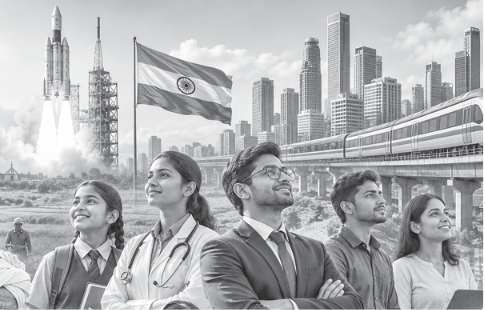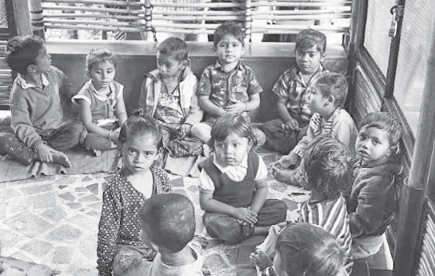
The Bharat of 2047 will be built by children who have not yet entered school. Their journey towards a healthy, confident and capable adulthood begins much earlier, most decisively in the first 1,000 days of life. For millions of Indian children and their mothers, that journey is supported by a familiar neighbourhood institution: the Anganwadi. Long before entering classroom, children are weighed and measured at an Anganwadi, receive a warm meal and hear rhymes outside home. It is where expectant parents receive counselling. Today, 14 lakh Anganwadi Centres serve as the first point of contact between citizen and State, reaching over 8.9 crore children, women and adolescent girls. The 25.2 lakh Anganwadi Workers and Helpers are drawn from the communities they serve.
The Anganwadi has always belonged to the neighbourhood. This familiar institution became the foundation of a national movement when Prime Minister Shri Narendra Modi launched POSHAN Abhiyaan in March 2018. The 9th Rashtriya Poshan Maah begins on 9th September 2026 with the theme “Hamari Anganwadi, Hamari Jimmedari”. The responsibility of providing quality services rests firmly with Government, and that commitment is unwavering. But an Anganwadi Centre truly flourishes when the community embraces it as its own. A Viksit Bharat can be built only through Sabka Prayas. Nutrition cannot be seen only as a government service.
From recipient to partner
Community ownership has too often remained an appeal. This year it becomes an institution. Anganwadi Management Committees bring parents, panchayat representatives and selfhelp groups into the Centre to ensure every eligible child is reached. Social audits enable communities to review services, verify entitlements and formally record findings. Accountability becomes verification from within by families served. Mothers are at the heart of this process. The SNP Menu Board displays day-wise entitlements for Hot Cooked Meals and Take-Home Rations. When a mother knows what her child is entitled to, transparency becomes an everyday habit. The community becomes an informed partner in ensuring quality. Poshan Maah 2026 will activate committees, social audits and Menu Boards, with Tithi Bhoj, tasting sessions and recipe demonstrations.
Beyond the menu Board
The first is the food itself. A Suposhit Bharat requires balanced meals: cereals and millets, pulses, nuts and seeds, milk and milk products, eggs, seasonal fruits and green vegetables. The Comprehensive Guidelines and families were drawn into the conversation. Partnership grows around Anganwadis because a mother’s nutrition was never hers to secure alone.
Respecting the Woman at the centre
and Aadharshila curricula carry nutrition and care into school readiness. Mothers are at the heart of this process. The SNP Menu Board displays day-wise entitlements for Hot Cooked Meals and Take-Home Rations. When a mother knows what her child is entitled to, transparency becomes an everyday habit. for the Supplementary Nutrition Programme, 2026, released in July, define Hot Cooked Meals and reinforce micronutrient norms under the National Food Security Act, 2013. The second is early learning. What a child eats and learns are deeply connected. Anganwadi Workers track 34 developmental milestones in a child’s first three years. The Navchetna The third begins before the child arrives.
A mother’s own nutrition in pregnancy shapes her child’s start in life. This Poshan Maah marks ten years of the Pradhan Mantri Matru Vandana Yojana, reflecting the Prime Minister’s conviction that no woman should have to choose between earnings and health. A decade on, 4.65 crore beneficiaries have received Rs 21,511 crore directly into their accounts. Strengthened under Mission Shakti, it provides an additional benefit for a second girl child. The Economic Survey 2025-26 makes clear that such a transfer achieves its full purpose when it travels with counselling that enables informed decisions within the household. Reviewing Rajasthan’s Cash Plus model, which paired these transfers with sustained behaviour change communication, it records that the share of women spending the benefit on food rose from 30 per cent to 89 per cent, and that myths surrounding maternal nutrition receded as husbands At the centre stands the Anganwadi Worker. Community ownership cannot mean placing the entire burden of nutrition and early childhood care upon her. It must mean respecting, supporting and strengthening her.
Her knowledge and trust are indispensable. This September, I call upon every citizen to visit at least one Anganwadi Centre in their locality. Speak to the Anganwadi Worker, read the menu board and ask how you can support. Fathers, grandparents, panchayats and self-help groups all have a role. The children being weighed at our Anganwadis this September will be in their twenties when India completes a hundred years of independence. The health and confidence they carry into that year are being shaped today. When every community takes responsibility for its Anganwadi, Bharat takes responsibility for the future of every child. The author is Union Minister for Women and Child Development, Government of India.