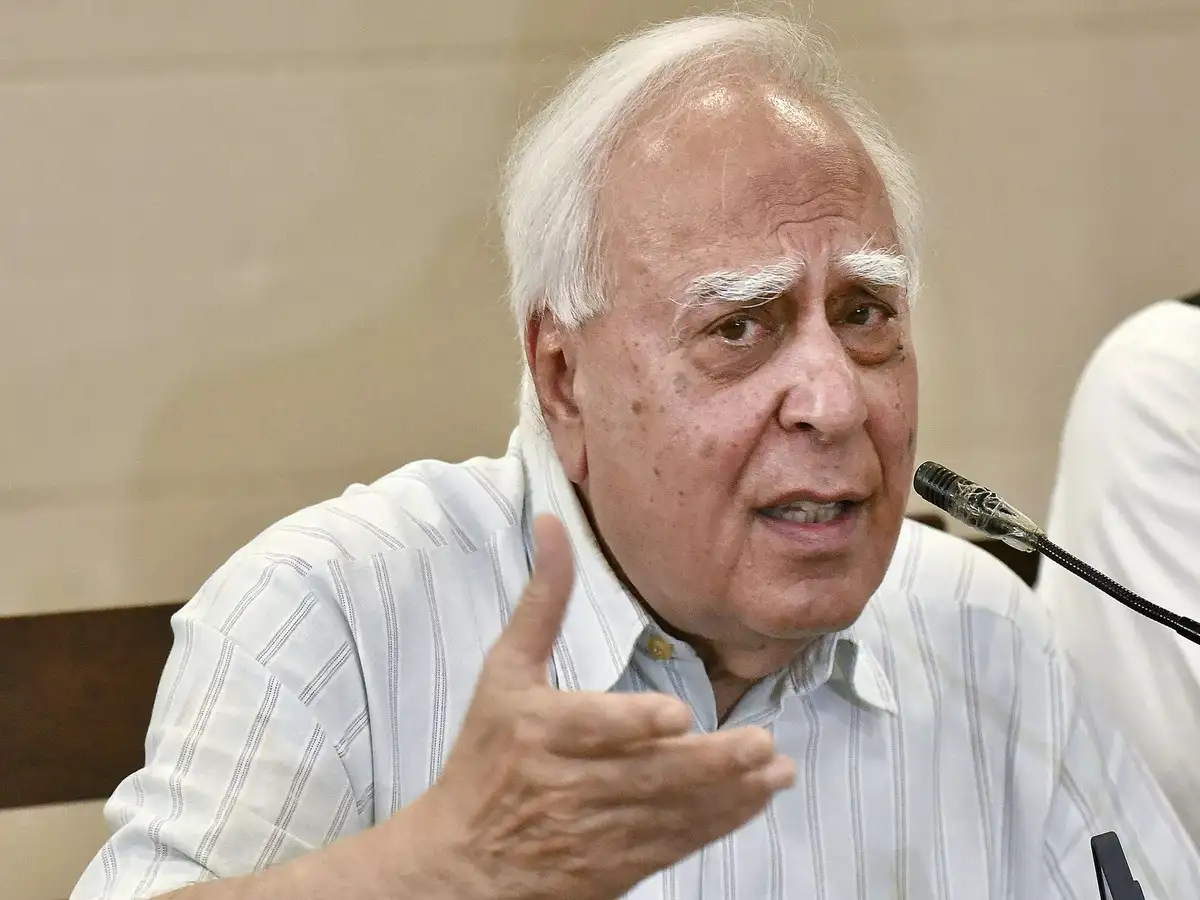
NEW DELHI: Senior advocate Kapil Sibal has sharply criticised the controversy over a revised NCERT Class 8 Social Science textbook, saying the dispute “wouldn’t have happened if judges had properly done their duties” and pointing to what he described as a “collapse of constitutional machinery in the country.”
Sibal made the remarks during a public discussion on constitutional morality and the role of the Supreme Court, arguing that while teaching students about corruption in society is important, the textbook’s selective focus on “corruption in the judiciary” unfairly targets the institution and risks giving young learners the impression that the justice system is fundamentally compromised.
According to him, the chapter went beyond discussing systemic challenges and instead skewed content in a way that made it seem like India’s courts were uniquely corrupt — despite corruption also existing in politics, bureaucracy and investigative agencies. He said this one-sided presentation could damage students’ trust in the legal system.
Sibal praised the Supreme Court’s firm response to the issue, including its decision to halt the textbook’s distribution and scrutinise how the controversial chapter was approved, stating that stronger judicial oversight might have prevented the crisis.
The broader textbook row began after NCERT included a section in its updated Class 8 book describing judicial corruption and massive case backlogs as major challenges confronting India’s courts. The Supreme Court took suo motu cognizance of this content, expressing concern over its potential impact on impressionable students and the institutional integrity of the judiciary.
The apex court’s actions — including banning the book’s circulation and directing officials to explain the inclusion of the chapter — triggered backlash from some educators and legal commentators, who argued that substantive issues facing the judiciary should not be off-limits for classroom discussion.
Sibal’s comments reflect that wider debate: about how and whether systemic problems in constitutional institutions should be presented to children, and whether institutions themselves should be open to critique without undermining public confidence.
According to him, the chapter went beyond discussing systemic challenges and instead skewed content in a way that made it seem like India’s courts were uniquely corrupt — despite corruption also existing in politics, bureaucracy and investigative agencies.