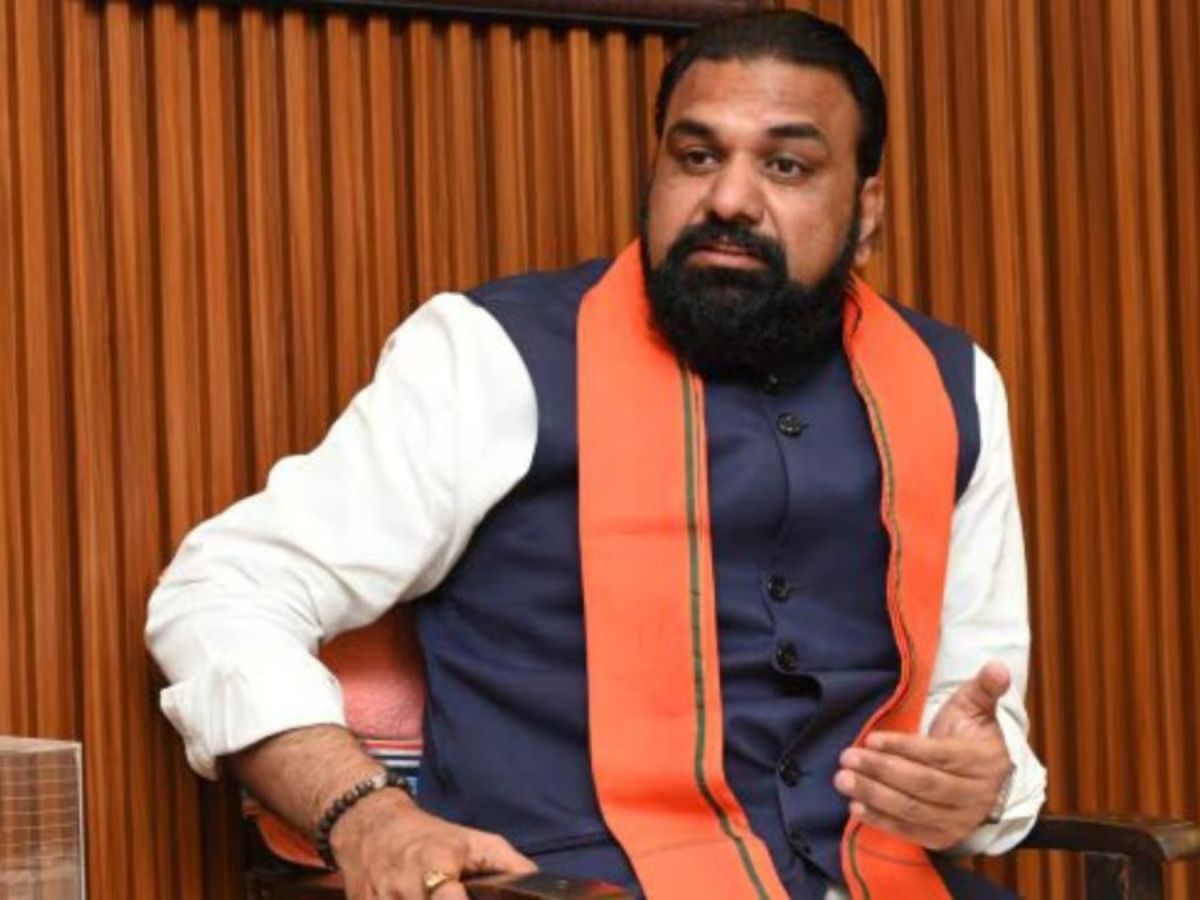
New Delhi: Samrat Choudhary was on Tuesday elected leader of the Bharatiya Janata Party legislature party in Bihar, formally positioning him as the next Chief Minister, with the oath expected on Wednesday. The development follows the exit of Nitish Kumar and marks the first time the BJP will hold the chief minister’s post in the state.
In a parallel arrangement aimed at maintaining coalition balance, senior leaders from the Janata Dal (United), Bijendra Yadav and Vijay Kumar Choudhary, are expected to be sworn in as Deputy Chief Ministers, signalling a calibrated power-sharing structure within the alliance.
The move was executed swiftly after the conclusion of Kharmaas, considered inauspicious in the Hindu calendar, with the party acting quickly to install its leadership and avoid any perception of political drift or instability.
The decision, while procedurally straightforward, represents a departure from the party’s recent pattern under Prime Minister Narendra Modi and Home Minister Amit Shah of springing surprise chief ministerial picks, as Choudhary’s name had been in sustained circulation for months.
The choice instead reflects a continuity approach, with little appetite for an unexpected or disruptive selection at a sensitive political juncture, a position that had been flagged by The Sunday Guardian in its report on Monday.
Coalition management appears to have been central to the decision. The BJP continues to depend on the support of the Janata Dal (United) to run the government, and Choudhary is seen as acceptable across key power centres within the ally, including figures such as JDU MP Sanjay Jha. The inclusion of two JD(U) leaders as deputy chief ministers reinforces this alignment and is aimed at ensuring legislative cohesion.
Electoral arithmetic also shaped the outcome. Choudhary, a prominent Kushwaha face, brings representation to a segment estimated at 3 to 5 percent of the electorate that has historically backed the JD(U)-BJP alliance. With Nitish Kumar’s exit raising the risk of fragmentation within the OBC vote base, the elevation is seen as an attempt to retain that support.
The shift also marks a change in leadership style. Nitish Kumar’s tenure was defined by an administrative model, while Choudhary’s profile is that of a political operator with cross-party experience, including a past association with the Rashtriya Janata Dal. As Deputy Chief Minister, he held the Home portfolio and, in recent months, positioned himself as a strong law-and-order figure, projecting administrative credibility alongside his organisational role.
His elevation was preceded by internal consultations and some resistance. Conversations with multiple BJP MLAs and party functionaries on Monday night, hours before the legislature party meeting in Patna, indicated that while the transition was expected to proceed smoothly, there were pockets of unease within the party over Choudhary’s candidature. Some level of internal management is understood to have been undertaken ahead of the formal selection.
The final decision followed the BJP’s centralised process, with the leadership choice conveyed through central observer Shivraj Singh Chouhan before being endorsed by the legislature party.
Despite reported reservations within sections of the party and the wider Rashtriya Swayamsevak Sangh ecosystem over Choudhary’s caste-centric political positioning, especially his perceived anti-forward approach, decisive backing from Amit Shah, reinforced by public signalling alongside Nitish Kumar in recent weeks, ensured alignment across ranks.
Currently an MLA from Tarapur, Choudhary transitioned from the Legislative Council to the Assembly after winning the 2025 Bihar elections. He served as Deputy Chief Minister from January 2024, initially handling the Finance portfolio before being assigned the Home Ministry in November 2025, a key power department often retained by the Chief Minister.
Choudhary was Bihar BJP president from March 2023 to July 2024 and has held ministerial roles across political formations. He began his career in the Rabri Devi government in 1999 as Minister for Metrology and Horticulture and was later elected MLA from Parbatta on a Rashtriya Janata Dal ticket. He subsequently joined the Janata Dal (United) and served as Urban Development and Housing Minister under Jitan Ram Manjhi in 2014–15, before moving to the BJP, where he was Panchayati Raj Minister in the Nitish Kumar-led NDA government and later Leader of the Opposition in the Legislative Council.