
Home » Symbols of Nemesis: Objects and Animals Associated with Her
Symbols of Nemesis: Objects and Animals Associated with Her
The symbols of Nemesis reveal the deeper layers of her divine nature like being fair, fierce, and unyielding.
Each one captures a piece of her essence as the goddess of justice, balance, and retribution.
From the scales and swords that embody moral judgment to the wheel and bridle that represent fate and restraint, her symbols tell the story of cosmic fairness. Understanding every Nemesis symbol helps interpret how ancient Greeks viewed justice as both divine and inevitable.
Even her sacred animals, like the griffin and swan, reflect her dual nature.
Together, they form a portrait of divine order that punishes excess and rewards humility. This easy-to-understand guide covers all the symbols of Nemesis and their meaning.
We’ll even cover the colors associated with the goddess.
Take a look…
Full List of the Symbols of Nemesis
Each of these Nemesis symbols carry centuries of myth and meaning, showing how her influence touched every part of Greek life.
Wheel of Fortune (Rota Fortunae)
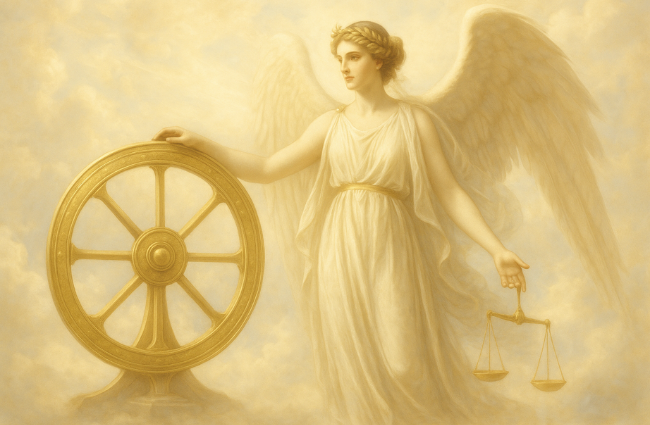
The Wheel of Fortune represents goddess Nemesis’ control over fate and destiny. It reminds mortals that fortune turns constantly, those at the top today may fall tomorrow.
She used this symbol to show that pride and excess would always be balanced by a turn of fate.
The Greeks viewed her wheel as both literal and metaphorical, symbolizing the inescapable motion of cosmic justice.
As the goddess of retribution, she ensured that arrogance, hubris, or unjust luck would eventually meet correction.
Artists often portrayed her standing beside a great wheel or turning it with calm authority, emphasizing her role in restoring balance to human affairs.
It stands as a timeless reminder that luck and justice are two sides of the same coin.
Scales (Balance)
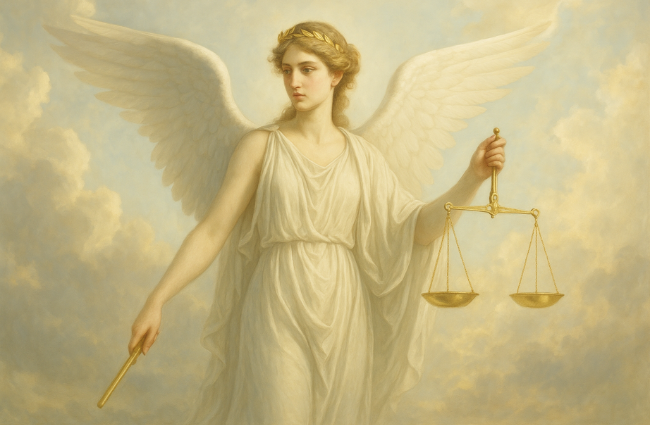
The scales of Nemesis symbolize her dedication to fairness and moral equilibrium. Like Themis, who judged divine law, the goddess used the scales to weigh the deeds of mortals, rewarding virtue and punishing excess.
Her version of justice was personal, not institutional. She didn’t condemn emotions or ambition but balanced them when they grew destructive.
In art, the scales appear in her hand alongside her sword or wheel, showing her dual nature of judgment and correction.
To the ancients, the scales were not just tools, they embodied cosmic law.
Naturally, this is one of the more well-known symbols of Goddess Nemesis.
Every act tipped the balance of the universe, and her duty was to restore it.
Through this, she became both feared and respected, embodying divine fairness that spared no one, not even kings.
Sword
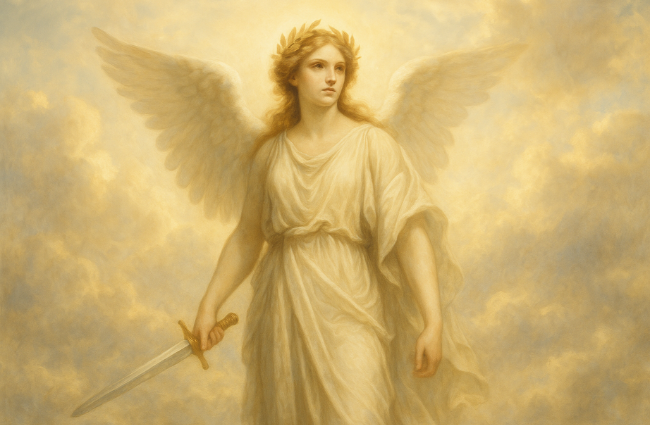
The sword of Nemesis symbolizes divine punishment and swift correction. While the scales weigh and measure, the sword executes the verdict.
It cuts through illusion and pride, reminding mortals that justice isn’t always gentle. Her sword represented both mercy and consequence, mercy, because it acted only when balance was broken; consequence, because it was final.
Artists depicted her sword unsheathed, gleaming with the certainty of divine purpose. It wasn’t about cruelty but moral precision.
She didn’t strike from anger but duty.
This is not a recognized Nemesis symbol, but the sword’s edge represented the line between fairness and arrogance, between deserved fortune and reckless excess.
To those who overstepped their limits, her blade was the great equalizer, restoring harmony through decisive, unflinching action.
Whip
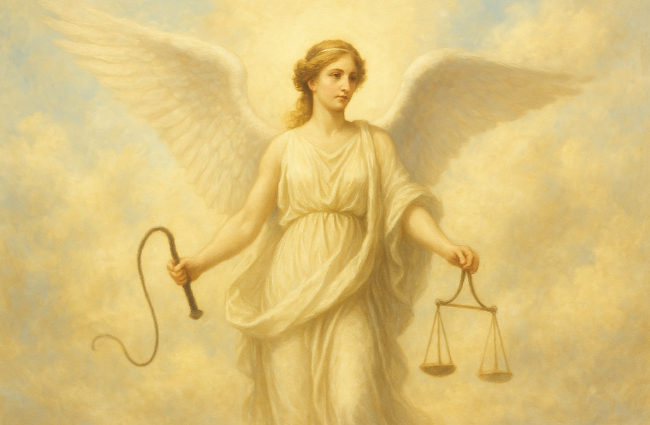
The whip is one of Nemesis’ more striking symbols, representing discipline, correction, and the painful lesson of humility.
Unlike the sword, which punishes finality, the whip teaches through endurance.
It’s the sting of consequence that follows arrogance or unchecked desire.
Ancient depictions show her holding it alongside her scales, implying that sometimes justice requires a sharp reminder rather than destruction.
The whip was not born of malice but necessity, it brought awareness, not vengeance. In a moral sense, it reflected the internal struggle humans face when confronting their own flaws.
Just as the whip leaves marks on the skin, her lessons leave marks on the soul, ensuring balance is restored through understanding and remorse.
Measuring Rod (Ruler or Tally Stick)
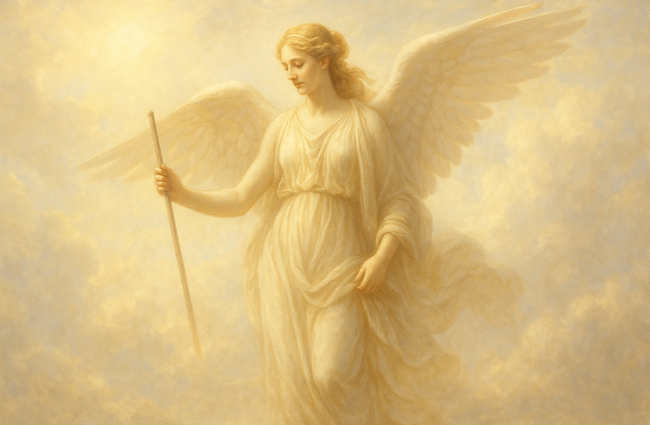
The measuring rod, also known as the ruler or tally stick, reflects her precision and fairness in judgment.
It’s one of the symbols of Nemesis that shows the exactness with which she assessed human behavior. Nothing escaped her calculation, every act, word, or intention was measured against divine balance.
In ancient art, the rod often appeared alongside her scales, reinforcing her role as the cosmic accountant of justice. Unlike the sword or whip, which enforce correction, the rod is symbolic of assessment.
It represents moral proportion, the idea that excess, greed, or pride can be quantified and brought back into harmony.
She wielded it not as a weapon but as a guide to the universal order, showing that justice is a measured process, not an impulsive act.
Bridle (Rein)
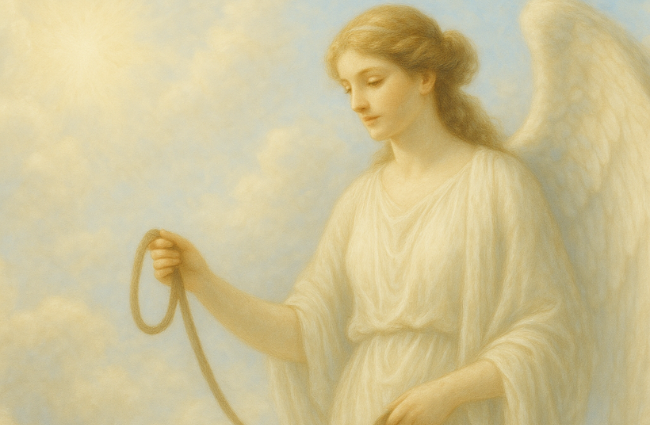
The bridle, or rein, represents restraint and self-control, two of her core principles. Just as a bridle reins in a powerful horse, the goddess used it to symbolize the need to control human impulses.
The Greeks saw her as a divine force that curbed arrogance and kept passion within moral bounds. The bridle’s presence in her imagery reminded mortals that unchecked freedom leads to downfall.
It wasn’t meant to suppress joy or ambition but to guide them responsibly.
In myths and art, Nemesis’ bridle often appeared beside her whip and sword, completing her tools of balance, discipline, restraint, and correction.
Together, they conveyed that justice doesn’t always arrive as punishment; sometimes, it appears as the invisible hand that holds us back before we go too far.
Chariot
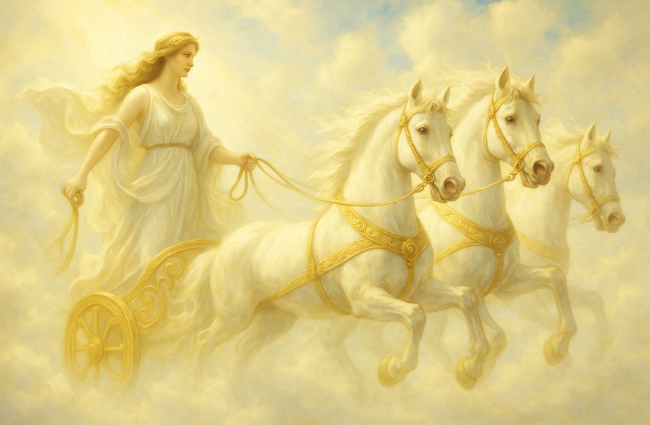
Nemesis’ chariot symbolizes the unstoppable motion of fate. It’s the vehicle through which justice moves, steady, certain, and impartial.
The chariot, often depicted with wings, carries her swiftly across realms to restore balance wherever arrogance blooms.
Its circular form mirrors the endless cycle of cause and effect, a concept deeply embedded in Greek thought. No matter how far one tries to run, this Nemesis symbol turns to meet them.
In ancient art, she often appears poised beside it, serene yet commanding.
The chariot isn’t a symbol of chaos but of divine rhythm, reminding mortals that every rise invites a fall if moderation is lost.
It embodies her role as the cosmic regulator who ensures all things return to their rightful place.
Apple Branch
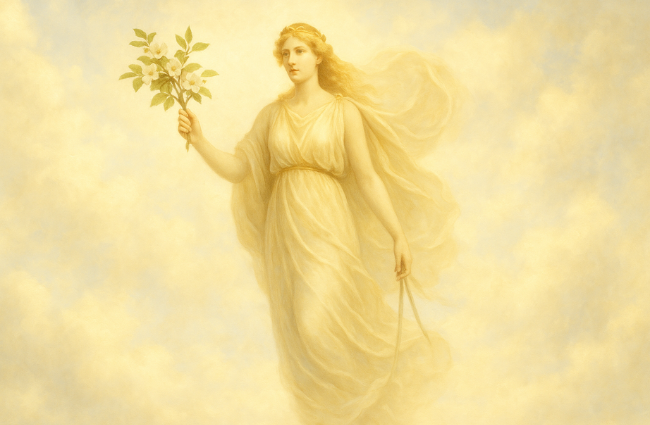
The apple branch, though a later and one of the lesser-known symbols of Nemesis, represents judgment, consequence, and divine fairness.
In Greek and Roman art, apples were often linked to beauty, temptation, and rivalry, themes she governed closely.
The branch she sometimes holds signifies measured justice, the idea that beauty and desire must be tempered by humility.
Some sources connect this imagery to the myth of the golden apple of Eris, another goddess of discord, suggesting Nemesis’ role in balancing the chaos that followed.
The apple branch thus becomes both a warning and a blessing, a reminder that not all gifts are without cost.
Through it, the goddess of retribution teaches that justice can appear sweet but always carries the weight of moral truth behind its charm.
Nemesis Statue (Winged Form)
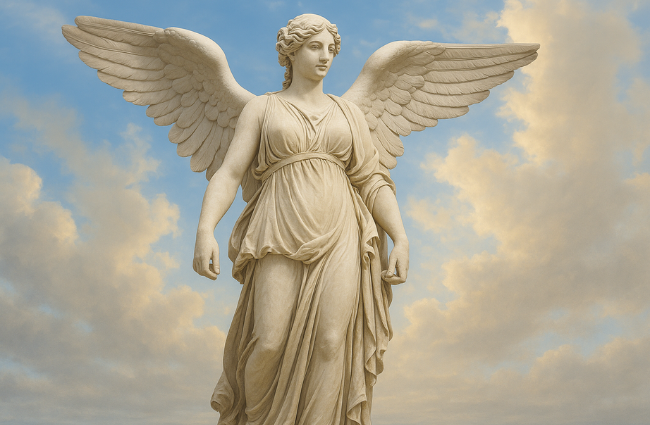
In art and sculpture, she often appears with wings, symbolizing the swiftness and inevitability of divine justice.
The wings make her appear almost angelic, yet she isn’t a messenger, she’s an executor of fate.They express how quickly fortune can change and how impossible it is to outrun destiny.
At her most famous temple in Rhamnous, statues showed her as a calm, regal figure with wings folded behind her, graceful yet powerful.
The wings also separate her from mortal limitations, proving that her reach extends beyond human time and space.
Whether soaring or standing still, her winged form represents balance in motion: justice that moves silently, swiftly, and without warning, always descending where arrogance dares to rise.
Veil
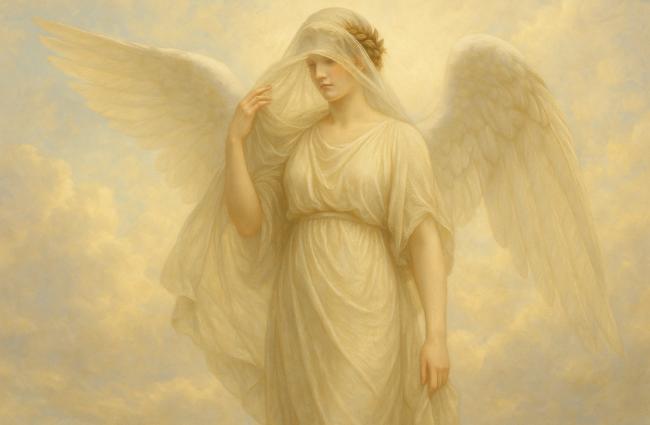
The veil of Nemesis represents impartiality and hidden judgment.
It conceals her expression, reminding mortals that divine justice sees without bias and acts without emotion.
The Greeks believed her veil signified the unseen forces of fate, those subtle, invisible powers that correct imbalance without warning.
It also connects her to other veiled goddesses of mystery, such as Isis, suggesting that justice operates quietly, behind the scenes.
When artists depicted her with a half-drawn veil, it became a Nemesis symbol that showed the gradual unveiling of truth or consequence.
The veil isn’t meant to distance her from humanity but to show that her purpose transcends personal feeling. Justice, in her hands, is sacred and objective, hidden until the moment it must be revealed.
Temple at Rhamnous
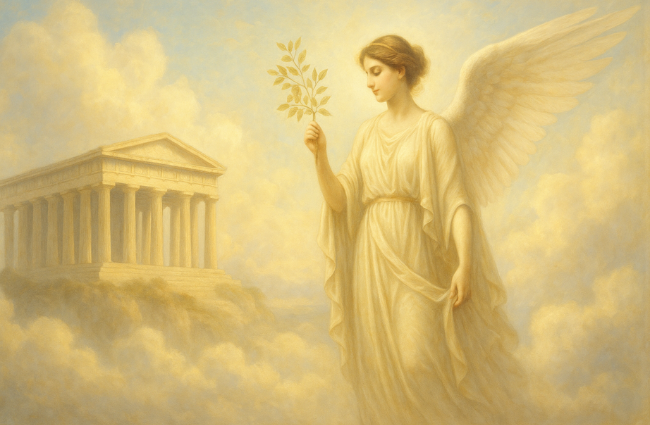
The Temple of Nemesis at Rhamnous in Attica was her most sacred site and an enduring symbol of divine retribution.
It stood as a physical reminder that no one, neither mortal nor god, could escape accountability. Built in her honor, the temple housed statues and reliefs showing her holding a wheel, scales, and sometimes a measuring rod.
Pilgrims came to pray to Nemesis for justice or forgiveness, often leaving offerings symbolizing humility.
The temple’s isolation overlooking the sea made it a place of reflection and awe. Many believed she guarded the land from foreign arrogance and divine hubris. Temples dedicated to her were often decorated with other symbols of Nemesis, reminding worshippers of the power of fate.
This temple’s enduring ruins still capture her essence… solemn, powerful, and eternally watchful, a monument to balance between human ambition and divine order.
Night (Nyx)
Nemesis’ association with Night (Nyx) connects her to the shadowy, mysterious aspects of divine justice.
In some myths, she is even called the daughter of Nyx, emphasizing that retribution often works unseen, emerging quietly when least expected.
Night symbolizes the hidden forces that balance light and darkness, truth and deceit, pride and humility.
For Nemesis, night is not a time of evil but of clarity. Under the cover of darkness, illusions fade, and the truth reveals itself.
The Greeks saw this connection as poetic: justice may sleep, but it never dies.
Like the night sky watching over the world, the goddess observes silently, patient and unblinking. When morning comes, her balance has been restored, and harmony quietly returns to the mortal realm.
Sacred Animal Symbols Associated with Nemesis
Understanding Nemesis’s sacred animals helps uncover the spiritual meaning behind her myths.
Here are the ones that were associated with the goddess…
Griffin
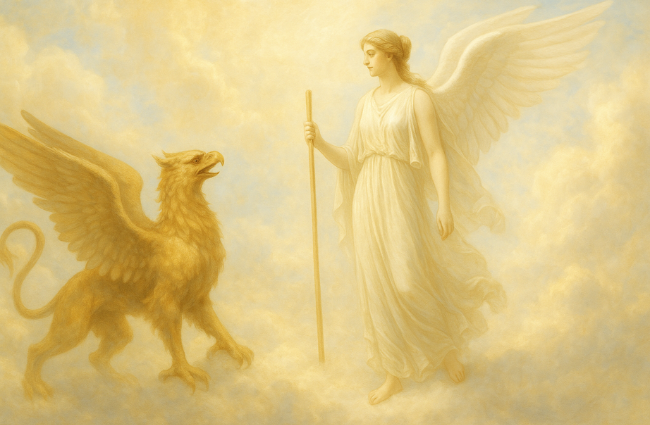
The griffin, a creature with the body of a lion and the head and wings of an eagle, was one of her sacred animals.
It symbolized vigilance, Nemesis’s divine power, and the watchful nature of retribution.In myth, the griffin guarded treasures and sacred places, just as she guarded moral balance. Its fierce, noble nature mirrored her own, majestic yet terrifying, noble yet relentless.
The griffin’s dual form connected heaven and earth, showing her reach across both mortal and divine realms.
Temples sometimes featured her standing beside this sacred animal of Nemesis, reinforcing her role as the eternal watcher who sees all transgressions. This creature embodied her message perfectly: that nothing escapes divine sight, and justice always finds its way to those who overstep.
Goose or Swan
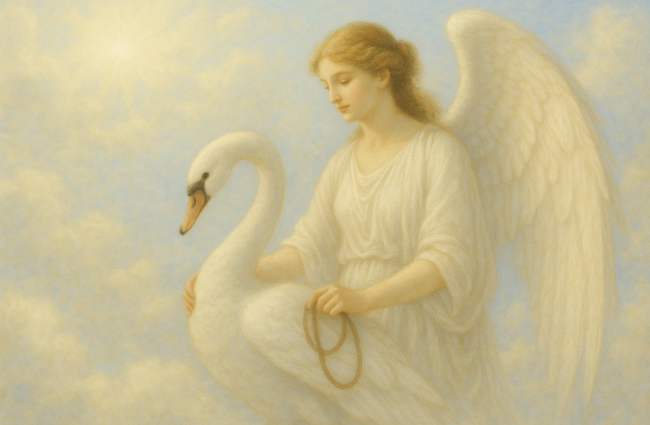
The goose or swan appears in some depictions of the goddess, connecting her with grace, beauty, and divine order.
These birds symbolized the balance between serenity and vigilance, qualities she embodied. Some myths suggest she could transform into a swan, a symbol of purity and elegance, yet also one that conceals inner strength.
The Greeks admired the swan’s calm surface and unseen power beneath the water, much like her silent but inevitable justice.
The association also links her to the goddess Leda, who bore Helen of Troy, a figure whose fate reflected her theme of beauty, pride, and consequence.
This sacred animal symbol of Goddess Nemesis thus reminds us that not all retribution is violent; sometimes, it glides in quietly, wrapped in grace and inevitability.
Ram
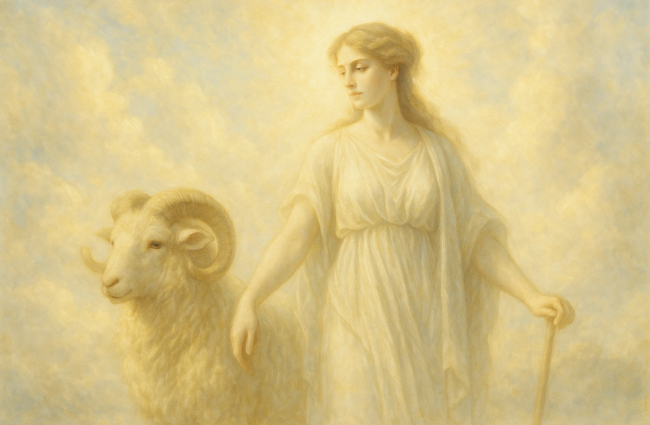
The ram is a lesser-known but powerful symbol of Nemesis, representing strength, determination, and the inevitability of consequence.
In Greek art and local cults, the ram’s horns symbolized both power and sacrifice, fitting for a goddess who enforced divine balance.
She didn’t oppose strength; she punished its misuse. The ram’s charge mirrored the unstoppable momentum of retribution once set in motion.
Some scholars link her ram symbolism to festivals in Rhamnous, where offerings of rams or their imagery honored her as a force that could not be swayed by prayer or pride.
The animal embodied her nature perfectly, resolute, fierce, and unmoved by pleading. Just as the ram pushes forward without hesitation, the goddess drives justice to completion, ensuring that moral order is restored.
Related: Nemesis Friends & Enemies: All Her Relationships Explained
Colors Associated with Nemesis
The color most often associated with the Greek goddess Nemesis is deep red, symbolizing justice, power, and divine retribution.
This hue reflects the passion and strength behind her role as the balancer of fate, intense, purposeful, and unwavering.
Red also represents the moral fire that burns away arrogance and restores equilibrium, aligning perfectly with Nemesis’s duty to punish hubris and reward humility.
In ancient art, she sometimes appeared in darker tones like crimson or burgundy, showing her connection to consequence and destiny rather than chaos or wrath.
Some later depictions added gold and silver accents, representing her divine authority and impartiality. These colors highlighted her as both feared and revered, a celestial force maintaining harmony between gods and mortals.
Understanding Nemesis’s favorite colors gives insight into her personality as the goddess of balance and consequence.
The palette of red, gold, and shadowed tones captures her essence: beauty wrapped in justice, strength cloaked in grace, and balance restored through divine will.
Conclusion to the Symbols of Nemesis
The symbols of Nemesis weave a powerful message about balance, morality, and the limits of human pride.
Each object and creature tied to her, from the scales and sword to the griffin and swan, speaks of justice that cannot be bribed, delayed, or avoided.
They remind us that fortune and fate are ever turning, and that arrogance invites its own undoing. She didn’t punish for pleasure; she restored order where chaos grew.
That’s what every Nemesis symbol represents.
Her whip, wheel, and bridle are not tools of cruelty but instruments of correction, guiding mortals back toward humility and awareness.
Even her wings and veil show the quiet, impartial side of divine fairness… swift, unseen, and absolute. Through the symbols of Nemesis, she continues to represent an eternal truth: no action escapes the balance of justice, and harmony is always restored in time.
2024 All rights reserved.