Beliefs and time shaped receptivity#
According to Bioengineer.org, several women felt that their current religious or cultural practices conflicted with meditation. Participants also identified a lack of time, uncertainty about how to begin and concerns about whether the practice fit their culture as obstacles to making it part of a routine.bioengineer.org 1 source for this line, starting with Bioengineer.org
Bioengineer.org reports that cultural and religious beliefs often guide health decisions in Hispanic and Latinx communities. The interviews examined preferences for care among older Latina women, a group for whom the report says relatively little is known about perceived sleep-care needs.bioengineer.org 1 source for this line, starting with Bioengineer.org
Meditation uses techniques to train attention and awareness, according to Wikipedia. In the interviews, the women recognized meditation-based practices as a possible option that does not rely on medication, Bioengineer.org reports. The account does not give a participant count or report a test of meditation's effects on sleep.bioengineer.org+1 2 sources for this line, starting with Bioengineer.org
A separate trial compared movement classes#
A separate randomized trial led by Evelyn Arana-Chicas of Rutgers Cancer Institute studied sleep quality in older male cancer survivors, Medical Xpress reports. Participants were at least 55, had completed primary cancer treatment and had clinically significant fatigue. They were assigned to tai chi qigong, an exercise class or usual care.medicalxpress.com 1 source for this line, starting with Medical Xpress
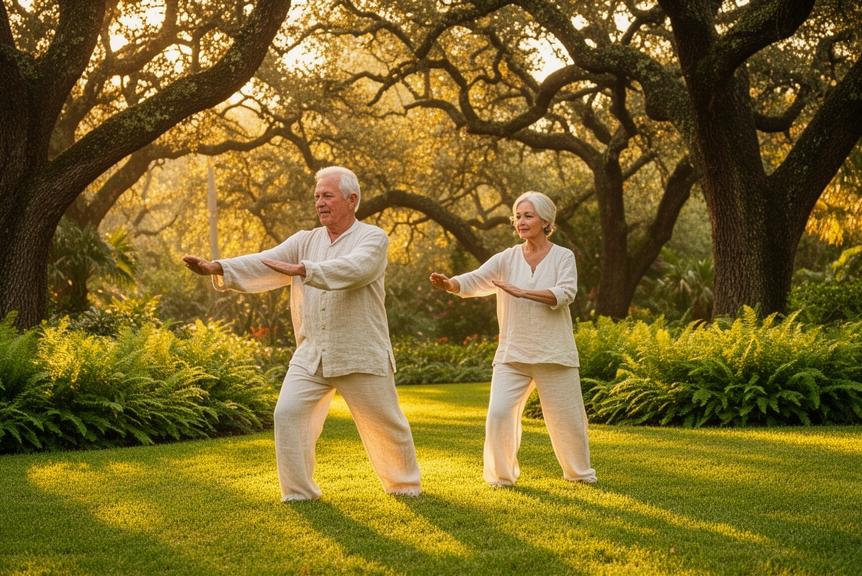
Tai chi and qigong combine gentle postures, breathing and meditation, according to Medical Xpress. News-Medical.Net reports that the comparison class used stretching and repetitive exercises matched to the movement practice in intensity, posture and muscle activation. Both classes met twice weekly for an hour over 12 weeks.medicalxpress.com+1 2 sources for this line, starting with Medical Xpress
Medical Xpress reports that, at 12 months, questionnaire results indicated clinical remission of sleep disturbance for 62% of the tai chi qigong group, 47% in the exercise group and 43% receiving usual care. The differences were not statistically significant.medicalxpress.com 1 source for this line, starting with Medical Xpress