
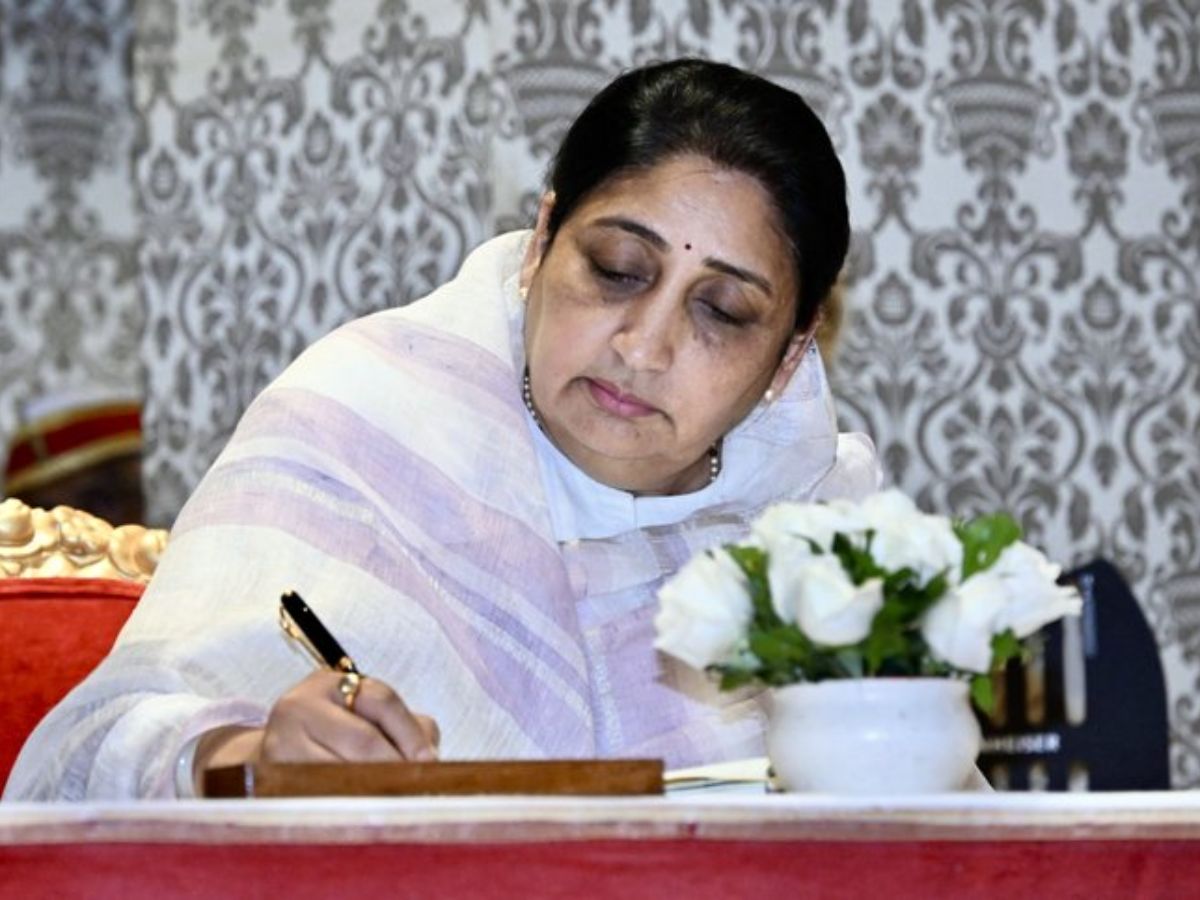
The newly announced list of national office bearers of the Nationalist Congress Party has triggered widespread discussion, surprise and visible unease within party circles, with several senior leaders and long-time workers questioning the party’s new organisational direction and concentration of authority.
A document dated 29th April 2026, addressed to the Election Commission of India and titled “List of National Office Bearers along with Work Allocation”, shows the appointment of 13 national office bearers in the party’s new organisational structure.
According to the document, Sunetra Ajit Pawar has been appointed National President, while Parth Ajit Pawar has been made General Secretary with responsibility for party coordination. Jay Ajit Pawar has been appointed National Secretary with responsibilities linked to the party’s disciplinary committee and treasury work.
The list also includes Subodh Mohite as General Secretary, Avinash Adik as National Secretary, Sana Malik as National Secretary, Dhiraj Sharma as National President (Youth), Sanjay Prajapati as National Secretary, Rana Ranvir Singh as National Secretary, Dr Raman Preet Singh as National Secretary, Dhananjay Sharma as National Secretary and Dr Abhishek V. Bokey as National Secretary.
The appointments quickly became the subject of intense political discussion after several senior leaders previously associated with important organisational responsibilities were not included in the new structure.
Among those excluded are Praful Patel, Sunil Tatkare, Chhagan Bhujbal, Hasan Mushrif, Dilip Walse Patil, Brijmohan Shrivastav, Advocate Jalaludeen, N.A. Kutty and Y.P. Trivedi, according to party background notes circulating within political circles.
Brijmohan Shrivastav has long been associated with the NCP and is widely regarded within party circles as a leader who remained committed to the organisation through several political and organisational challenges over the years.
The exclusion of former Union minister and senior Rajya Sabha member Praful Patel has particularly attracted attention within the party. Patel had long been associated with the party’s national organisational structure and was considered one of Ajit Pawar’s closest political associates during the party split. Political observers say his absence from the newly announced structure has raised questions among party workers regarding the future role of senior leadership within the organisation.
Similarly, Sunil Tatkare, regarded as one of the party’s prominent national faces and an elected Lok Sabha MP from Maharashtra, was also not retained in his earlier organisational responsibility as National General Secretary, a role he had reportedly held since 2022.
The appointments also led to allegations from some party insiders and political observers that key organisational positions were increasingly being concentrated within a limited leadership circle linked to the Pawar family. Critics within party circles claimed that multiple positions in the new structure had gone to members of the extended family and their close associates, though the familial relationships mentioned in internal background notes were not detailed in the official document itself.
At the same time, the elevation of relatively lesser-known organisational faces such as Dhananjay Sharma, Rana Ranvir Singh, Dr Raman Preet Singh and Dr Abhishek V. Bokey became another point of discussion among party workers in several states.
However, amid the controversy, Sunetra Ajit Pawar issued a clarification on social media stating that the list of office bearers circulating in the media contained a “clerical mistake” and would be corrected soon. The clarification added another dimension to the ongoing debate within party circles regarding the appointments and the structure of the new organisational setup.
Soon after the clarification, one senior leader whose name does not appear in the newly announced organisational structure reportedly remarked that no formal communication or clarification regarding any clerical error had been conveyed to several leaders excluded from the list. The response further fuelled speculation and uncertainty within sections of the party over the status and authenticity of the circulated appointments list.
Party workers and senior functionaries are now openly discussing whether organisational experience, seniority and long-standing political contribution are gradually being sidelined in favour of a more centralised leadership structure.
Political observers believe the developments may deepen internal dissatisfaction unless the party leadership provides greater clarity regarding the criteria and strategy behind the new appointments.