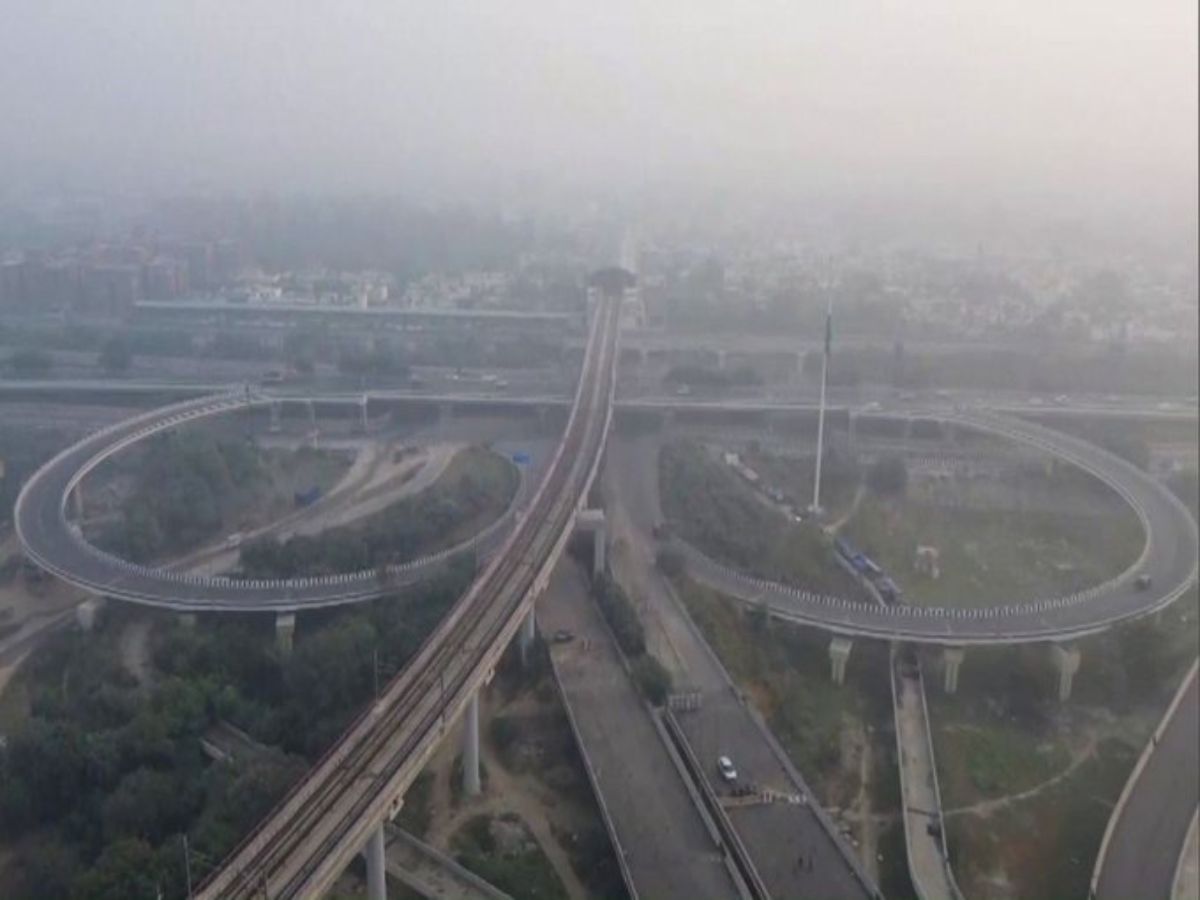
The government revoked GRAP Stage 3 restrictions on Wednesday, even though Delhi’s air quality remained in the ‘very poor’ category. The 24-hour average AQI stood at 327 at 4 pm, marking the Capital’s 21st day of toxic air. The Commission for Air Quality Management (CAQM) allowed construction work and older diesel vehicles back on the road.
This move came at a time when public frustration over hazardous air levels has been rising sharply. It also came just a week after the Supreme Court urged the panel to take “proactive action” and implement tougher pollution controls.
AQI Improves Slightly, But Not Enough
Delhi recorded a marginal improvement compared to earlier this week. Tuesday’s AQI was 353, and Monday’s was 382. Still, the current streak of AQI above 300 is now tied for the fifth-longest since 2015.
The Central Pollution Control Board (CPCB) categorises AQI levels between 301 and 400 as ‘very poor’. Officials and lawyers in the Supreme Court — including the Chief Justice — mentioned they experienced breathing discomfort due to the smog. Experts questioned why GRAP 3 was withdrawn despite forecasts showing unchanged pollution levels in the coming days.
Experts Say the Decision Was Premature
CAQM’s order did not offer a detailed explanation. It only stated that air quality had “been improving since the last three days” and that forecasts showed air will stay “very poor”.
IIT Delhi pollution expert Mukesh Khare criticised the decision. “We know temperatures are dipping and the AQI keeps fluctuating at this time of the year… We cannot normalise slightly lower values and this decision feels illogical,” he said.
Residents’ groups echoed this concern. The East Delhi Federation of RWAs said existing stages are “ineffective” and demanded even tougher measures, including restricting public movement and free public transport.
Restrictions Rolled Back Across NCR
With GRAP Stage 3 lifted:
- Construction, demolition, mining and related activities can resume.
- BS-III petrol and BS-IV diesel vehicles can operate again.
- Schools can return to full physical classes.
- Offices no longer need 50% staff attendance or work-from-home rules.
These relaxations came just days after the Delhi government implemented them under a revised GRAP framework that had shifted several restrictions to lower thresholds.
Revised GRAP vs Ground Reality
The Supreme Court had endorsed stronger, earlier interventions, saying “any proactive action in reducing air pollution would always be welcome.” However, Wednesday’s rollback indicates a mismatch between policy intentions and on-ground execution.
Meteorologists said the slight AQI improvement happened due to better wind speeds and changing wind direction, not because of stronger action.
Data Gaps Raise Bigger Concerns
Beyond the policy debate, Delhi’s air-monitoring system itself is under scrutiny. Several stations went offline this season during peak pollution hours. This pattern raises concerns that the actual air quality could be worse than reported.
A major outage on November 10 left most stations blank for hours. Experts say such gaps undermine public trust and make policy-making unreliable.
Centre Focuses on Greening NCR
Even as curbs were lifted, Union Environment Minister Bhupender Yadav chaired a meeting to discuss a five-year greening plan for NCR. States must now prepare micro-level plantation plans to expand green cover in forest areas, degraded zones and river catchments.