When Symbols Are Lost: The Soul’s Struggle for Harmony
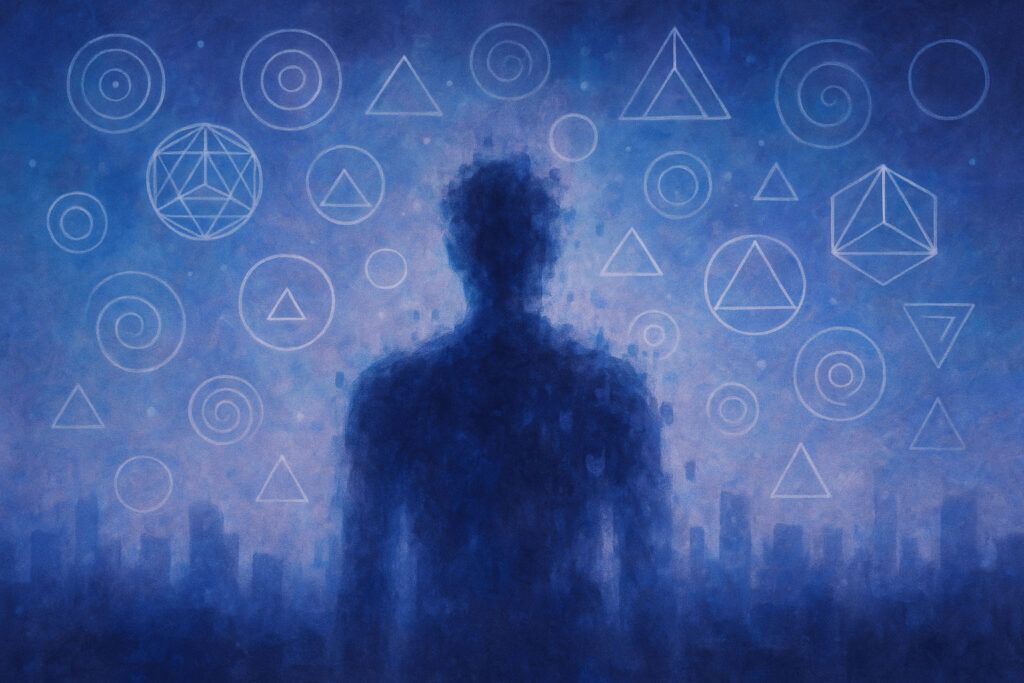
In centuries past, symbols were once held in sacred trust because they carry the power to shape the inner life of people and the culture they live in. Their psyches’, their perceptions’, and their sense of what is real and meaningful.
The Sacred Role of Storytellers
Shamans, priests, poets, and sages were the keepers of symbols. Acting as guardians of a deeper language that shaped how we lived, what we loved, and who we became. They told stories to initiate their societies, to pass on wisdom in forms the soul could absorb. They used image, myth, and ritual not to entertain, but to guide the inner life. To teach the difference between right and wrong, to offer hope in grief, to shepherd the soul through transformation and the great mysteries of life and death.
In the West, the symbolism of the Bible shaped consciousness for centuries. Later, during the Renaissance, playwrights like Shakespeare and Marlowe became the architects of the human soul. When England faced the spiritual and political fractures of the Reformation, Shakespeare wrote As You Like It; a symbolic journey from the court’s corruption to the healing harmony of the forest. Through exile, disguise, and reconciliation, As You Like It offered his country a map back to wholeness and societal harmony.
The Collapse of Meaning
But today, with the proliferation of mass media, the rise of consumer capitalism that monetises psychic forces without care, and the loss of elders or guides to interpret meaning, that symbolic world has collapsed resulting in psychic fragmentation and societal disharmony.
What Counts as a Symbol?
To clarify: what constitutes a symbol is broad. Symbols are not just icons and logos. They can be anything that holds a deeper meaning than what it appears to be. Songs, stories, art, and architectural choices can be intentionally created as symbolic, pointing to deeper truths that invite reflection and contemplation. But you might also find symbolic meaning in a beautiful sunset. Symbols activate emotions, memories, and unconscious material, shaping how we think, feel, and make sense of the world.
This is why symbols are powerful.
They help structure our perception of reality, organise emotional life, and shape the way we interpret experience.
When Symbols Harm Instead of Heal
Cognitive linguist George Lakoff has shown that our brains rely on metaphor and symbolic association to process abstract concepts. This means our everyday thinking is symbolically patterned, whether we realise it or not.
But when symbols are encountered passively or without context; through media, entertainment, or unstructured spiritual exposure, they can bypass reflection and influence us in destabilising ways.
For example, repeatedly watching soap operas filled with hyper-dramatised interpersonal conflict; betrayals, shouting matches, emotional manipulation can slowly begin to normalise dysfunction. Over time, these symbolic portrayals can reshape a viewer’s expectations of relationships, subtly reinforcing the idea that chaos, mistrust, and emotional volatility are not only common but somehow necessary for love to feel real.
Further trauma researcher Bessel van der Kolk has demonstrated how emotionally charged imagery, especially when unprocessed, can imprint deeply into the nervous system, affecting behaviour, mood, and memory. Instead of guiding the soul toward integration, symbols in such cases can trigger inner chaos, fixation, fragmentation, dissociation, and a deepening loss of meaning in life.
Symbolic Overload and the Fragmented Psyche
In today’s culture, this presents enormous spiritual and psychic risks, both to the individual and to society.
Unlike our ancestors, who encountered symbols in structured, meaningful contexts like rituals, sacred stories and seasonal festivals, we are now exposed to an overwhelming volume of symbolic material every day.
Images, narratives, archetypes, and emotionally charged content come at us constantly and without structure, delivered through advertising, social media, streaming platforms, and algorithmic feeds. The symbols we absorb are no longer woven into a shared cosmology designed to keep us functioning as a harmonious society; they arrive in fragments, divorced from tradition, and often designed to provoke rather than guide.
For the individual, this creates a symbolic overload. Archetypal energies are still at work; love, power, betrayal, transcendence but without any structure or guidance to help integrate them, they overwhelm the psyche. Emotional confusion, anxiety, and identity diffusion often follow. Symbols that once offered healing now haunt. The inner world fragments under the pressure of meaning without containment.
For society, the collapse of shared symbolic literacy leads to a crisis of coherence. Without common myths, we lose the ability to make collective sense of reality. Communities fracture into isolated narratives, each shaped more by algorithmic feedback loops than by lived wisdom. Consumer capitalism fills the vacuum with artificial symbols, brands, trends, influencers that mimic the gravity of sacred archetypes but lack the soul. These manufactured symbols seduce, polarise, and disorient. They do not initiate us into deeper truth and harmony; they keep us trapped in cycles of desire, comparison, and distraction.
Not Less Culture, But Deeper Engagement
What we are facing is not just an overload of information, but a breakdown in the symbolic order. And when a culture loses the ability to read its symbols, it loses its map, its meaning, and its memory of the divine resulting in a society haunted by spiritual amnesia where lives feel hollow, meaning feels manufactured, and the sacred becomes unreachable in the noise of the everyday.
This is not a call to reject modern life. I’m not advocating for censorship or a return to an age where the only acceptable stories were mystery plays or sacred texts. Nor am I suggesting we abandon social media, film, or digital art, which at their best can still elevate, connect, and awaken. The issue is not the medium, but our relationship to it. What we need is not less culture, but deeper engagement.
What we need is symbolic literacy.
The Alchemy of Awareness
Symbolic literacy is the capacity to recognise when something functions as a symbol and to know how to reflect on, engage with, and integrate its effects. It means understanding that the images and stories we consume have the power to shape our inner lives, and choosing not to remain passive in the face of that influence.
For example, imagine sitting down to watch a true crime documentary. A passive viewer might absorb it purely for entertainment or curiosity, feeling disturbed, fascinated, or emotionally charged, but doing nothing with those reactions. The result is that emotionally potent material images of violence, betrayal, or fear enters the psyche unfiltered, where it can linger, distort perception, and subtly influence one’s beliefs about human nature, safety, and trust, all without conscious awareness.
A symbolically literate viewer, on the other hand, might ask: What archetypes are being activated here? What fears, beliefs, or desires are stirred in me? What emotional residue am I carrying after this? Through reflection, even a dark or disturbing narrative can become a site of self-understanding, shadow integration, or moral discernment resulting in the alchemy of reaction into reflection—where even darkness becomes material for depth, healing, and the return of coherence and harmony to the soul.
This doesn’t mean that every viewing of a TV show needs to be followed by a deep reflection, especially when you’re simply unwinding after a long day. Entertainment has its place, and symbolic literacy isn’t about over-analyzing or moralizing pleasure. But at the very least, it means staying aware of what you’re letting into your psyche. It means noticing when something affects you more than expected, when an image lingers, or when a story begins to shape how you feel about yourself or the world. Even small acts of reflection can turn unconscious absorption into conscious relationship; restoring agency, meaning, and inner balance.
Symbolic literacy establishes your sovereignty over your psyche. It turns consumption into contemplation, and entertainment into initiation.
The Mystical Power of Symbols
For the spiritual seeker, symbolic literacy is not optional. It is initiation and part of the path of orientating the soul to the sacred. It is one of the oldest and most potent technologies of the soul, used for millennia to access higher wisdom, awaken inner vision, and commune with the divine. Across mystical traditions, contemplating symbols enable the practitioner to cross spiritual thresholds. To engage a sacred image, a mythic story, or an archetype was to step into a living dialogue with the unseen. In this light, symbolic literacy becomes a form of spiritual attunement; training the imagination not to escape reality, but to perceive it more deeply. It allows the soul to orient not just around pleasure or achievement, but around meaning, mystery, and sacred harmonious order.
But symbolic literacy also extends far beyond personal well-being and spiritual growth.
The Soul of Society and Harmonious Cultures
If a society wants to re-orient itself toward cohesion, harmony, and sacred balance, it must recover the symbolic frameworks that support those ideals. Cultures are held together by the stories they tell and the symbols they share. Without them, there can be no unity, only dissonance. This becomes increasingly evident as societies grow more multicultural through immigration and shifting social demographics. We have seen that tensions between communities in diverse societies cannot be resolved purely through policy or tolerance, they require a shared symbolic understanding of what it means to live together in harmony. A purely secular framework, without any common symbolic threads, struggles to hold a culture together. Without shared meaning, coexistence becomes fragile and true integration remains out of reach.
This was understood by thinkers like Plato, who believed that beauty, harmony, and proportion in the arts were not merely aesthetic ideals but moral and metaphysical forces. Art that mirrored cosmic order helped shape just souls and in turn, just cities. The philosopher-magus Marsilio Ficino revived these ideas in Renaissance Florence, using music, poetry, astrology, and myth as symbolic practices to elevate the soul toward the divine. For Ficino, engaging with beautiful symbols was not escapism it was medicine. Symbolic magic was a means of tuning the soul to the deeper harmonies of the cosmos, resulting in greater inner peace and a more ordered, unified society.
Reawakening Symbolic Sight for a Harmonious Future
To become symbolically literate is not just a way to understand more deeply, it is a way to reconnect with the soul and let the sacred speak again. It is a return to a way of seeing in which nothing is meaningless, and everything is alive with messages that can uplift, align, and inspire. In a world flooded with unstructured symbols that fragment the soul, this is not a luxury it is a spiritual imperative.
This work does not begin in grand gestures. It begins quietly: in the symbols that stay with you after a film, in the dreams you hesitate to dismiss, in the moments of wonder or unease that ask for your attention. To notice is to begin. To reflect is to reclaim. Every small act of symbolic awareness restores a thread between soul and world, between the self and something greater that leads to inner and outer harmony.
But this is not only inner work to be undertaken solo. If we are to live together with any hope of peace, we must also recover the shared symbols of harmony those cultural and spiritual threads that can hold us through change, difference, and crisis. Without them, we remain fragmented. With them, we begin to remember how to live in relationship: to one another, to the sacred, and to the Earth.
We may no longer live in temples or gather around sacred fires, but the symbols still surround us. The divine has not stopped speaking it is our capacity to listen that must be remembered. Symbolic literacy is how we tune our inner ear, how we restore coherence to the psyche and harmony to society, and how we begin to reweave the torn fabric of meaning in our time.
Subscribe to the Newsletter


Leave a Reply