
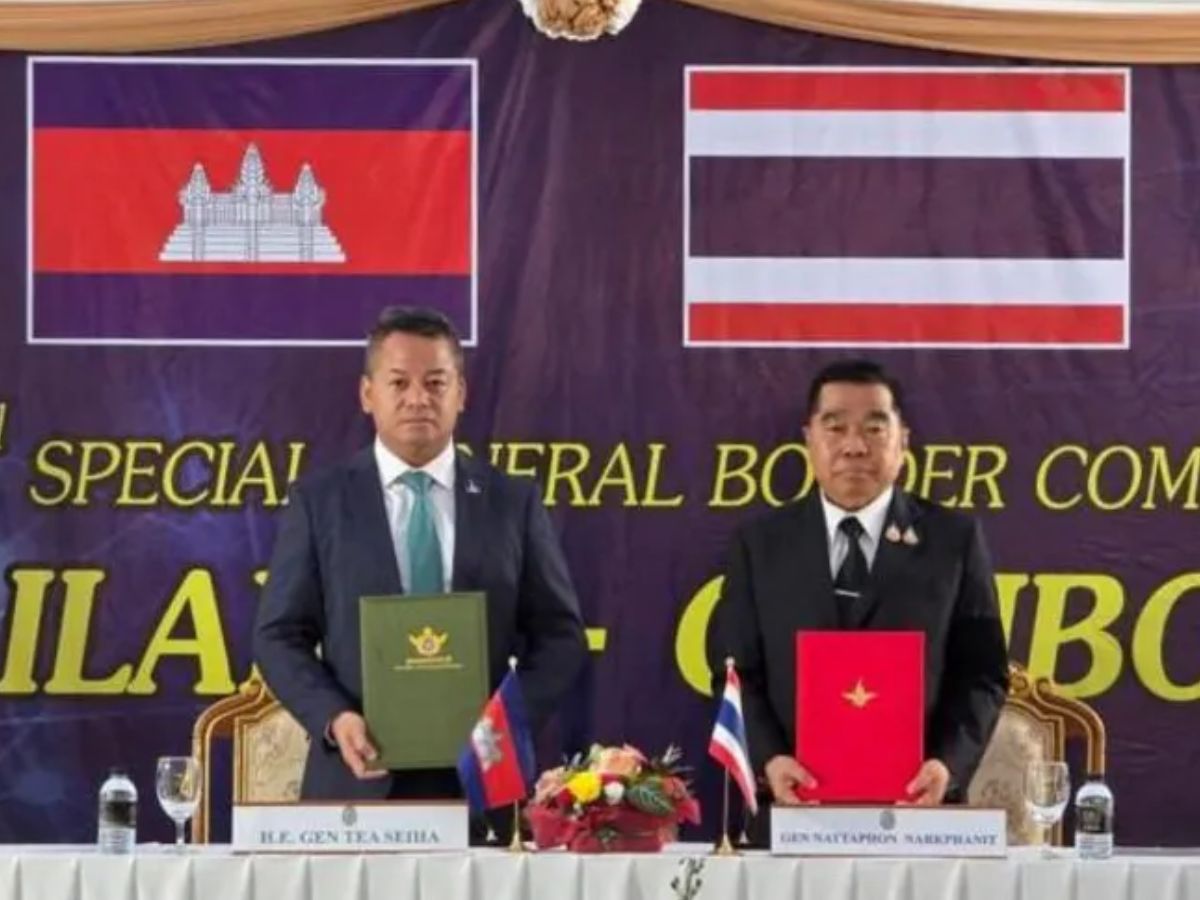
Thailand and Cambodia have agreed to an immediate ceasefire, according to a joint statement released by the defence ministers of both countries on Saturday.
Under the agreement, both sides will stop moving their troops. Civilians who were forced to flee border areas will now be allowed to return home. This brings a pause to weeks of heavy fighting that has killed at least 41 people and forced nearly one million people to leave their homes.
The ceasefire began at noon local time (05:00 GMT).
Cambodian Soldiers to Be Released After 72 Hours
The joint statement said that if the ceasefire holds for 72 hours, Thailand will release 18 Cambodian soldiers who are currently in its custody. This move is expected to help rebuild trust between the two sides.
Talks Lead to Breakthrough
The agreement came after Thai and Cambodian officials held several days of discussions to try to end the latest wave of violence along their shared border.
The joint statement described the ceasefire as a process of “de-escalation”. It includes a halt to “attacks on civilians, civilian objects and infrastructures, and military objectives of either side”.
It also warned both countries against further provocation.
“Both sides must avoid unprovoked firing or advancement or movement of troops towards the other side’s positions or troops,” the statement said.
Kuala Lumpur Declaration Referenced
The release of the detained Cambodian soldiers will be carried out “in the spirit of the Kuala Lumpur Declaration”. This agreement was signed earlier at a ceremony attended by US President Donald Trump in October.
That earlier ceasefire, however, collapsed earlier this month when new clashes broke out.
Both Sides Blame Each Other
After the previous truce failed, both Thailand and Cambodia accused each other of causing the violence.
The Thai army said Cambodian forces fired first in Si Sa Ket province, injuring two Thai soldiers.
Cambodia’s defence ministry denied this and said Thai troops had launched the first attack in Preah Vihear province. It insisted Cambodia did not fight back.
Air Strikes and Civilian Damage
Fighting continued through December. On Friday, Thailand launched air strikes on a disputed border area inside Cambodia.
The Thai Air Force said it targeted a Cambodian “fortified military position” after civilians had left the area.
Cambodia rejected this claim. Its defence ministry said the air strikes were “indiscriminate attacks” that hit civilian homes.
Long History of Border Conflict
The border dispute between Thailand and Cambodia goes back more than 100 years. Tensions worsened in May, when a Cambodian soldier was killed.
In July, the situation escalated into five days of intense fighting. Dozens of soldiers and civilians were killed, and thousands more people were forced to flee.
Previous Peace Deal Fell Apart
With help from Malaysia and US President Donald Trump, the two countries agreed to a ceasefire in late October.
Trump called the agreement the “Kuala Lumpur Peace Accords”. It required both sides to pull back heavy weapons and set up an observer team to watch the disputed area.
However, Thailand suspended the deal in November. Prime Minister Anutin Charnvirakul said the security threat had “not actually decreased”.
Now, both countries hope the new ceasefire will finally bring stability to the troubled border region.