
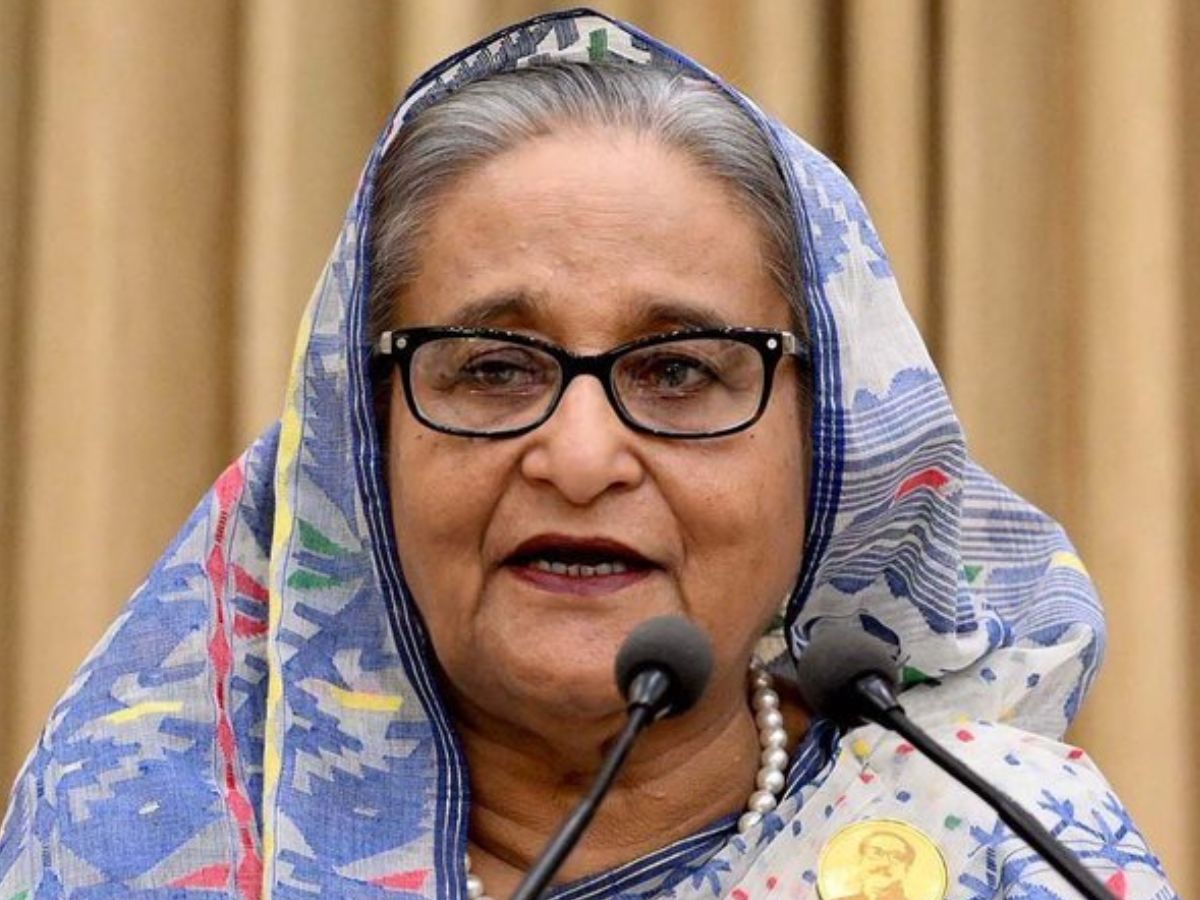
Former Bangladesh Prime Minister Sheikh Hasina has been handed the death penalty after a tribunal court ruled that she committed “crimes against humanity” during the 2024 student uprising. The judgment has brought relief to families who lost loved ones in the violence, even as Hasina remains in exile in India.
The same tribunal also sentenced former interior minister Asaduzzaman Khan Kamal to death. Chowdhury Abdullah Al-Mamun, the former Inspector General of Police, received a reduced sentence of five years because he cooperated with investigators and pleaded guilty earlier this year.
The Verdict Against Sheikh Hasina
Judge Golam Mortuza Mozumder delivered the ruling, stating that Sheikh Hasina was “found guilty on three counts”, including inciting violence, issuing kill orders, and failing to stop atrocities committed under her leadership.
The court first considered a life sentence, but after reviewing the additional charges, the tribunal decided that the punishment should be harsher.
“We have decided to inflict her with only one sentence — that is, sentence of death,” Judge Mozumder declared.
Hasina and her aides were accused of five major crimes:
-
Planning the mass killing of protesters in Dhaka
-
Using helicopters and drones to shoot at civilians
-
Murdering student activist Abu Sayed
-
Burning bodies in Ashulia to cover up evidence
-
Coordinated killings of demonstrators in Chankharpul
Sheikh Hasina Reactions to the Judgment
Sheikh Hasina has rejected all accusations, insisting on Monday that the verdict was “rigged”, “politically motivated”, and issued by a “kangaroo court.”
In contrast, the Yunus-led interim government supported the verdict. Bangladesh’s chief adviser Muhammad Yunus said in a statement:
“The courts of Bangladesh have spoken with a clarity that resonates across the nation and beyond. The conviction and sentencing affirm a fundamental principle: no one, regardless of power, is above the law.”
Following the ruling, Bangladesh formally requested India to extradite Sheikh Hasina and Asaduzzaman Khan Kamal. Both were tried in absentia after fleeing Bangladesh following the August uprising.
Dhaka reminded New Delhi that the extradition treaty requires India to return convicted individuals.
India responded by noting the court decision and added:
“As a close neighbour, India remains committed to the best interests of the people of Bangladesh, including in peace, democracy, inclusion and stability in that country.”
What Will Happen Next with Sheikh Hasina?
Hasina’s future now depends on how India addresses Bangladesh’s extradition request. Bangladesh’s foreign ministry reiterated that granting asylum to Hasina would be “a grave unfriendly act and a contempt of justice.”
The tribunal’s next steps include:
-
confiscating all of Hasina’s properties, placing them under state control
-
allowing an appeal, but only if Hasina returns voluntarily or is arrested within 30 days
If she does not comply, she may officially be declared a fugitive. In that case, authorities can:
-
seize remaining assets
-
cancel her passport
-
strengthen extradition efforts
-
issue an Interpol Red Notice
The world now watches to see how India responds and what direction this high-stakes political saga will take next.