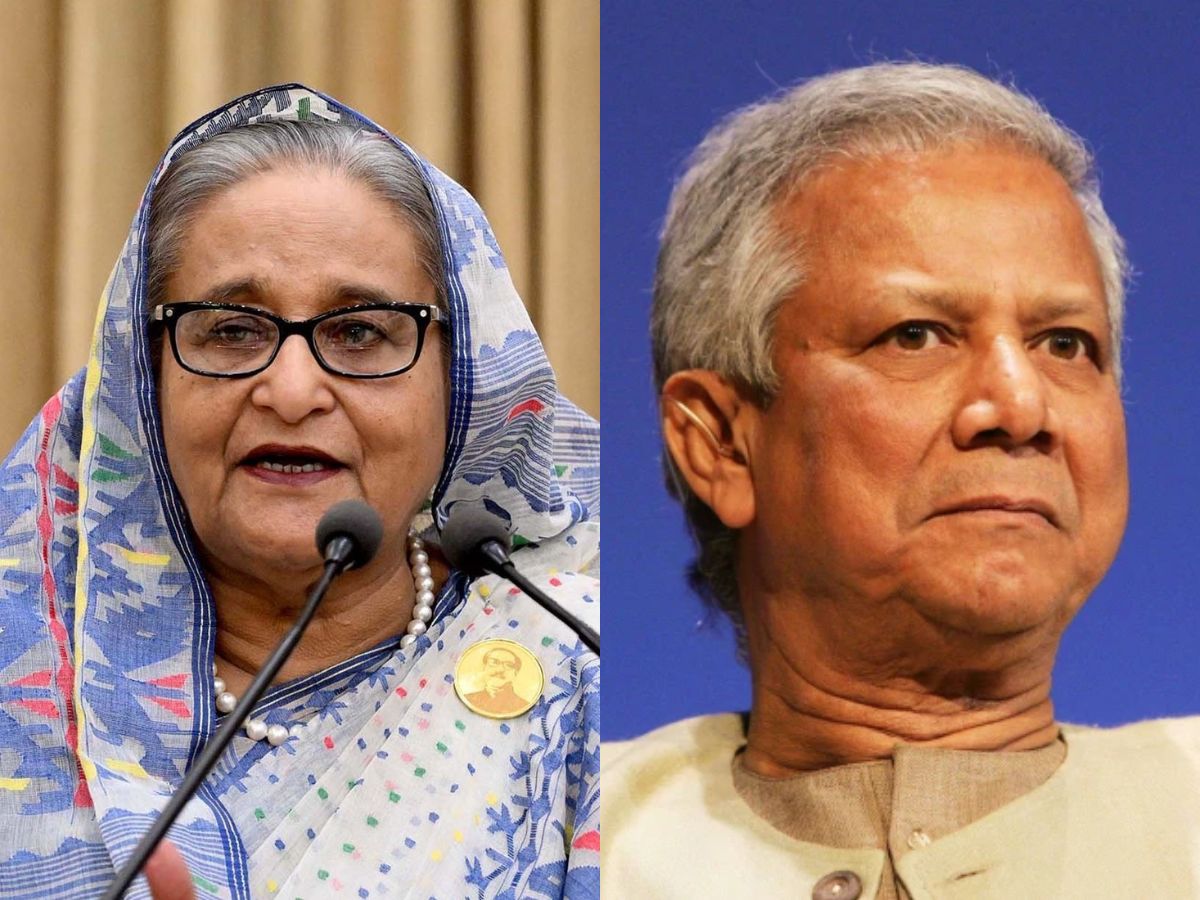
The Awami League on Monday strongly rejected a Dhaka court ruling against former Prime Minister Sheikh Hasina and her relatives in a case filed by Bangladesh’s Anti-Corruption Commission (ACC), calling the decision entirely predictable.
The party criticized the interim government led by Muhammad Yunus, claiming the verdict reflects the ACC being misused for political purposes by desperate, unelected men.
The Dhaka court sentenced Hasina to five years in prison over alleged irregularities in the allocation of plots under the Purbachal New Town project. Additionally, Hasina’s sister, Sheikh Rehana, received a seven-year sentence, and her niece, British MP Tulip Siddiq, was given a two-year prison term.
Awami League Denounces Lack of Evidence and Fair Process
In a statement, the Awami League said, “No persuasive evidence of corruption was heard at the ACC, because none exists. Defendants did not have proper legal representation at the ACC and were judged in absentia. The process fails to pass any reasonable test of judicial fairness a point that has been made forcefully by both local and international legal experts.”
The party accused Yunus of using the ACC to target Hasina personally, alleging that despite the absence of evidence, he leveled accusations against elected officials outside Bangladesh. The statement described the verdict as a judicial and diplomatic failure that harms the nation’s global reputation.
Hasina Accuses ACC of Political Weaponization
Sheikh Hasina argued that while corruption exists everywhere, it must be investigated fairly. “The ACC has failed that test today. It is controlled by an unelected government run by the Awami League’s political opponents. It has exclusively targeted members of the Awami League, or those seen to be sympathetic to our party, and done nothing to prosecute or even investigate the cronyism that has escalated in Bangladesh since Muhammad Yunus and his so-called interim government took power,” she said.
Hasina further accused Yunus of using the ACC as a “smokescreen” to divert attention from his governance failures and suppress a political party that has been elected nine times since Bangladesh’s independence. She also condemned the recent ban on the Awami League from participating in next year’s elections, arguing it disenfranchises millions of voters and undermines political reconciliation.
Verdict Allegedly Serves Political Interests, Harms International Reputation
The former prime minister stated that the court’s decision primarily serves the interests of “Yunus and his ragtag coalition of extremists and opportunists,” warning that the ruling could damage Bangladesh’s standing with key international trading partners.