Venezuelan opposition leader María Corina Machado, the 2025 Nobel Peace Prize laureate, has vowed to personally bring her award back to Venezuela, declaring her country’s “tyranny” will end. The pledge came during her first public appearance after a clandestine, high-risk escape from Venezuela, where she had been in hiding for over a year under a government travel ban.
Who Is María Corina Machado?
Machado, a 58-year-old industrial engineer and longtime political figure, is the most prominent leader of Venezuela’s opposition. She was awarded the 2025 Nobel Peace Prize in October for her “tireless work promoting democratic rights for the people of Venezuela and for her struggle to achieve a just and peaceful transition from dictatorship to democracy.”
Her political journey is marked by confrontation with the government of Nicolás Maduro:
Barred from Office: Even though she won the opposition’s 2024 primary by a huge margin, government-aligned courts barred her from contesting the presidential election, which the international community widely condemned as fraudulent.
In Hiding: Following an expanded crackdown on opposition figures after the 2024 vote, she went into hiding in August 2024 to avoid arrest.
The Escape: To reach the Nobel ceremony, she secretly fled Venezuela, reportedly using disguises and traveling by fishing boat to Curaçao before flying to Norway—a journey she said involved risks and U.S. government support.
What Did She Say in Oslo?
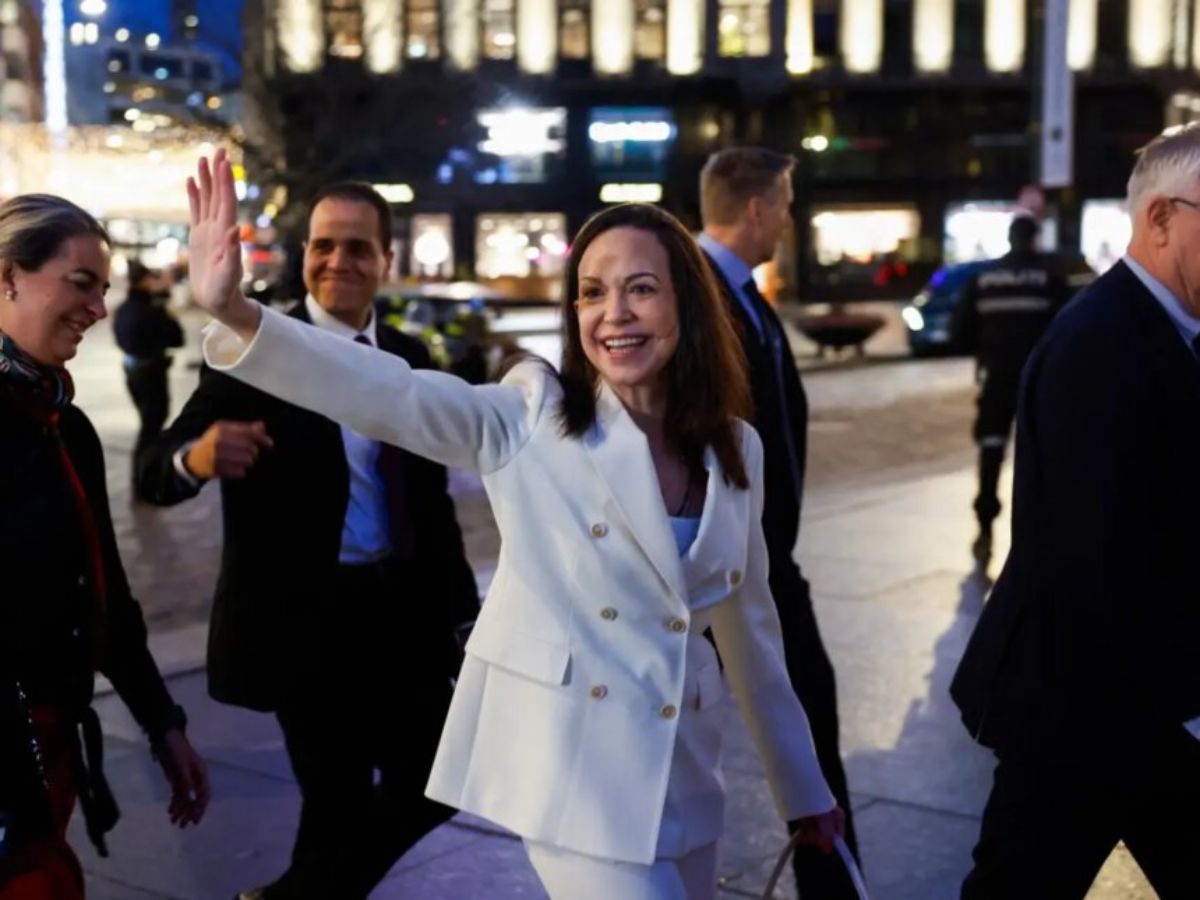
Arriving hours after the official December 10 ceremony (where her daughter accepted the prize), Machado held an emotional press conference at the Norwegian parliament on December 11.
Her key statements included:
The Pledge: “I came to receive the prize on behalf of the Venezuelan people and I will take it back to Venezuela at the correct moment.”
On the Maduro Regime: She accused the government of turning Venezuela into the “criminal hub of the Americas,” sustained by drug, oil, arms, and human trafficking.
On U.S. Pressure: She praised U.S. President Donald Trump’s actions as “decisive” in weakening the Maduro government, aligning herself with Trump administration hawks who view Caracas as a national security threat.
On Returning: She vowed to return “regardless of when Maduro goes out,” stating, “He’s going out, but the moment will be determined by when I’m finished doing the things that I came out to do.”
What Are the Risks and the Stakes?
Machado’s return would be perilous. The Venezuelan government has declared her a “fugitive” for leaving the country in violation of her travel ban, and she faces almost certain arrest. Her pledge symbolizes the high-stakes battle for Venezuela’s future, occurring against a backdrop of extreme U.S. pressure, including recent military strikes and the seizure of a Venezuelan oil tanker.
Her Nobel win provides an immense moral platform, but it also deepens the political divide. While she dedicates the prize to victims of the regime, Maduro’s government has previously dismissed similar UN reports on human rights violations as “falsehoods.”
Your Questions Answered: María Corina Machado FAQs
Q: Why couldn’t she attend the official Nobel ceremony?
A: She was physically unable to reach Oslo in time due to the complexities and dangers of her secret escape from Venezuela, which she undertook after over a year in hiding. Her daughter accepted the award on her behalf at the December 10 ceremony.
Q: What did she mean by dedicating the prize to Donald Trump?
A: When awarded in October, she dedicated it in part to Trump, whose maximum-pressure campaign of sanctions and, recently, military posturing she views as crucial to challenging Maduro’s hold on power. This aligns her with the faction within the U.S. that advocates for aggressive action.
Q: Does she support a U.S. military invasion of Venezuela?
A: When asked, she reframed the question, arguing Venezuela has “already been invaded” by Russian and Iranian agents and drug cartels propping up the regime. She focused on the need to cut off criminal funding flows to the government rather than explicitly endorsing or condemning a U.S. invasion.
Q: What is the significance of her wearing white at the press conference?
A: Across different cultures and movements, white is often worn to represent peace, protest, and defiance. For Machado and the Venezuelan opposition, it now serves as their trademark color of peaceful democratic resistance.
Q: What happens next?
A: Machado stated she has tasks to complete internationally before returning. Her next steps will draw intense attention as she leverages her Nobel recognition to build international support, even as Maduro’s Russia-backed government and the Trump administration push their conflict further.
Also Read: Putin, Lukashenko Offer Support to Maduro as Trump Intensifies Venezuela Pressure