
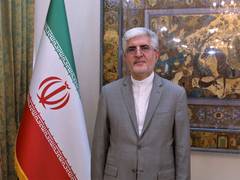
Seoul [South Korea], May 28 (ANI): Iran strongly rejected South Korea’s conclusion that Iranian-developed missiles were likely used in an attack on a South Korean commercial vessel (HMM Namu) in the Strait of Hormuz earlier this month, escalating diplomatic tensions between the two countries, according to South Korean news agency Yonhap.
Speaking to reporters at the South Korean Ministry of Foreign Affairs building on Wednesday after being summoned for consultations, the Iranian Ambassador to South Korea, Saeed Koozechi, denied any Iranian role in the incident.
“Iran denies all allegations regarding this matter,” he said through an interpreter. “We were absolutely not involved (in the attack).”
He also expressed sympathy for the damaged vessel, but firmly rejected Seoul’s assessment. “Personally, I would like to express my regret over the damage suffered by the Korean vessel,” he added.
He said, “We must be wary of false flag operations by hostile countries.”
The comments came after South Korea’s Foreign Ministry stated that an Iranian-made antiship missile was “highly likely” used in an attack earlier this month on the “HMM Namu” in the Strait of Hormuz. The targeted vessel is operated by the prominent South Korean shipping company HMM.
Attributing the findings directly to national intelligence assessments, South Korea’s Yonhap news agency cited the country’s First Vice Foreign Minister Park Yoon-joo as saying the government came to the conclusion based on a “technical analysis”. According to the agency, this extensive forensic review included evaluating the warhead’s shape and gas debris colour to identify the origin of the weapon.
Elaborating on the specifics of the incident, Park stated that the “HMM Namu” came under attack from a pair of unidentified aircraft on May 4. He explained that the initial warhead was successfully incinerated, whereas the subsequent one detonated. The first strike is believed to have ignited an engine room fire, while the secondary strike reportedly caused the inferno to engulf the vessel rapidly.
Detailing the debris recovered from the scene, the First Vice Foreign Minister noted that the propulsion system bore a close resemblance to an “Iranian turbojet engine, and parts were found to bear markings presumed to be from an Iranian manufacturer”.
The South Korean authorities further disclosed that the vessel, which was carrying 24 crew members at the time of the incident, sustained significant structural damage. The impact zone on the port-side stern measured approximately “five metres (16.5 feet) wide and extended roughly seven metres (23 feet) into the hull”.
In light of the investigation’s conclusions, Seoul summoned Iran’s ambassador to the country over the incident, said Park, signalling a formal diplomatic protest over the maritime strike.
Earlier in May, the Iranian Embassy in Seoul had “firmly” rejected allegations linking the Iranian armed forces to the incident involving damage to a South Korean vessel operated by HMM in the Strait of Hormuz.
The comment came as US President Donald Trump had called on South Korea to join the US-led maritime operation after alleging that an Iranian-linked attack targeted a South Korean cargo vessel.
In a post on Truth Social, Trump alleged that Iran had targeted “unrelated Nations” during the “Ship Movement, Project Freedom”, including an incident involving a South Korean cargo vessel. He claimed US forces responded by shooting down “seven small boats”. (ANI)
The article has been published through a syndicated feed. Except for the headline, the content has been published verbatim. Liability lies with original publisher.