
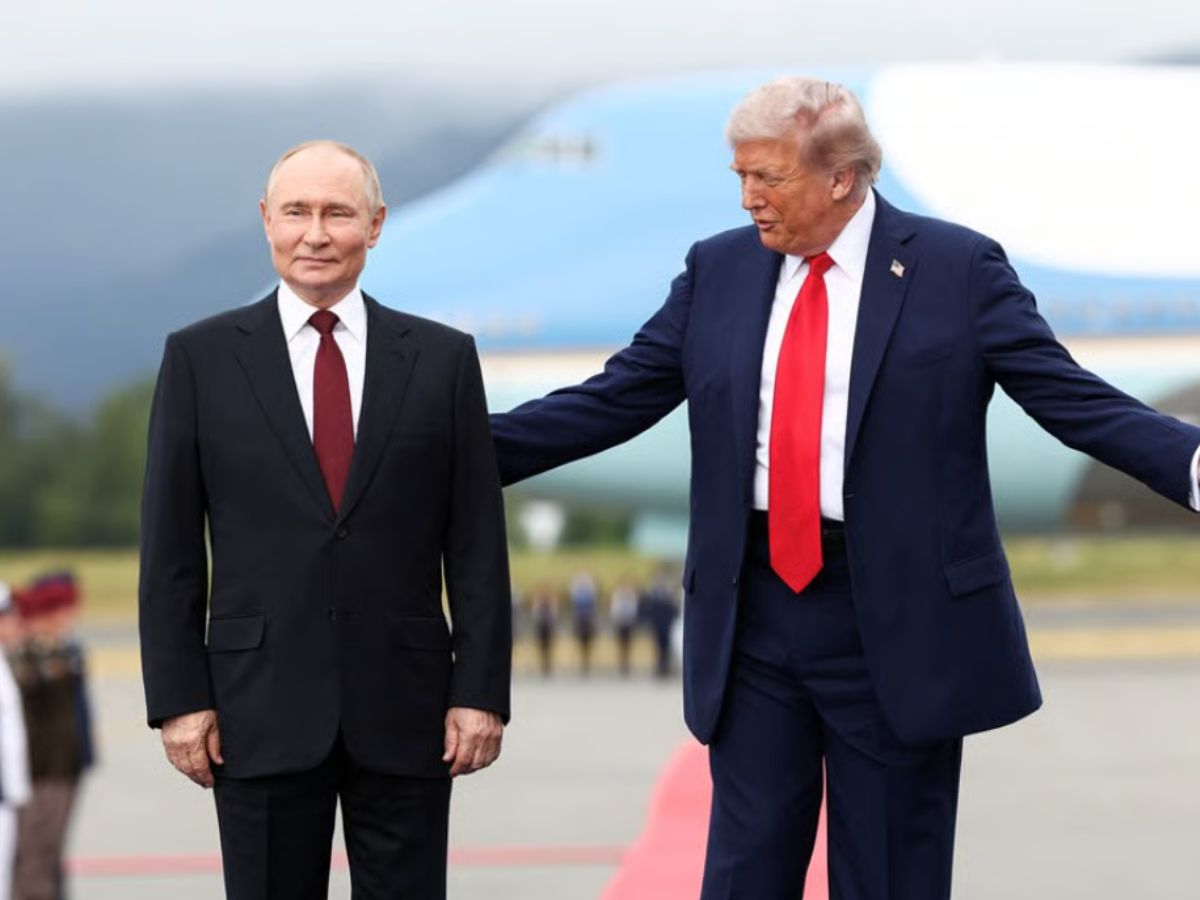
Hardly a week after US President Donald Trump announced plans to meet Russian President Vladimir Putin in Budapest within two weeks or so, but the White House has now confirmed that the meeting will not take place.
The planned summit was intended to restart the talks on the ongoing Russia–Ukraine war, now entering its fourth year. Trump’s declaration followed a two-hour phone conversation with Putin, which he described as productive and full of great progress.
White House Confirms Cancellation
Washington officially scrapped both the summit and the preparatory talks between US Secretary of State Marco Rubio and Russian Foreign Minister Sergey Lavrov. Trump told reporters that he is not interested at all to waste his time.
A White House official later told Politico that Rubio and Lavrov had already held a “productive call,” and therefore, “an additional in-person meeting is not necessary.” The official also confirmed there were no plans for a Trump–Putin meeting in the near future.
This sudden reversal underscores the continuing diplomatic freeze between Washington and Moscow over Ukraine and highlights the gap between Trump’s peace ambitions and reality on the ground.
What Was the Budapest Summit Aimed to Achieve?
The Budapest meeting was planned as a follow-up to Trump and Putin’s earlier summit in Anchorage, Alaska, held two months ago. That three-hour discussion ended without a concrete agreement, though both sides had publicly claimed “progress.”
After his role in facilitating a ceasefire and hostage deal between Israel and Hamas, Trump reportedly told his negotiator Steve Witkoff in Egypt, “We have to get Russia done.”
This statement led to renewed efforts to revive the Ukraine peace process. Following Trump’s call with Putin last Thursday, it was announced that Rubio and Lavrov would meet to prepare the groundwork for a new summit in Hungary.
The meeting carried major geopolitical importance, with potential discussions expected on long-range weapons aid for Ukraine, territorial disputes, and Russia’s willingness to negotiate. However, instead of uniting both sides, the initiative collapsed almost immediately.
Why Was the Summit Cancelled?
According to US officials, the key reason for the cancellation was Russia’s refusal to soften its stance. After Rubio and Lavrov’s phone discussion, Washington concluded that Moscow had made no shift in its “maximalist” position.
At a Moscow press conference, Lavrov said, “American officials have concluded that Russia’s position has remained largely unchanged and remains within its initial ‘maximalist’ demands.”
Russia continues to insist that peace talks must come before any ceasefire, a condition the US believes blocks progress. “We remain entirely committed to this formula,” Lavrov added, confirming his stance during his conversation with Rubio.
The cancellation of the Budapest summit signals a renewed chill in US–Russia relations, dashing hopes for a diplomatic breakthrough in the Ukraine conflict. Despite Trump’s optimism, deep mistrust and entrenched positions on both sides continue to stall peace efforts.
Also Read: How Has Virginia Giuffre’s Memoir Renewed Focus on the Epstein Scandal?