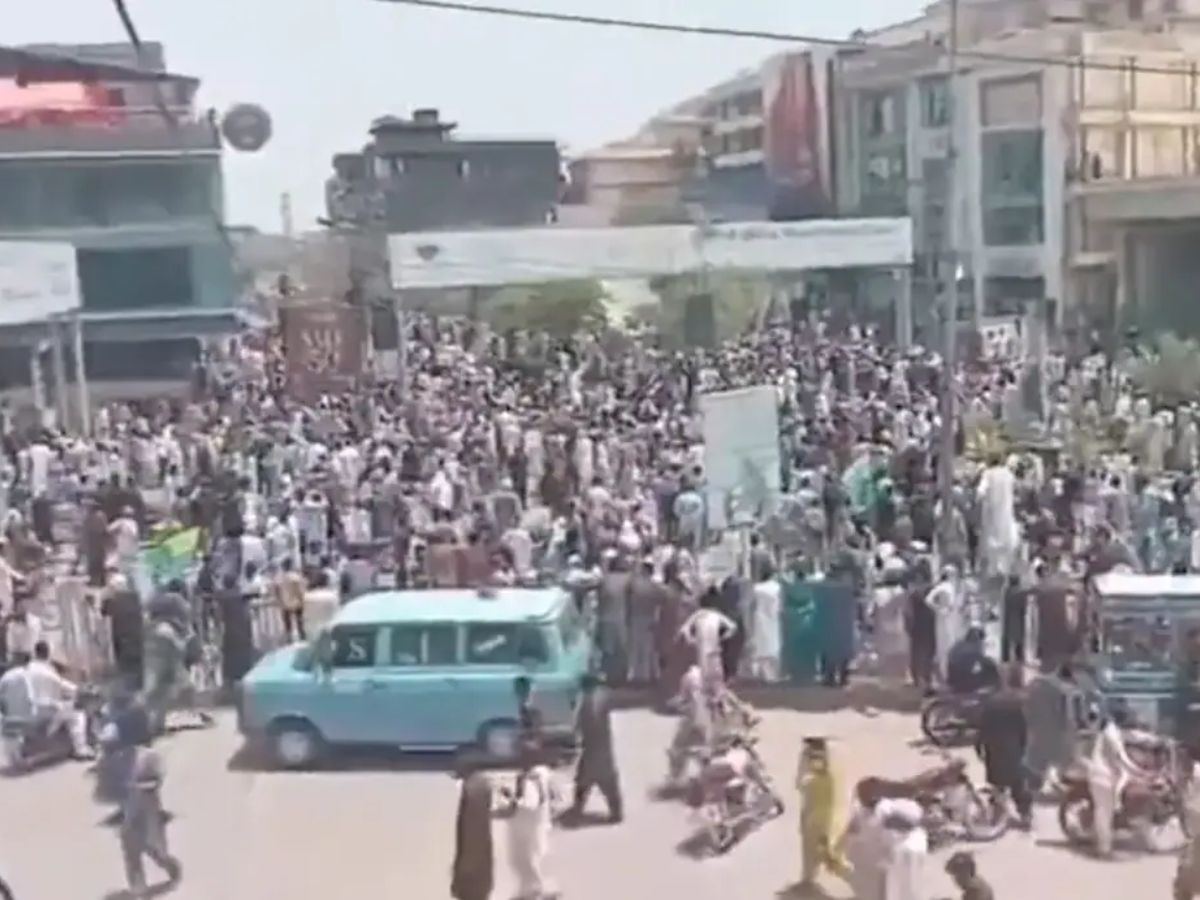
This week, Pakistan faced severe violence and clashes in Pakistan-occupied-Kashmir (POK) region. Pakistan is currently experiencing overlapping waves of unrest, from intensified revolt in Balochistan to lethal protests in POK and nationwide demonstrations, against the backdrop of a long-standing state policy of disregarding the interests of people living in these regions. It is also selectively instrumentalising militant groups regionally while securitising dissent at home. It is evident that Pakistan’s promotion of jihadist proxies and its persistent marginalisation of Baloch political demands are mutually reinforcing dynamics that deepen internal violence and erode state legitimacy.
This escalation builds on a steady upward trend in violence in Balochistan since at least 2023. Simultaneously, POK has witnessed its most serious unrest in years, centred on grievances over governance and political representation. Strikes and shutdowns have continued across the regions, reflecting deeper disenchantment with Pakistan’s governance and the democratic deficit in the local governance structure.
These domestic crises unfold in a state that has long deployed and promoted militant groups as instruments of its regional strategy. A ‘jihad paradox’ can now be seen in Pakistan whereby elements of Pakistan’s security establishment support to some jihadist actors targeting India while combating those that directly attack the Pakistani state. A sustained assistance from the military and the Inter-Services Intelligence (ISI) to organisations such as Lashkar-e-Taiba (LeT) and Jaish-e-Mohammad (JeM), including training, financing and operational support for attacks against Indian forces in Jammu and Kashmir and occasionally in Indian cities has costed its economy heavily. As in due to this, the state policy has consistently and deliberately overlooked the basic interests of people living in the POK region leaving them with no other choice but to protest against the government for basic commodities like affordable flour, rice, electricity, and fundamental rights. This week, when they assembled in Rawalakot for a protest, the Pakistani army opened fire against them, which further worsened the situation.
On the other hand, Pakistan has made Kashmir a hub of cross-border militancy, with Pakistan-based Islamist organisations implicated in repeated terrorist attacks on Indian targets. Pakistan has viewed these groups as low-cost proxies to offset India’s conventional military superiority and to internationalise the Kashmir dispute, even as their actions have overwhelmingly targeted civilians and undermined prospects for negotiated conflict resolution. These externalised jihad policies have had profound domestic repercussions for Pakistan. By legitimising certain militant narratives and infrastructures while attempting to repress others, the state has fostered an ecosystem in which armed non-state actors enjoy social support, coercive capacity, funding from the religious institutions of Pakistan and geographic depth that ultimately erode Pakistan’s own internal security. This selective counterterrorism posture has enabled groups such as the Tehreek-e-Taliban Pakistan (TTP) to expand influence, and has normalised militarised governance practices that are then applied against non-jihadist rebels, including ethnic and regional movements.
Balochistan epitomises the costs of privileging coercive control over political accommodation. The revolt there, which has seen several waves since the 1950s, is driven by long-standing grievances over provincial autonomy, control of natural resources and perceived Punjabi domination of the state, as well as resentment at the limited local benefits from mega-projects such as the China-Pakistan Economic Corridor (CPEC). It is evident that Pakistan has systematically treated these demands as a security problem, deploying sweeping military operations, enforced disappearances, and so-called ‘death squads’, producing mass displacement and widespread human rights abuses.
Instead of meaningful dialogue with a wide spectrum of Baloch actors, the state has doubled down on enforcement, as seen in the offensive following the January 2026 BLA attacks. While officials emphasise the killing of large numbers of insurgents as evidence of resolve, such body-count metrics obscure the cyclical nature of the conflict, in which each new wave of repression fuels further radicalisation and recruitment. The deep under-representation of Baloch voices in national decision-making, coupled with the securitised treatment of even peaceful protest, reinforces a perception that the central state is unwilling to recognise Balochistan as a political community with legitimate rights rather than merely a restive frontier to be pacified.
Taken together, Pakistan’s support for, or tolerance of, certain militant proxies abroad and its repression of ethno-regional dissent at home form two sides of a single security logic that prioritises regime and military interests over inclusive state-building. Externally, the use of jihadist groups in Kashmir allows Islamabad to project influence and contest rivals without formal war, but at the cost of entrenching a militant infrastructure that is only partially under state control. Internally, the same securitised mindset delegitimises non-violent claims from peripheries such as Balochistan and POK, treating demands for autonomy, equitable development or democratic reform as precursors to secession and therefore as threats to be crushed.
The present unrest, intensified violence in both POK and Balochistan, and lethal crackdowns by the Pakistani government, highlights how this strategy is generating a multidirectional crisis of authority. Far from delivering security, the selective promotion of terrorism as statecraft, combined with the marginalisation of communities like the people of POK and Baloch, has produced a landscape of chronic instability that undermines Pakistan’s own cohesion and complicates regional peace and security.