
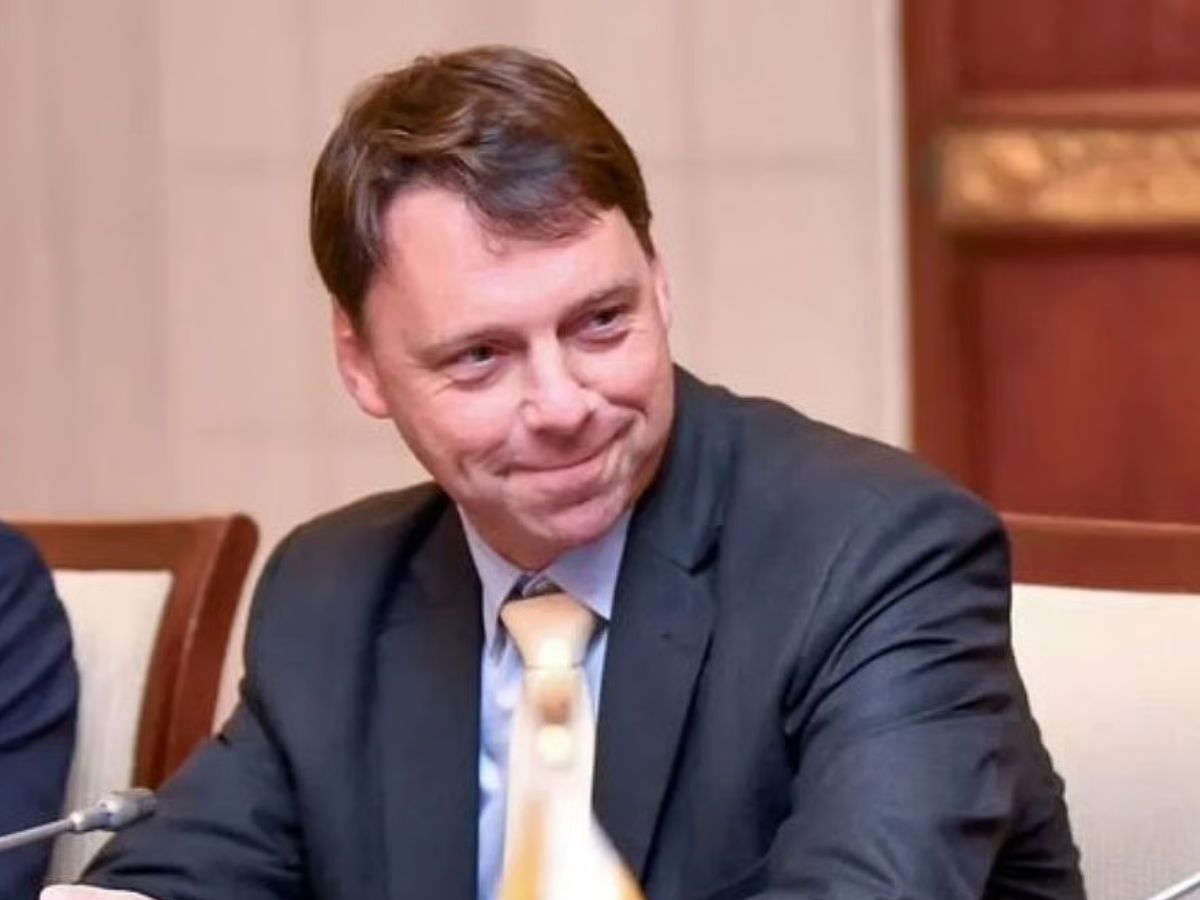
Brendan Lynch is the Assistant US Trade Representative for South and Central Asia, responsible for managing complex trade negotiations between the United States and India. he reached the Ministry of Commerce & Industry at Vanijya Bhawan in Delhi. He leads the US team working on the stalled India-US Bilateral Trade Agreement (BTA). Lynch has deep expertise in trade policy, focusing on sectors like agriculture, manufacturing, services, and intellectual property rights. Before his current role, he served as the US Trade Representative’s Director for India, managing the bilateral trade relationship.
Lynch oversees the development and implementation of US trade policy with 15 countries in the South and Central Asia region. His experience includes promoting US agricultural trade interests and advising Congress on trade barriers. With the current trade deadlock triggered by high US tariffs on Indian goods, Lynch plays a key role in attempting to revive and fast-track negotiations aimed at restoring and expanding economic ties between the two nations.
India-US Trade Relations Under Strain
India and the United States are facing difficult times in their trade relationship. This tension grew when US President Donald Trump imposed a massive 50% tariff on Indian goods. Part of this, a 25% tariff, was specifically targeted at India’s imports of Russian oil. This action directly affected India’s exports to the US, which dropped from $8.01 billion in July to $6.86 billion in August 2025. Senior Trump aides, including Peter Navarro and Howard Lutnick, continued to criticize India’s trade practices, adding to the strain.
Key Talks Take Place in New Delhi
On September 15, 2025, Brendan Lynch and the US trade team arrived in New Delhi for important discussions with Indian officials. The Indian side was led by Rajesh Agrawal, Special Secretary in the Department of Commerce. This meeting was significant because it was the first face-to-face trade dialogue since the imposition of the high tariffs. Rajesh Agrawal explained that this meeting was a “precursor” to the official sixth round of trade negotiations.
Optimism and Strong Statements
Before the talks, Peter Navarro expressed hope that India was ready to negotiate. He said, “India is coming to the table. Prime Minister Narendra Modi sent out a very conciliatory, nice, constructive tweet, and President Trump responded to that. We will see how this works.”
Despite the tension, both Prime Minister Modi and President Trump publicly committed to resolving their trade differences. Trump expressed confidence, stating, “I feel certain that there will be no difficulty in coming to a successful conclusion for both of our Great Countries!” Modi emphasized the strong bond between the two nations by calling them “close friends and natural partners.”
Also Read: US Trade Envoy to Visit India for Fresh Deal Talks
The Main Issue: Russian Oil Purchases
A major point of disagreement remains India’s continued purchase of Russian oil after the 2022 Russia-Ukraine war began. Peter Navarro sharply criticized India, saying, “There is this issue of India buying Russian oil, which it never did before 2022… Indian refiners got in bed with Russian refiners immediately after the invasion, and they’re making out like bandits.” This purchase became a key reason for the US imposing extra tariffs.
Background of Earlier Negotiations
Earlier in 2025, India and the US seemed to be making progress toward a large trade agreement. Both sides aimed to expand bilateral trade to $500 billion by 2030. Indian Commerce Minister Piyush Goyal visited Washington, and Vice President JD Vance announced that terms for talks had been finalized. But disagreements over import duties, especially for farm products, stalled the deal. In August, the situation worsened when the US applied an additional 25% tariff, particularly targeting Russian oil imports.
What Comes Next?
The current round of talks is being watched carefully by businesses and governments worldwide. Both sides want to avoid further damage to their trade relationship, but deep issues remain unresolved. The outcome of the discussions between Brendan Lynch and Rajesh Agrawal will be crucial in shaping future India-US trade relations.
Brendan Lynch’s visit and the negotiations in New Delhi mark an important effort to repair the strained India-US economic relationship. While both countries have expressed a positive attitude, significant hurdles still stand in the way. It remains to be seen if the talks will lead to a breakthrough or if the relationship will face further challenges.