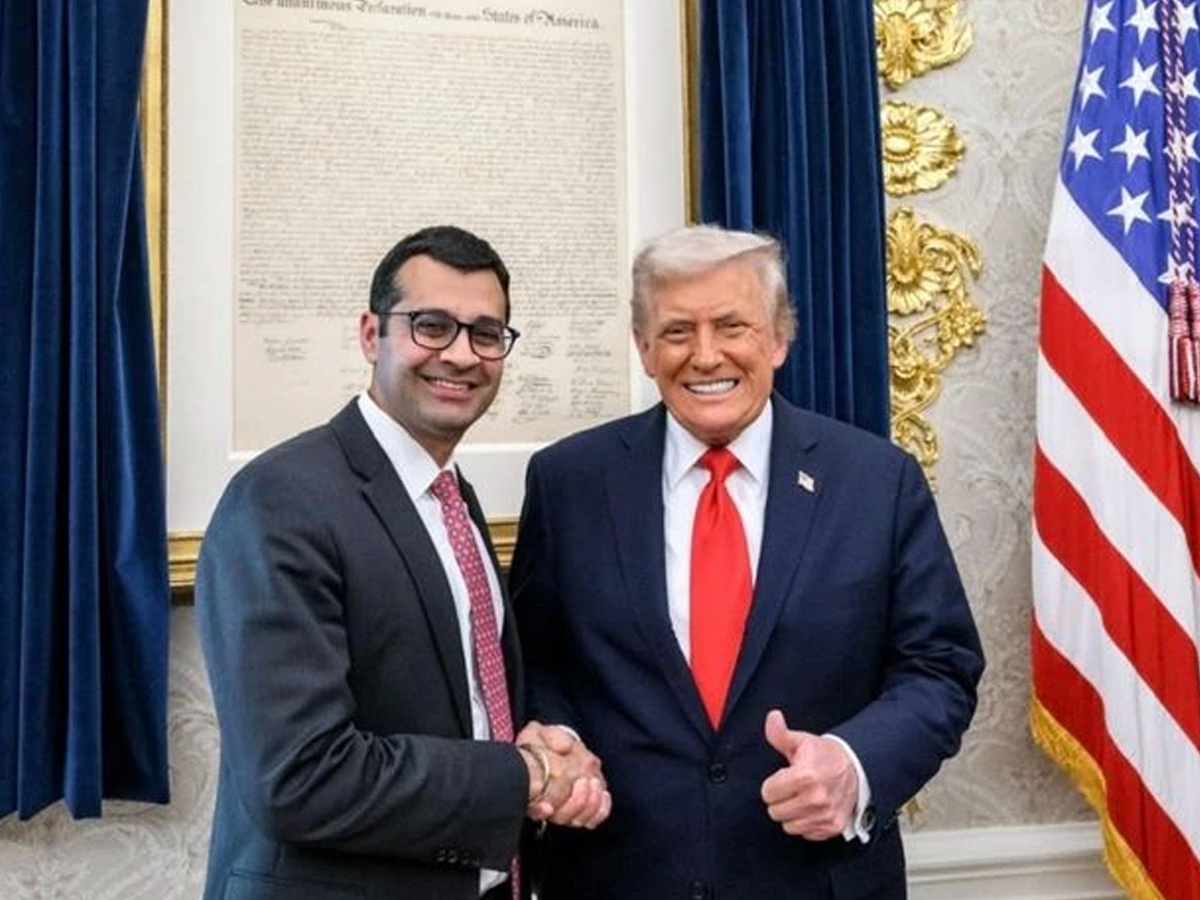
Ranjit “Ricky” Singh Gill, an Indian‑origin advisor in the United States, has come into the limelight after being honoured with the National Security Council’s Distinguished Action Award for his role in what the US cited as India‑Pakistan ceasefire negotiations this year.
The recognition has drawn attention on both sides of the world and sparked debate about Washington’s role in the regional crisis and diplomatic narratives.
Who Is Ricky Gill?
Gill serves as Senior Director for South and Central Asia at the US National Security Council (NSC) and is a Special Assistant to President Donald Trump. He received the NSC’s highest internal honour from US Secretary of State Marco Rubio in Washington, acknowledging his contributions to US national security objectives.
Born in New Jersey to Punjabi Sikh immigrant parents, Gill holds a degree from Princeton University’s Woodrow Wilson School of Public and International Affairs and a law degree from the University of California, Berkeley. He previously held positions involving Russia, European energy security, and other strategic areas within the US government.
Award Linked to India‑Pakistan Ceasefire Claims
The NSC Distinguished Action Award citation refers to Gill’s involvement in the India‑Pakistan ceasefire after Operation Sindoor earlier this year. The Trump administration has repeatedly claimed it played a key role in brokering the truce between the two nuclear‑armed neighbours, a narrative that contrasts with official Indian statements.
While the award highlights his diplomatic work, details about Gill’s exact contributions to the ceasefire talks have not been publicly disclosed by US officials, leaving many questions unanswered about the scope and nature of his role.
Reactions in India and Abroad
The announcement has triggered debate in India. Some analysts see the award as politically motivated, interpreting it as an attempt by the US to shape the narrative around the ceasefire. Former Indian Foreign Secretary Kanwal Sibal described the honour as “puzzling,” saying it appeared to challenge India’s well‑publicised rejection of third‑party mediation.
Critics on social media and in diplomatic circles have echoed the sentiment that the award may complicate longstanding Indian policy on bilateral talks with Pakistan. Despite this, supporters view the recognition as a career milestone for Gill and a testament to his skills in international diplomacy.
Gill’s Career Highlights
Before joining the NSC in his current role, Gill was involved in US foreign policy on multiple fronts. He previously served as Director for Russia and European energy security within the NSC. He also worked in the State Department and advised on strategic infrastructure projects.
Gill’s experience spans diplomatic, legal, and policy roles, giving him broad exposure to global issues. His work on South Asia, especially during times of heightened tensions, has placed him in a unique position within the US administration’s foreign policy apparatus.
Broader Implications
The award underscores the complex diplomatic interplay between Washington, New Delhi, and Islamabad. It also sheds light on how international accolades can influence regional perceptions and policy narratives.
As debates continue, the focus remains on transparency and clarity over the US government’s actual contributions to peace efforts in South Asia, and how such recognitions fit into that larger picture.