
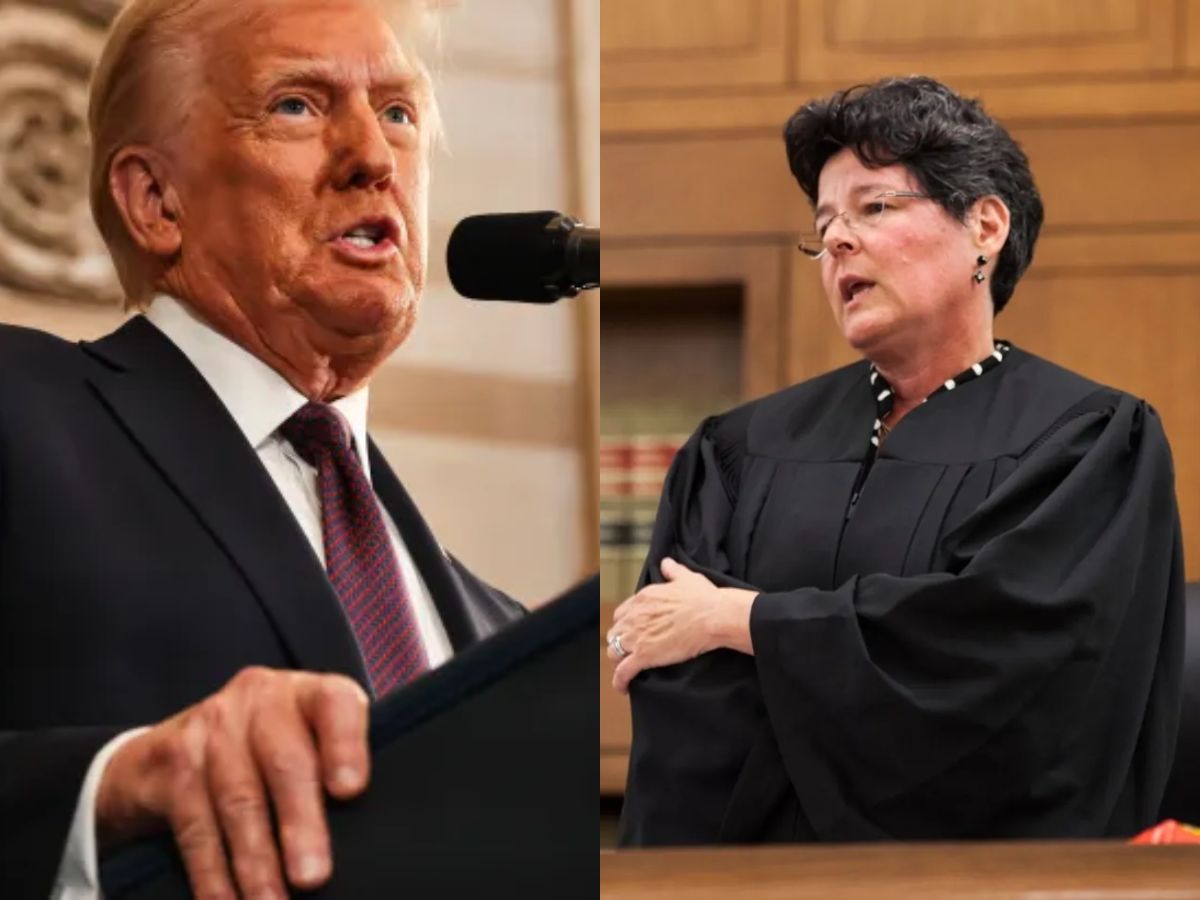
In a decisive legal blow to the Trump administration, U.S. District Judge Allison Burroughs ruled it violated federal law and Harvard University’s First Amendment rights by freezing nearly $2 billion in federal grants. The ruling escalates a political battle, but it also puts a spotlight on the judge who delivered it: who is Allison Burroughs, and why was this case on her docket?
Who Is Judge Allison Burroughs?
Allison Dale Burroughs, appointed to the federal bench in 2014 by President Barack Obama, serves as a United States District Judge for the District of Massachusetts. A former federal prosecutor specializing in cybercrime and child exploitation cases, she now presides over some of the most consequential legal disputes in the region. Her most recent decision carries on the tradition of her Boston courtroom being the scene of high-profile litigation involving influential organizations.
What Did She Rule On Exactly?
The administration’s action to penalize Harvard for its treatment of antisemitism on campus was at the heart of the dispute. After Harvard rejected the terms of a federal demand letter, officials froze over $2.2 billion in research grants and threatened the university’s tax-exempt status.
Judge Burroughs issued an 84-page decision blocking these actions. While she acknowledged that Harvard has been “plagued” by antisemitism and should have acted more decisively, she concluded the administration’s true motive was not student safety.
What Was the Core of Her Reasoning?
Burroughs found the funding freeze had little to do with genuine concerns for Jewish students. Instead, she characterized it as a political attack.
“In fact, a review of the administrative record makes it difficult to conclude anything other than that Defendants used antisemitism as a smokescreen for a targeted, ideologically-motivated assault on this country’s premier universities,” Burroughs wrote.
She ruled the administration violated the Administrative Procedure Act (APA), which governs how federal agencies can make regulations, and Title VI of the Civil Rights Act. Crucially, she also found it violated Harvard’s First Amendment protections, framing the freeze as punishment for the university’s views.
Is This Her First Major Harvard Case?
No, and this is key to understanding her role.Perhaps the most well-known case Judge Burroughs has presided over is Students for Fair Admissions v. Harvard, a lengthy and well-publicized lawsuit in which Asian American students contested the university’s racially discriminatory admissions procedure.
In 2019, she ruled in Harvard’s favor, upholding its admissions process.
Given her background, she is an experienced arbiter in the university’s disputes because she is well-versed in the legal nuances and intense scrutiny that surround it.
Also Read: Harvard Wins $2.6B Federal Funding Battle, Judge Rules Trump Cuts Were Retaliation
How Did the White House React?
The administration’s response was swift and critical, directly attacking the judge herself. White House assistant press secretary Liz Huston called Burroughs an “activist Obama-appointed judge” and promised a swift appeal.
“Harvard does not have a constitutional right to taxpayer dollars and remains ineligible for grants in the future,” Huston said. This sets the stage for a continued legal fight that will likely move to a higher court.
Although there is still a significant and persistent problem with antisemitism on campuses, the judge’s decision makes it apparent that legal processes, not political pressure, must be used to address the problem.