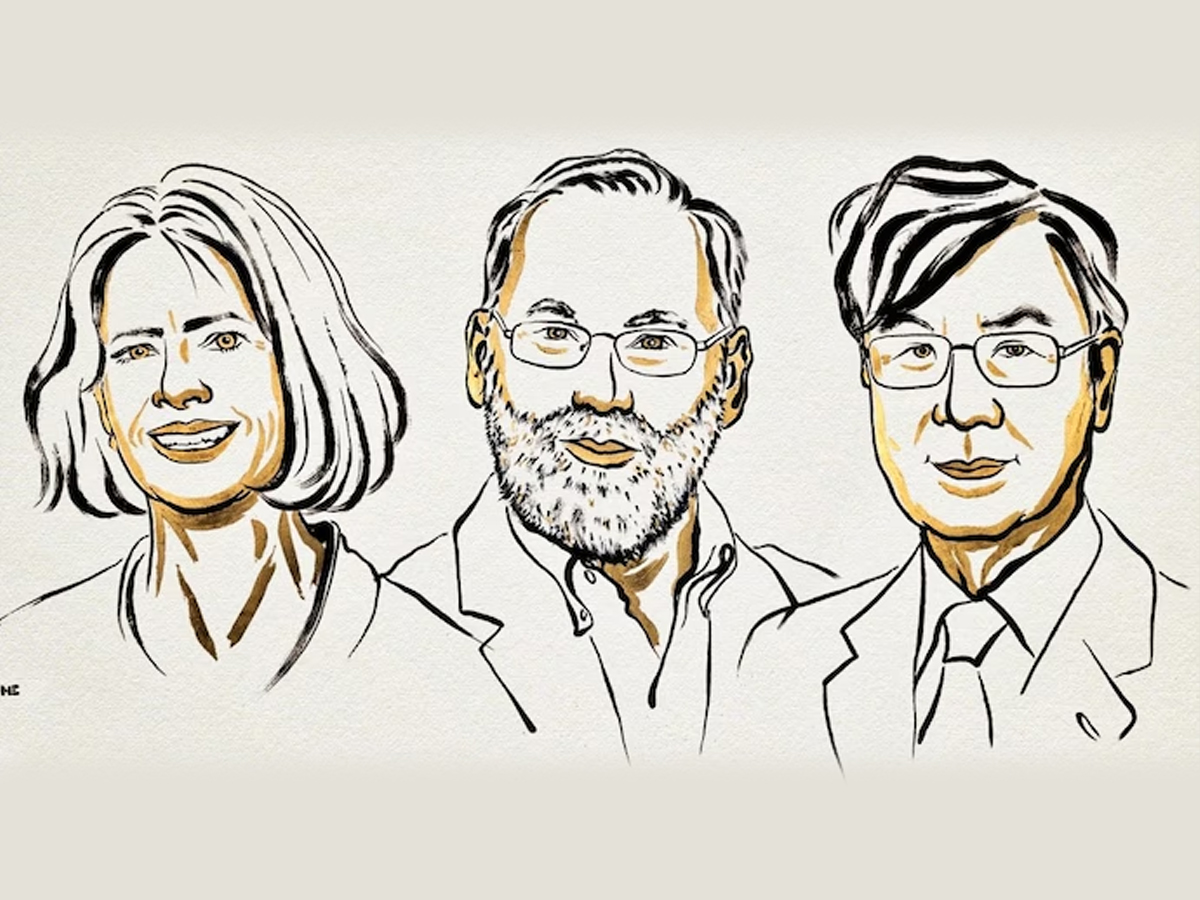
Mary Brunkow, Fred Ramsdell, and Shimon Sakaguchi have won the 2025 Nobel Prize in Physiology or Medicine for their groundbreaking discoveries on peripheral immune tolerance. Their research revealed how the body’s immune system prevents itself from attacking its own organs, paving the way for new treatments for cancer and autoimmune diseases.
Announcing the award, the Nobel Assembly at the Karolinska Institute in Sweden said, “The body’s powerful immune system must be regulated, or it may attack our own organs. [They] made groundbreaking discoveries concerning peripheral immune tolerance that prevents the immune system from harming the body.”
The committee added, “Their discoveries have laid the foundation for a new field of research and spurred the development of new treatments, for example, for cancer and autoimmune diseases.”
What is the Prize for the Nobel Prize?
The winners will receive a cash prize of $1.2 million and a gold medal, which will be presented by the King of Sweden on December 10, the death anniversary of Alfred Nobel, the founder of the Nobel Prizes.
What Is Peripheral Immune Tolerance?
Peripheral immune tolerance is a natural process that helps the immune system target harmful germs and viruses while protecting healthy cells and tissues. When this system fails, the body may start attacking itself, leading to autoimmune diseases such as type 1 diabetes, rheumatoid arthritis, and multiple sclerosis.
The discovery made by Brunkow, Ramsdell, and Sakaguchi has helped scientists better understand how immune cells, especially regulatory T cells (Treg cells), keep the immune system balanced. Their research has also inspired new therapies that either strengthen or suppress immune activity — crucial in treating both cancer and autoimmune disorders.
Who Are Mary Brunkow, Fred Ramsdell, and Shimon Sakaguchi?
Mary E Brunkow
Mary E Brunkow, 64, holds a Ph.D. in Molecular Biology from Princeton University. She currently works as a Senior Program Manager at the Institute for Systems Biology in Seattle, USA.
Fred Ramsdell
Fred Ramsdell, born in 1960, earned his Ph.D. in Immunology from the University of California. He serves as a Scientific Advisor at Sonoma Biotherapeutics in San Francisco, where he focuses on immune-based therapies.
Shimon Sakaguchi
Shimon Sakaguchi, 74, from Japan, is a Professor at the Immunology Frontier Research Center, Osaka University. He holds both an MD and a Ph.D. from Kyoto University and is widely known for his pioneering work in identifying and studying regulatory T cells (Treg cells).
How Their Research Began
The Nobel-winning work dates back to 1995, when Shimon Sakaguchi first identified Treg cells — a special type of immune cell that helps prevent the immune system from attacking the body’s own tissues.
In 2001, Mary Brunkow and Fred Ramsdell discovered a key gene mutation in laboratory mice that caused their immune systems to malfunction, leading to tissue damage. Their findings supported Sakaguchi’s theory and helped confirm how regulatory T cells function in maintaining immune balance.
Two years later, Sakaguchi connected all the discoveries, laying the foundation for what scientists today call peripheral immune tolerance. His work also earned him the Canada Gairdner Award in 2015 and recognition as one of the world’s leading immunologists.
Background and Legacy
The Nobel Prize in Medicine has been awarded 115 times to 229 laureates since 1901. Last year’s winners, Victor Ambros and Gary Ruvkun from the US, were honored for discovering microRNA, tiny molecules that control how genes are expressed.
This year’s Nobel marks another milestone in medical science, celebrating discoveries that could revolutionize the understanding and treatment of autoimmune diseases and cancer.
The Nobel announcements will continue this week — with Physics on Tuesday, Chemistry on Wednesday, Literature on Thursday, and the Peace Prize on Friday. The Economics Prize will follow on October 13.