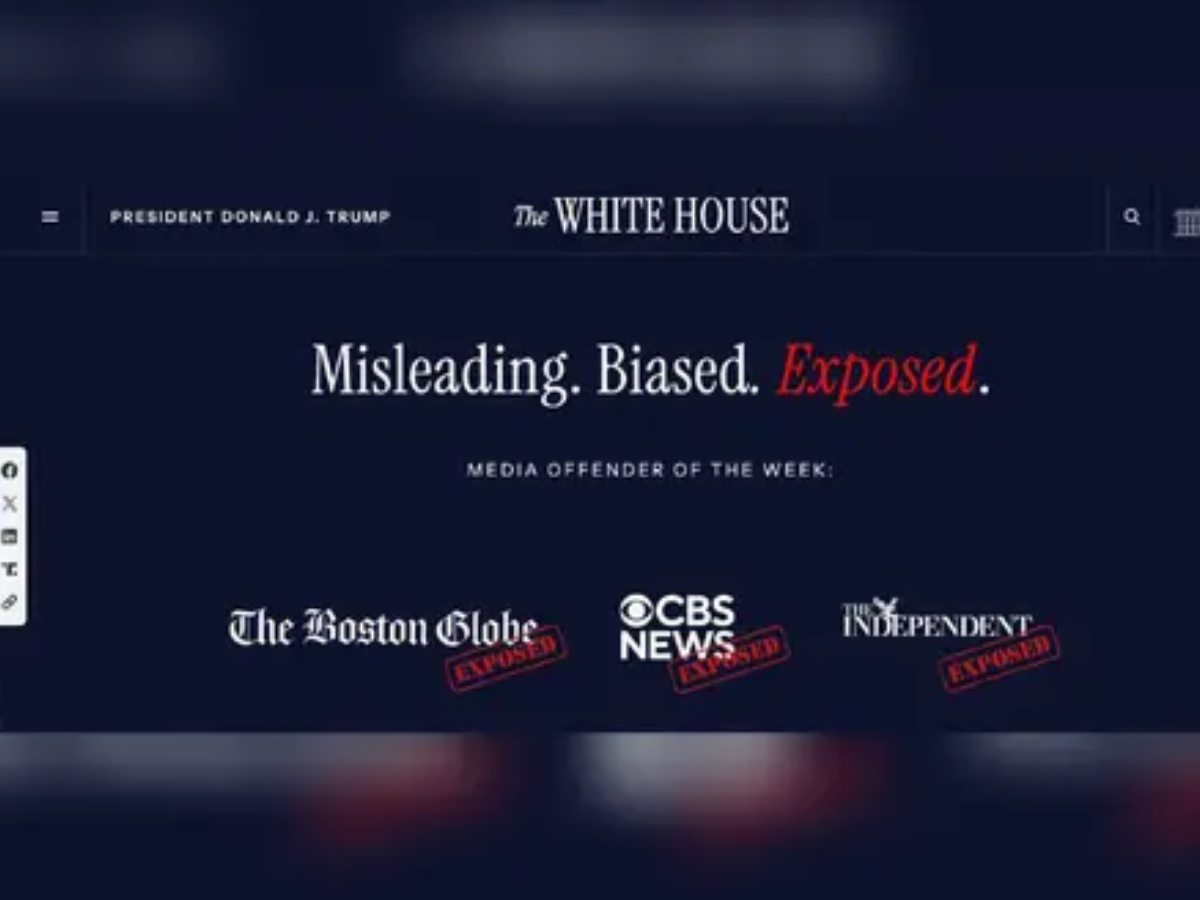
The White House has opened a fresh chapter in its feud with the press by creating a section of its website dedicated to calling out news outlets it says have misrepresented the president.
Readers of the page are greeted with a blunt headline accusing the media of misleading the public and highlighting a number of organisations which it labels “offenders of the week.” The move signals a new willingness to formalise what has long been an informal war on mainstream journalism.
How a Political Clash Became a Public List
The immediate spark was coverage of comments he made about six Democratic lawmakers who questioned the legality of military orders. Their video prompted him to accuse them of behavior bordering on sedition.
He also shared a post echoing the phrase “hang them,” which drew intense scrutiny. Major outlets reported on the uproar, and the administration responded by accusing them of suggesting he had issued unlawful commands. The new web page attempts to turn that dispute into an exhibit of alleged media malpractice.
Criticism Turned into a Catalogue
In addition to the weekly callouts, the site contains an “Offender Hall of Shame.” It ranks newsrooms, links specific articles, and attaches labels like bias and malpractice. Among the top targets are the Washington Post, MSNBC and CBS News.
Even long-established players like the Associated Press, the New York Times, and the Wall Street Journal appear on the list, illustrating how broad the White House’s grievance has become.
Pattern of Confrontation
This database is not an isolated initiative. It joins a trail of lawsuits, settlements and public accusations against major media brands. The president’s habit of calling reporters the “enemy of the people” has become a hallmark of his political identity.
His most recent comments, aimed largely at female journalists, mark a sharp escalation. Insults delivered aboard Air Force One or on Truth Social have become routine parts of his communication strategy.
Why This Moment Matters
Turning political anger into an official catalogue raises some serious questions about the health of public discourse. Most governments challenge the press, but ranking and tagging journalists on a federal site takes this to an uncomfortable level. It erodes the fragile trust in news at a time when many Americans already believe that press accounts are inaccurate.
This new tool risks changing the appearance of political backlash to policy. Sure, it rallies supporters, but that gap between the White House and the institutions that are supposed to keep it in check deepens further.
Disclaimer: This editorial provides analysis and opinion for informational purposes and should not be taken as legal or official guidance.