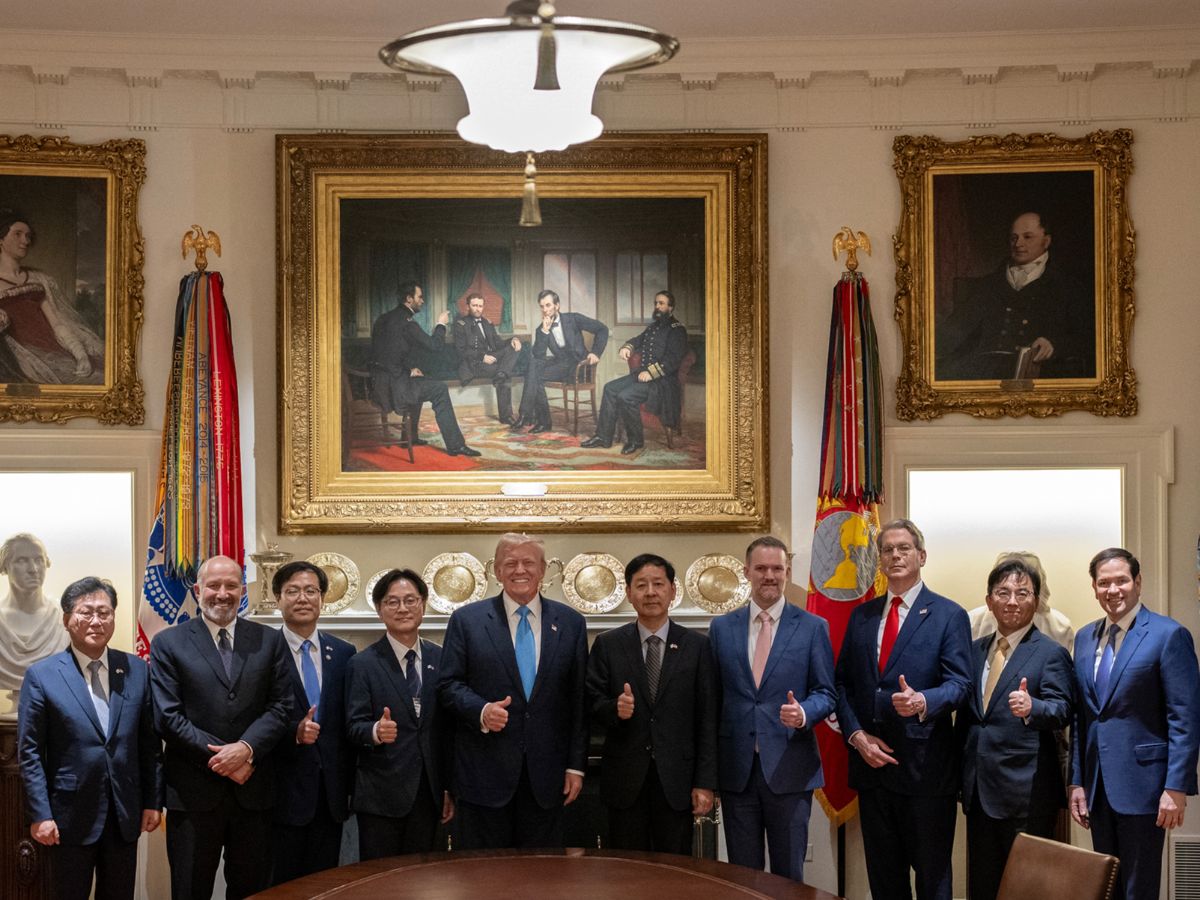
The United States of America and South Korea have signed on a major trade and investment agreement, announced on July 31, 2025. The deal is likely to change the economic and strategic relations between the two allies in the face of quickly evolving global trade patterns.
The Deal – Key Terms
Under the newly declared agreement, South Korean merchandise exported to America will be taxed at 15%. This is a significant reduction from the 25% across-the-board tariff previously threatened by the U.S., providing South Korean industry with a vital respite. Significantly, this 15% level is in line with recent agreements reached with Japan and the European Union, as Washington attempts to normalise tariffs on key trading partners.
Significant investment in US
The most newsmaking aspect of the deal is South Korea’s promise to invest a whopping $350 billion in the United States over a series of years. Official reports have it that this investment will be specifically aimed at U.S.-owned projects chosen by the Trump administration, focusing on key industries like shipbuilding, semiconductors, secondary batteries, biotechnology, and energy. Of the amount, $150 billion is said to be set aside particularly to facilitate American and South Korean firms’ cooperation in shipbuilding, an industry where South Korea leads the world.
LNG worth $100 bn
Furthermore, Seoul has committed to buying $100 billion of U.S. liquefied natural gas and other energy commodities, providing a shot in the arm for American energy producers. On the other hand, the U.S. assured that South Korean companies will not be at a disadvantage relative to others from other countries in future tariffs, especially in sensitive areas such as semiconductors and pharmaceuticals. Nevertheless, U.S. tariffs on South Korean steel and aluminum will continue at an extremely high 50%, subjecting those sectors still to major headwinds.
Political and Economic Implications
South Korean President Lee Jae-myung, who took office in June 2025, welcomed the deal as removing uncertainty for South Korean exporters and providing competitive terms for South Korean merchandise. The agreement was greeted with relief by South Korean industries, particularly automakers and shipbuilders, which were preparing for increased tariffs that could have severely impacted exports and employment at home.
American policymakers highlighted that the agreement brings not only economic gains but also enhances national security interests. In increasing domestic production and energy extraction, U.S. policymakers contend that the deal will decrease reliance on worldwide supply chains that are increasingly susceptible to geopolitical shock.
Strategic Context
The pact was completed just days ahead of a U.S. deadline to raise tariffs on countries that were unable to agree with Washington. It is part of an overall effort by the U.S. administration to rebalance trade, encourage foreign investment in America, and continue to open partners’ markets to U.S. exports—while keeping pressure on competitors like China.
In brief, the U.S.–South Korea agreement marks a new model of high-value investment and partnership, and it sets a precedent for the U.S. in its future negotiations with its closest allies. Both sides indicate that additional details and industry-specific projects will be announced when President Lee makes a mid-August visit to Washington for a bilateral summit.