
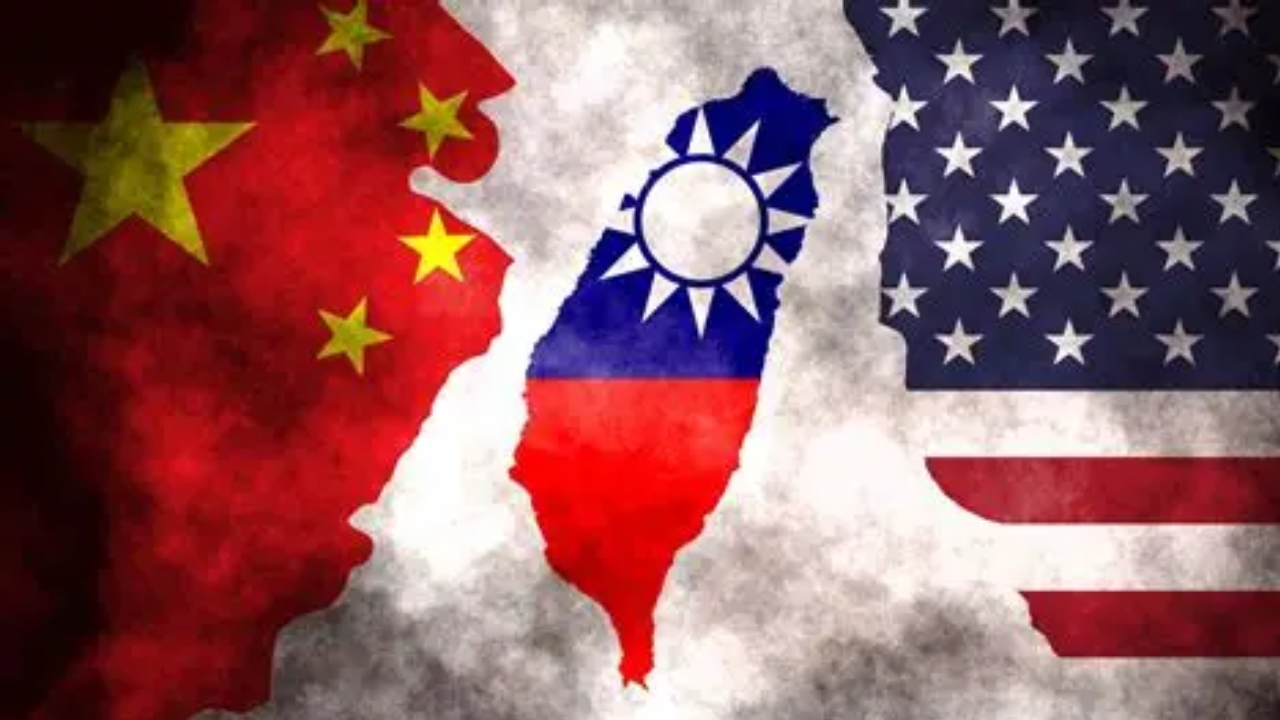
In an escalation of strategic resolve against Chinese aggression, the United States House of Representatives passed the Taiwan Conflict Deterrence Act, which aims to impose targeted costs upon those Chinese Communist Party (CCP) elites in the circumstance of a military invasion of Taiwan. This bill proposes stringent sanctions against the financial and property assets of selected Chinese political figures in the event of China deviating from the status quo in the Taiwan Strait.
According to CNA, the measure requires the Treasury Secretary to publish a report identifying financial institutions and accounts associated with prominent Chinese officials, as well as ban big transactions involving their family members. A public summary of this report must be made available on Treasury platforms in both English and Chinese.
“This bill communicates a clear and bipartisan warning: should the CCP wage war against Taiwan, there will be repercussions,” McClain said during the bill’s voice vote, according to news agency ANI.
Strategic Objectives: Economic Coercion as a Deterrent Tool
Strongly bipartisan in support, the bill provides for a deterrence model in terms of economic and financial retaliation. Under its provisions, the U.S. Treasury Department would have the ability to develop and publicly disclose a list of overseas assets for senior CCP leaders and the members of their families in the event that the People’s Republic of China (PRC) engages in hostile action against Taiwan. Those assets would extend to global financial institutions, real estate, corporate shares and offshore trusts.
Lawmakers supporting the bill argue that if the regime’s very high-ranking officials and their families were to be found ensuring concealment of illicit or illegally hidden wealth, the mere threat of such exposure alone would create in Beijing an overwhelming disincentive to take belligerent actions against Taiwan.
Legislative Momentum and Bipartisan Consensus
Legislation aimed at strengthening deterrence architecture in the Indo-Pacific is gaining traction within the U.S. Congress as U.S.-China tensions over trade, security, and technological supremacy intensify. The House Select Committee on the CCP has championed the bill, which enjoys rare cross-party backing and clearly reflects a collective concern about the probability of military conflict in East Asia.
According to Congressional sponsors, since a blend of traditional sanctions or threats of U.S. military posturing may not serve as deterrence to conflict, it is therefore necessary to identify and personalize consequences for decision-makers in Beijing.
Most importantly, the bill proposes mandating that the U.S. intelligence community enjoys the capability to cooperate with foreign partners to identify, validate, and publicly disclose the worldwide assets of CCP elites. However, the sanctions would not be automatic; they would be triggered by verified acts of aggression, such as military incursions, naval blockades, or cyberattacks on Taiwan.
Thus, the legislation establishes the groundwork for mapping and then preemptively sanctioning the Chinese financial infrastructures of decision-makers in case of any escalation.
Beijing has yet to make an official response to the bill’s passage; however, its previous pronouncements have derided U.S. activities of a similar nature as “hostile interference” in China’s internal affairs. If enacted, this bill will further worsen political relations at a time when both countries are trying to manage strategic competition through limited engagement.
Geopolitically, the act will change the calculus for security decision-making by Japan, South Korea, and Australia and may fortify the deterrent framework of U.S. allies under the Quad and AUKUS alliances.
This step comes on the heels of several recent U.S. actions designed to bolster Taiwan’s defense posture: more military aid, arms sales, and exercise training. It is indicative of the growing consensus in Washington that the defense of Taiwan is not just a regional problem but a global test of democratic resistance to authoritarian expansionism.