
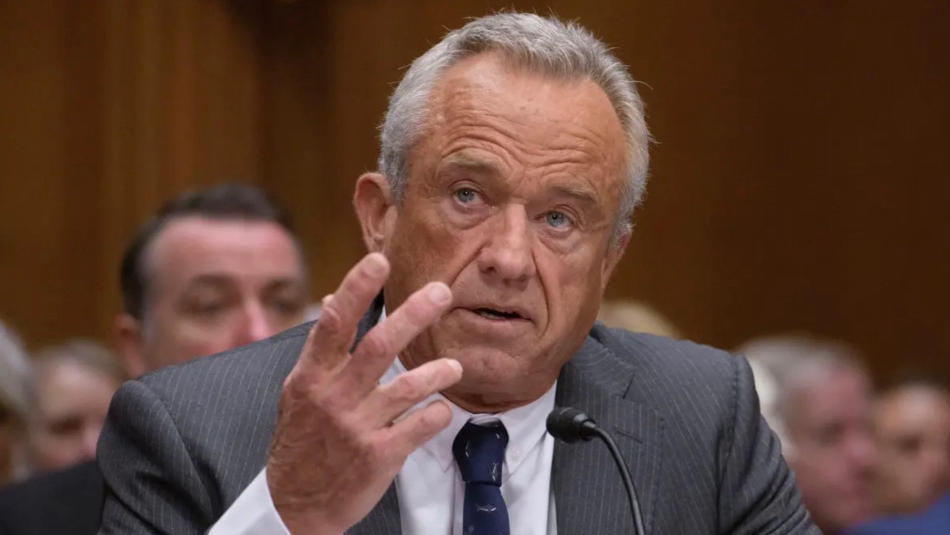
The US Department of Health and Human Services (HHS) has decided to end funding and contracts for several vaccine projects that use mRNA technology to fight respiratory viruses such as COVID-19 and the flu.
Kennedy Shuts Down $500 Million Worth of Vaccine Projects
Health Secretary Robert F. Kennedy Jr. announced on Tuesday that 22 vaccine projects using mRNA technology will be cancelled. These projects were worth $500 million in total. The cancellation aligns with Kennedy’s known doubts about vaccines, especially those developed with mRNA methods.
Since taking charge, Kennedy has reversed many previous vaccine-related policies. He has dismissed the expert vaccine advisory panel, stepped back from supporting COVID-19 vaccination campaigns, and shown little urgency even as measles cases rise.
Kennedy: Focus Will Shift to ‘Safer’ Vaccine Alternatives
In a social media video, Kennedy criticised the mRNA platform and said the move would affect major companies like Pfizer and Moderna. Both firms have been working on mRNA vaccines for illnesses like COVID-19, the flu, and bird flu (H5N1).
“To replace the troubled mRNA programs, we’re prioritising the development of safer, broader vaccine strategies, like whole-virus vaccines and new platforms that don’t fail when viruses mutate,” said Kennedy.
Health Experts Strongly Oppose the Decision
Top public health experts have voiced serious concerns over the announcement. Mike Osterholm, a well-known infectious disease expert at the University of Minnesota, called it, “the most dangerous decision in public health” he has witnessed in the last 50 years.
He emphasized that mRNA technology allows for faster responses during new disease outbreaks, which is vital for global health.
Another leading figure, Dr. Paul Offit of the Children’s Hospital of Philadelphia, also warned against halting mRNA research, especially with the threat of bird flu still present.
“mRNA vaccines have certainly saved millions of lives,” he said.
mRNA Technology Goes Beyond Infectious Diseases
Research into mRNA technology isn’t limited to fighting viruses. Scientists are also studying its potential in cancer treatment. Earlier this year, tech billionaire Larry Ellison spoke at a White House event where he praised mRNA for its promise in developing cancer therapies.
Unlike older vaccines, which require viruses to be grown in eggs or lab cultures, mRNA vaccines use genetic instructions to teach the body to produce a harmless piece of the virus. This process triggers the body’s immune system to build protection.
HHS Clarifies Scope of Project Cancellations
In a follow-up statement, HHS clarified that the decision to cancel funding applies only to the 22 specific mRNA projects. Other programs using mRNA technology across the department will continue.
As of now, mRNA vaccines are approved for diseases like COVID-19 and RSV, but no mRNA-based flu vaccine has been approved yet. Moderna, which is working on a combined COVID-flu vaccine, previously said that mRNA methods can speed up flu vaccine production compared to traditional techniques.