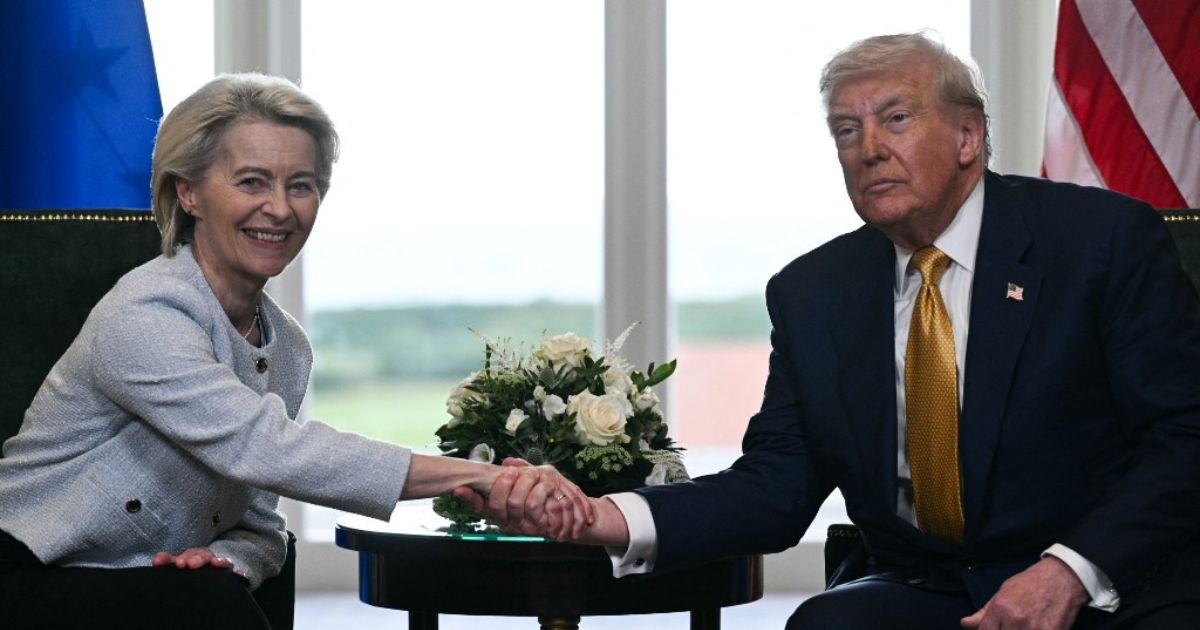
A fresh EU-US trade agreement negotiated between US President Donald Trump and European Commission President Ursula von der Leyen has raised huge uproar across Europe. The agreement, signed after a tense summit in Scotland on Sunday, levies a flat 15% import tariff on the majority of EU goods destined for the United States.
As it avoids a possible calamitous 30% tariff threat from Washington, though, it triples the existing average rate of 4.8%. France has responded with outrage, Germany cautiously, and Hungary has denounced the deal as a diplomatic debacle. Businessmen and ministers caution that this “temporary stability” has a long-term strategic price for Europe’s economy and sovereignty.
Dark Day for the European Union
France has become the most vocal critic of the accord. PM François Bayrou criticized the deal as an act of surrender to US hegemony. “It is a dark day when an alliance of free peoples. determines to submit,” Bayrou tweeted on X. French Europe Minister Benjamin Haddad repeated the sentiments, stating the agreement might provide “temporary stability,” but is “unbalanced” and “not sustainable.
Accord Van der Leyen-Trump : c’est un jour sombre que celui où une alliance de peuples libres, rassemblés pour affirmer leurs valeurs et défendre leurs intérêts, se résout à la soumission.
— François Bayrou (@bayrou) July 28, 2025
The French administration feels the European Commission yielded too quickly. French business groups are saying that a 15% export tariff will pinch margins and erode competitiveness in already struggling industries challenged by inflation and energy price shocks.
Germany Seeks Silver Linings
German Chancellor Friedrich Merz attempted to hit a positive note, describing the agreement as “a step away from unnecessary escalation” and thanking it for preventing a destructive trade war. But German exporters disagree. The 15% tax on auto products will strike German automakers at a time when the sector is incurring an expensive shift towards electrification.
Traders are apprehensive of US tariffs slowing growth and leading to layoffs at Germany’s key manufacturing centres. For some, the deal is postponing disaster rather than preventing it.
Ireland Welcomes Certainty, Regrets the Price
Ireland’s Deputy PM Simon Harris greeted the “measure of much-needed certainty” introduced by the deal. But he also expressed regret at the baseline tariff. Ireland, one of the highest EU exporters to the US, will lose competitiveness under the new terms.
EU Caves to US Pressure Again?
This trade agreement is part of a pattern that annoys many European analysts. The EU seems to be more willing to offer concessions as a result of pressure from the US than in establishing clear terms. Hungarian PM Viktor Orban made it bluntly obvious. “Donald Trump ate von der Leyen for breakfast,” he said. “This is what happened.”
Experts warn that by embracing such imbalances, Europe could lose negotiating power in future tech, drugs, and defense cooperation talks. With the US presidential election looming, some leaders worry the EU is again sacrificing too much in the expectation of a fleeting peace.
What the Deal Actually Means?
Under the accord, the 15% tariff on imports will be levied on 70% of all EU exports to the United States, valued at almost €380 billion. Pharmaceuticals and steel are temporarily exempted, but those remain under negotiation. Although the agreement puts the threat of Trump’s 30% retaliatory tariffs out of the way, it is a long way from the EU’s initial demand for “zero-zero”—no tariffs for either side.
Von der Leyen owned up to the compromise. “Fifteen per cent is not to be underestimated, but it is the best we could get,” she stated.
Looking Ahead
This deal could stop a short-term trade war, but the long-term price Europe pays in terms of economic sovereignty and bargaining leverage is not easy to ignore.
The more irate EU leaders become, the more pressure there will be on the European Commission to take a harder line in future negotiations–with both the US and other partners.