
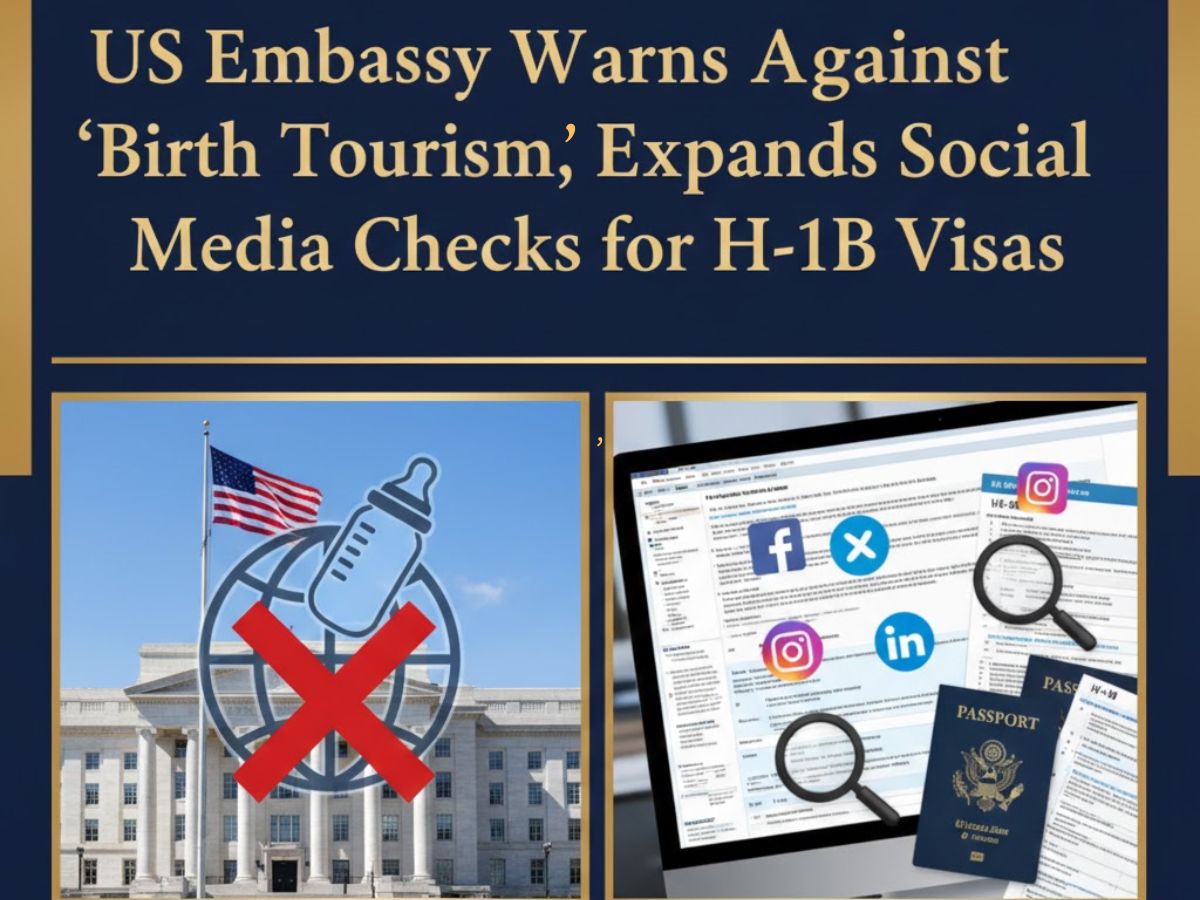
The U.S. Embassy in India has announced two significant changes impacting visa applicants: a clear policy against using tourist visas for “birth tourism” to obtain U.S. citizenship for children, and a major expansion of social media and online vetting to include H-1B specialty occupation workers and their families. These moves signal stricter scrutiny across visa categories for Indian applicants.
What is the “Birth Tourism” Warning?
In a clear post on X, the embassy said consular officers will reject B-1/B-2 tourist visa applications if they think the main reason for the trip is to give birth in the U.S.
The embassy’s statement was unequivocal: “US consular officers will deny tourist visa applications if they believe the primary purpose of travel is to give birth in the United States to obtain US citizenship for the child. This is not permitted.” This targets the practice where individuals travel to the U.S. with the primary intent of securing birthright citizenship for their child, which is granted under the 14th Amendment to all persons born on U.S. soil.
What is the New Social Media Vetting Rule?
In a separate but concurrent development, the U.S. Department of State is expanding its existing visa vetting protocols. Beginning December 15, 2025, an “online presence review” will be applied to all applicants for:
- H-1B visas (for specialty occupation workers)
- H-4 visas (for dependents/spouses of H-1B holders)
Previously, such checks were standard for student (F, M) and exchange visitor (J) visas. The embassy stated this is a “routine” effort to strengthen security and verify that applicants intend to engage only in activities consistent with their visa classification.
Also Read: Putin, Lukashenko Offer Support to Maduro as Trump Intensifies Venezuela Pressure
How Are Applicants Being Affected?
The policy shifts are already causing practical disruptions:
Rescheduled Appointments: Many applicants in India have received emails saying their H-1B and H-4 visa interviews have been pushed to later months in 2026. The embassy said this is due to aligning appointments with “resource availability.”
Strict Adherence Required: The embassy warned that applicants must attend only their newly rescheduled dates, stating that “arriving on your previously scheduled appointment date will result in your being denied admittance.”
Increased Scrutiny: The combined measures mean consular officers will now have a broader mandate to assess both the purpose of travel (for tourists) and the online footprint (for work visa applicants) during interviews.
Your Questions Answered: US Visa Policy Changes FAQs
Q: Does this mean pregnant women cannot get US tourist visas?
A: No. The policy targets intent. A pregnant woman traveling for tourism or business is allowed if she can clearly prove the purpose of her trip. The denial only applies when the officer believes her main and only goal is to give birth for citizenship.
Q: What will consular officers look for in online checks?
A: Officers can check public social media posts and other online footprints to confirm what applicants claim, assess potential risks, and look for mismatches in job history, credentials, or travel purpose.
Q: I have an H-1B appointment. What should I do?
A: Check your email—including the spam folder—for any updates from the embassy or consulate. Go only to the new appointment date. Make sure your social media matches your professional details and avoid posts that could be misunderstood.
Q: Is “birthright citizenship” itself being abolished?
A: No. The 14th Amendment stays the same. This policy only targets visa applicants who plan to exploit the system and does not alter constitutional citizenship rules.
Q: Why is the US focusing on these issues now?
A: These steps fit with the Trump administration’s wider immigration goals, which focus on stopping fraud, increasing visa security, and addressing what it sees as loopholes in the system.
Also Read: Who Is María Corina Machado? Nobel Laureate Vows to Return Prize to a Free Venezuela