
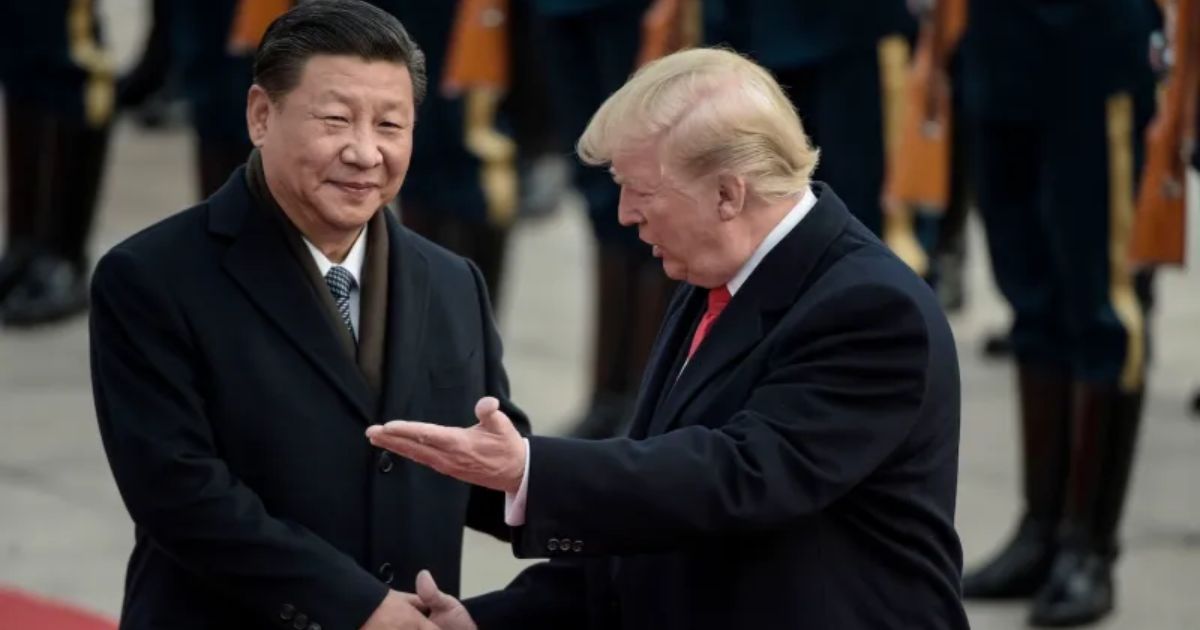
US and Chinese senior-level calls this week have paved the way for an early November visit to Beijing by US President Donald Trump. The visit is possible either around or in between the Asia-Pacific Economic Cooperation (APEC) summit in South Korea and has top priority for trade disputes and security tensions.
Rare Earths: Beijing’s Trump Card
Behind the US-China competition is Beijing’s control of rare earths, a commodity vital to the defense industry of America. As Washington has already slapped 30 percent tariffs on Chinese imports and called on Europe to reciprocate with even harsher measures, China’s dominance of rare earth exports has been a tough counter.
Fudan University’s Wu Xinbo stated rare earth limits had been Beijing’s best tool in the trade war, targeting US defense supply chains for such systems as the F-35 fighter and guided missiles. While civilian shipments were relaxed during the temporary trade compromise, Beijing continues to strictly regulate supplies for use on a defense basis, maintaining its strategic power.
Experts caution that if Trump raises tariffs, Beijing may in turn cut off supplies again, but both threaten to harm themselves. As Tsinghua University’s Chen Qi put it, “Both governments have exhausted options that hurt the other but not themselves.”
ALSO READ: Ryan Routh Begins Trial Over Trump Assassination Attempt in 2024
South China Sea and Taiwan Flashpoints
Aside from trade, Chinese officials reinforced security issues, more so over the South China Sea and Taiwan. Defence Minister Dong Jun informed his US counterpart that Beijing was against “provocations” by foreign countries in the waters of the region. He also cautioned against any move to use Taiwan as a bargaining chip, describing such actions as unacceptable.
Foreign Minister Wang Yi also said Washington has to tread carefully on matters related to China’s “core interests,” emphasizing Beijing’s red lines. Meanwhile, Beijing said it will transform Scarborough Shoal into a marine reserve symbolic gesture intended to reaffirm sovereignty claims challenged by the Philippines, an US treaty ally.
Washington’s Push for Allies
Though Europe has not indicated much interest in becoming part of Trump’s tariff movement, Mexico has already given way to pressure, hiking tariffs on Chinese and other Asian vehicles to 50 percent. However, Chinese experts believe that Beijing has the upper hand due to greater economic coordination with allies in infrastructure, technology, and investment spheres where Washington does not have the leverage China enjoys.
As Trump considers his China visit, the stakes are plain, both countries are still entangled in a struggle that extends far wider than tariffs, with rare earth minerals and disputed waters governing the next chapter of their tense relationship.