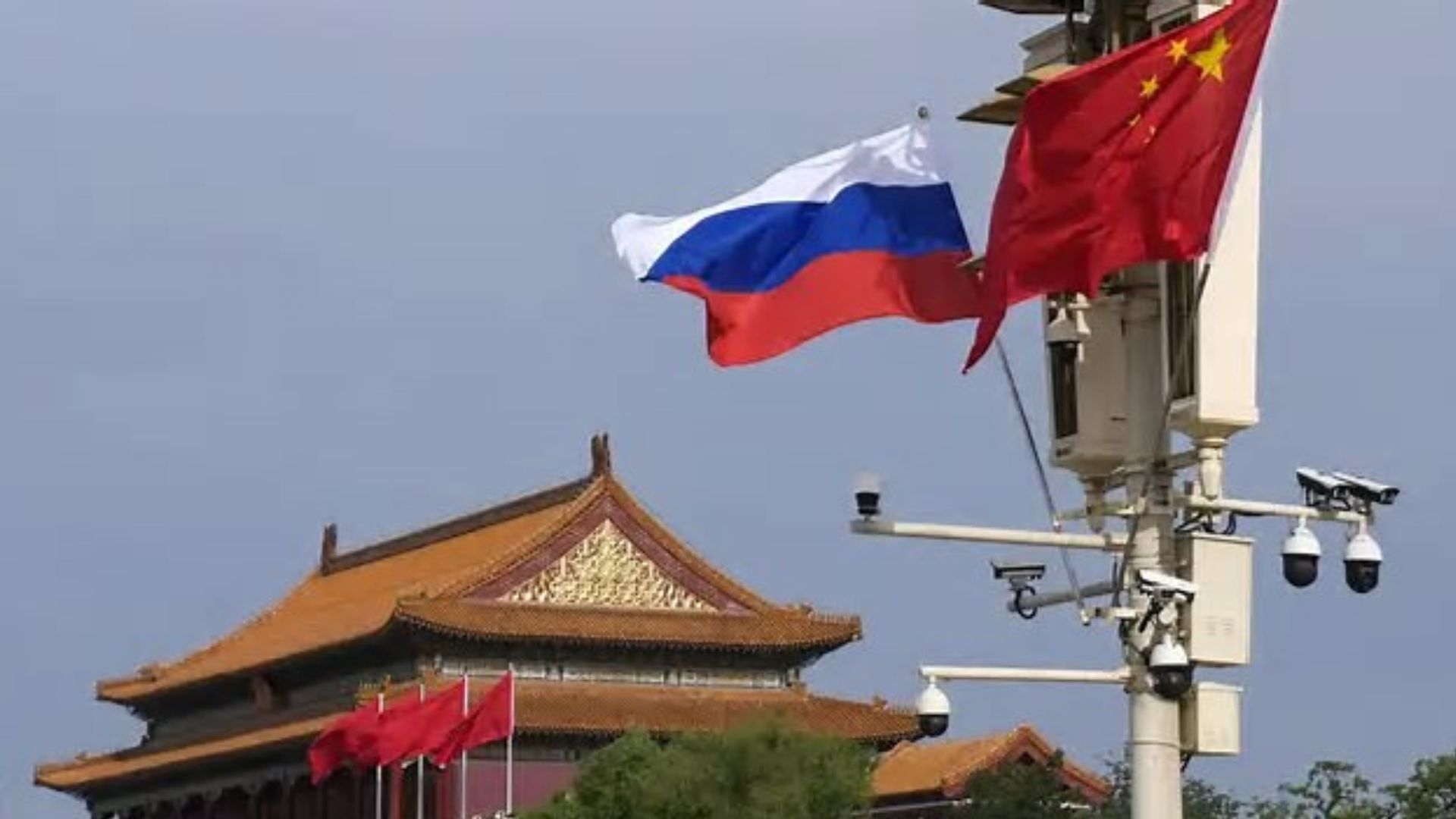
As the United States and China work toward settling several trade disputes, one major issue continues to divide them: Washington’s demand that Beijing stop buying oil from Iran and Russia.
Following two days of trade talks in Stockholm, China strongly rejected the US pressure. In a post on X (formerly Twitter), China’s Foreign Ministry said, “China will always ensure its energy supply in ways that serve our national interests.” It added, “Coercion and pressuring will not achieve anything. China will firmly defend its sovereignty, security and development interests.”
Diplomatic Optimism Meets Strategic Resistance
These statements came even as both nations signaled optimism about making progress in their economic relationship. Recent talks aimed to reduce tariffs and ease trade restrictions, raising hopes for a new deal between the world’s two largest economies. But China‘s strong response reveals that it won’t compromise when it sees its sovereignty or energy security at stake.
US Treasury Secretary Scott Bessent, who attended the talks, acknowledged China’s firm position. Speaking to reporters, he said, “The Chinese take their sovereignty very seriously.” He added that the US does not intend to interfere in China’s sovereignty, but in response to oil purchases, “they would like to pay a 100 per cent tariff.”
Despite the pushback, Bessent said negotiations are still moving forward. “I believe that we have the makings of a deal,” he told CNBC, although he admitted the Chinese were tough negotiators.
Trump’s 100% Tariff Threat Faces Skepticism
Gabriel Wildau, managing director at consulting firm Teneo, expressed doubt over former President Donald Trump enforcing a full 100% tariff. He warned that such a move would risk undoing recent progress. “Realising those threats would derail all the recent progress and probably kill any chance” of a trade deal between Trump and Chinese President Xi Jinping, Wildau said.
The US aims to block oil revenue from Iran and Russia, both of whom rely heavily on oil sales to support military activities. Russia continues its war against Ukraine, while Iran funds several militant groups across the Middle East.
China Unmoved by US Demands
China, however, remains unmoved. When Trump introduced large-scale tariffs in April, China was the only country to retaliate directly. It made clear it would not submit to American pressure.
“If the US is bent on imposing tariffs, China will fight to the end, and this is China’s consistent official stance,” said Tu Xinquan, director of the China Institute for WTO Studies in Beijing.
Tu believes China doubts the US will follow through on its threats, especially given America’s inconsistent foreign policy toward Russia. He pointed out that Beijing’s support for Moscow has remained steady, while Washington’s strategy appears uncertain.
Oil as a Bargaining Chip
Scott Kennedy, a senior adviser at the Center for Strategic and International Studies in Washington, suggested that China may be using its oil trade with Russia and Iran as a bargaining chip. He said China likely won’t back down, especially if it sees contradictions in the US position.
Danny Russel, a fellow at the Asia Society Policy Institute, agreed. He said Beijing believes it holds a stronger hand in negotiations, especially because Trump wants a high-profile agreement with Xi. “Rejecting a US demand to stop buying oil from Iran or Russia is probably not seen as a deal-breaker, even if it generates friction and a delay,” he said.
Russel added that oil from Russia is vital for China. “Beijing simply cannot afford to walk away from the oil from Russia and Iran,” he explained. “It is too important a strategic energy supply, and Beijing is buying it at fire-sale prices.”
China’s Heavy Dependence on Oil from Iran and Russia
According to a 2024 report by the US Energy Information Administration, China buys around 80% to 90% of Iran’s oil exports—about 1 million barrels per day. This oil plays a significant role in fuelling China’s economy.
When Iran’s parliament proposed shutting down the Strait of Hormuz after US strikes on Iranian nuclear sites in June, China publicly opposed the move, recognizing its importance as a critical global oil route.
China is also a major customer of Russian oil, second only to India. In April, China increased its imports of Russian oil by 20%, reaching 1.3 million barrels per day, according to the KSE Institute at the Kyiv School of Economics.
India Also Targeted Over Russian Oil
This past week, Trump announced plans to place a 25% tariff on Indian goods, along with an additional tax due to India’s continued oil trade with Russia. In response, India’s Foreign Ministry emphasized its long-standing partnership with Moscow, calling the relationship “steady and time-tested.”
Stephen Miller, a senior White House adviser, stated that Trump views India’s oil purchases as unacceptable. Speaking on Fox News, Miller said, “People will be shocked to learn that India is basically tied with China in purchasing Russian oil.” He added that the US must “get real about dealing with the financing of this war.”