
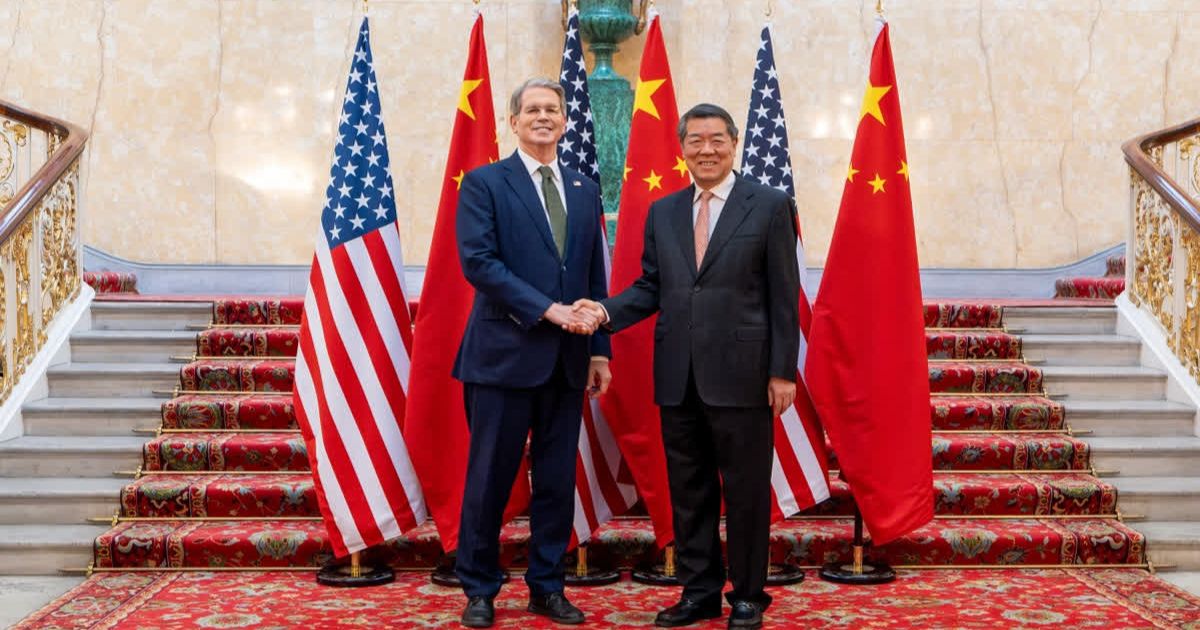
The United States and China have resumed high-level trade negotiations in Stockholm to avert a new wave of tariffs and prolong a three-month standoff. With an impending August 12 deadline, the two sides seek to end longstanding differences that fueled one of the most debilitating trade wars in recent times.
Riding on the line are not just hundreds of billions’ worth of goods, but also global supply chains and the path to a hoped-for summit between President Donald Trump and President Xi Jinping later in the year. Tariff relief and fewer export controls are what China desires. More domestic rebalancing from Beijing and preventing China’s increasing influence, particularly on rare earth minerals, is what the US wants.
Stockholm Meeting Seeks to Defer Tariff Escalation
Stockholm negotiations come after Trump’s breakthrough agreement with the European Union, a 15% tariff on EU products and deep investment commitments. Next on the agenda is Beijing. If the US and China don’t agree by August 12, current tariffs would revert to triple-digit levels, threatening what analysts term a “de facto trade embargo.”
Thus far, there is a modest expectation from officials of a 90-day extension of the existing tariff truce reached in May. Trade experts maintain that this would stall escalation and leave time to schedule a Trump-Xi summit in October or November. The US Treasury remains tight-lipped officially but is generally regarded as being behind the scenes to secure this extension.
Trump-Xi Summit Hangs Over the Horizon
Trump has made clear he wants a deal and a high-profile visit to China. “We’ve really sort of made a deal with China, but we’ll see,” he said on Sunday. A summit with Xi could help lock in concessions and boost his global image ahead of US elections.
Beijing is also interested, reportedly willing to revive its 2020 pledge to purchase more American farm goods—if Washington eases its 20% fentanyl-linked tariffs. But much remains a matter of timing. Any impromptu eruption in tariffs or export controls can set back summit preparations altogether.
China’s Control of Rare Earth Minerals
Another underemphasized consideration is China’s control over rare earth minerals. The minerals drive everything from military technology to electric cars. Beijing’s previous suspension of rare earth exports and the US prohibition of Nvidia’s AI chips illustrate the way supply chains now function as bargaining chips.
Analysts say that unless the US relaxes its tech curbs, China may reinstate restrictions on these materials, particularly if negotiations stall. Trump’s team has allegedly put on hold further tech export controls to prevent sabotaging the negotiations. The Financial Times says Commerce Department staff were instructed to “hold off” new restrictions.
More Fundamental Issues Still Unresolved
Although the Stockholm talks provide a time-out, neither party has addressed basic issues. The US charges China with inundating world markets with low-cost products under its state-driven system. China alleges that US export controls aim to stifle its growth. These issues will require more intense negotiation far beyond tariff deadlines.
Scott Kennedy, a China analyst at CSIS, indicated Geneva and London negotiations earlier this year were regarding halting escalation and not bridging the structural gap. “A 90-day ceasefire is probable, but no real deal,” he said.
Fragile Truce Buys Time, Not Trust
US Treasury Secretary Scott Bessent would like to see China transition towards domestic consumption, something the US has long requested. But with elections approaching and geopolitical tensions on the rise, even modest victories will prove difficult to win.
If the Stockholm extension holds up, it could lead to a Trump-Xi summit. But the deeper divide persists. Unless both sides tackle structural challenges and mutual suspicion, the trade truce will be tenuous and temporary.