
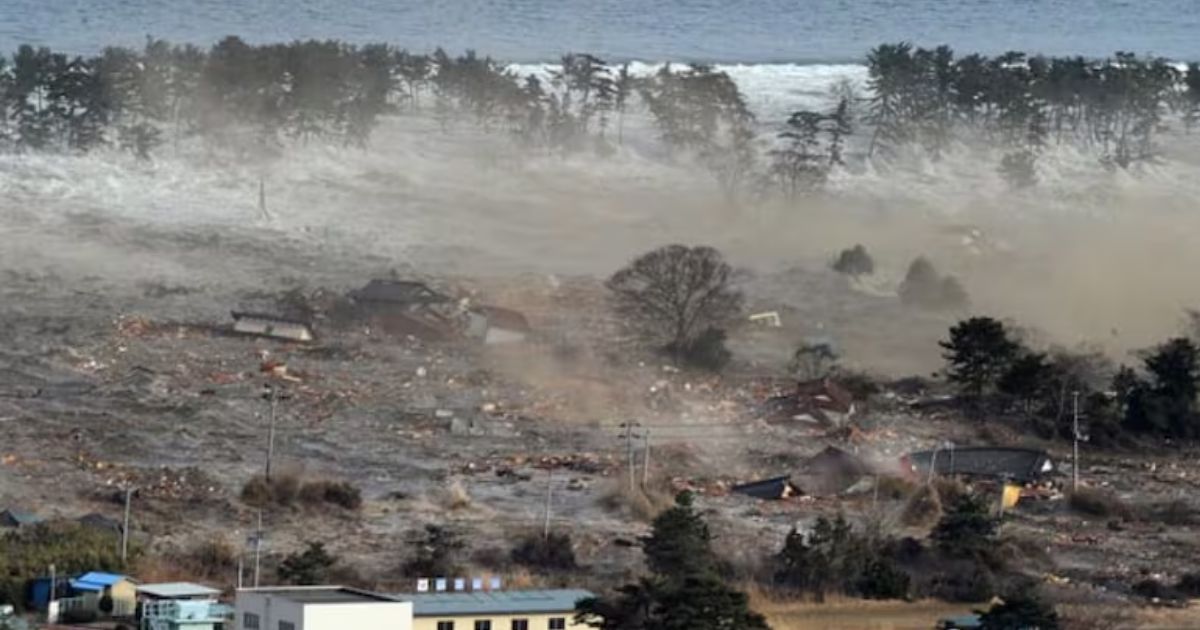
Tsunami waves hit Hawaii on Wednesday following an 8.8-magnitude earthquake that struck off Russia’s Kamchatka Peninsula. The US Coast Guard immediately closed all harbours within the Hawaiian Islands. It also instructed all commercial ships to remain offshore pending further notice. Official warnings were placed on low-lying areas, where people were advised to vacate and move towards higher ground.
At the same time, tsunami warnings radiated across the Pacific—from Russia’s eastern coast to Japan, Alaska, and the US west coast. Waves of up to 13 feet are forecast. Specialists warned of aftershocks and further wave movement. This incident has also once again sparked fears of climate-related ocean hazards in the region.
Russia Quake Sends Waves Across the Pacific
The earthquake, measured at a shallow depth by the US Geological Survey, hit off Russia’s Kamchatka Peninsula. Its magnitude and position prompted an instant tsunami alert throughout the Pacific basin. Officialdom in Japan, Alaska, and the US coastal states has been kept on high alert.
Russia’s eastern seaboard was initially hit by the waves. But Hawaii later became the centre of attention as the tsunami journeyed thousands of miles out into the ocean.
Harbours Closed, Ships Told to Remain Offshore
The US Coast Guard acted quickly. It shut down all harbours in Hawaii and instructed all commercial vessels to leave ports. The ships were instructed to keep offshore until the waves pass. “Ships passing in the area of the Hawaiian Islands or approaching ports in Hawaii shall stay offshore until conditions dissipate,” CNN reported the Coast Guard Oceania District as saying.
These measures were intended to avoid the destruction of vessels and port facilities. The Coast Guard is keeping an eye on the situation and will open operations when it’s safe to do so.
Residents Instructed to Leave Low-Lying Areas
State governments issued emergency evacuation notices. Residents in coastal and low-lying areas were ordered to evacuate as soon as possible to higher ground. Officials also warned that the initial waves could hit Hawaii at any time.
They also warned that aftershocks or further waves are possible. Emergency shelters opened on islands. Highways leading to higher areas witnessed high volumes of traffic as residents heeded evacuation instructions.
New Warning Sign: Climate and Ocean Threats
Scientists are monitoring the event closely. Earthquakes naturally cause tsunamis, but warming oceans and changing sea levels might strengthen their impact. Increasing sea temperatures have a direct influence on tectonic plate action and the degree to which ocean disturbances increase in size. Emergency response systems and seashore structures are put under more pressure today than a decade or so ago.
Experts explain that the Pacific region—susceptible to both earthquakes and climate-related phenomena—is increasingly vulnerable. The combination of seismic activity and sea-level rise may render future tsunamis more catastrophic, particularly for island archipelagos like Hawaii.
Pacific on High Alert
With alerts sent in multiple countries, the Pacific is still at heightened alert. Hawaii is still tracking approaching waves. Emergency crews are kept on standby. Meanwhile, aftershocks of the earthquake can continue to pose threats in the next 24 hours. Once the sea subsides, attention will be turned to recovery and recalculation of coastal defenses.
This incident is a chilling reminder of the seismic unpredictability of the Pacific—and the increasing impact of global climate trends on natural disasters.