
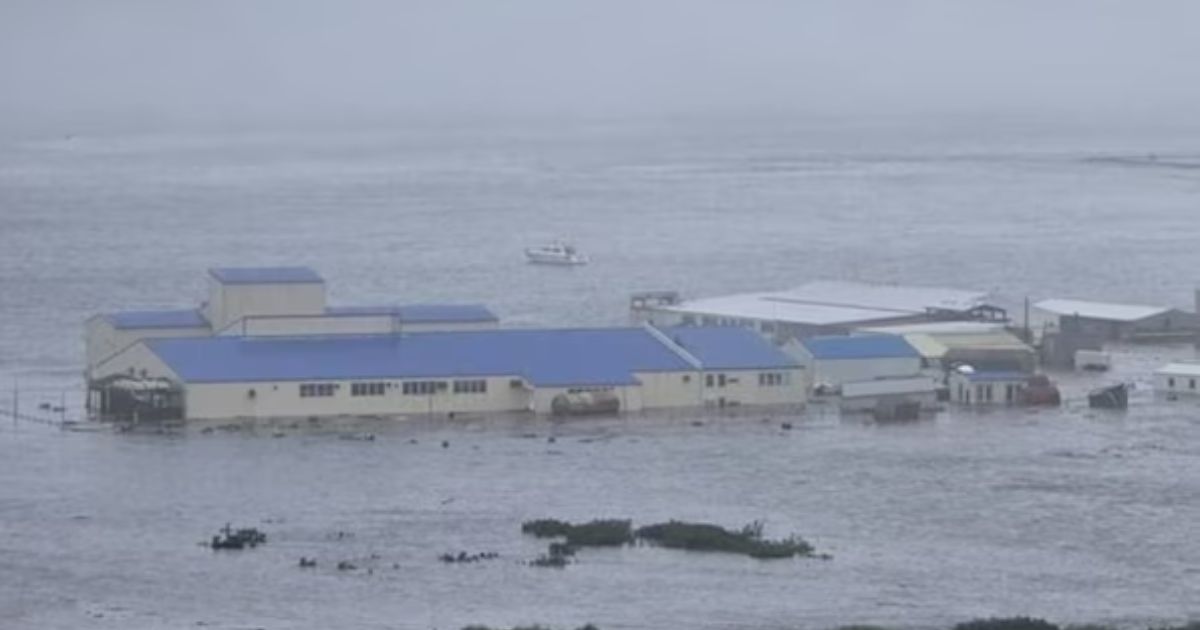
Tsunami waves hit Midway Atoll early Wednesday after a huge 8.7-magnitude quake close to Russia’s Kamchatka Peninsula. Wave heights of up to 7 feet were felt on the low-lying Pacific atoll, which is part of the Northwestern Hawaiian Islands. The US National Weather Service (NWS) verified that a tsunami had developed and issued warnings of “expected impacts” on various islands.
Social media and sensor data indicated rapidly advancing waves headed to Hawaii, leaving mere minutes until landfall. Emergency warnings were dispatched throughout the Pacific, including Japan, Russia, Alaska, and the West Coast of the US. The disaster has heightened serious questions regarding the susceptibility of outlying islands to sea catastrophes.
Earthquake Sparks Pacific-Wide Tsunami Warnings
The quake hit at 8:25 a.m. local time (2325 GMT Tuesday). The initial reading placed the magnitude at 8.0, which was later increased to 8.7. The shallow depth and offshore epicentre of the quake set off tsunami warnings throughout the Pacific basin.
Officials in Russia, Japan, Alaska, and coastal states in the United States issued the instant evacuation warning. Both the Pacific Tsunami Warning Centre and the NWS confirmed a tsunami had been created and would first affect island communities.
7-Foot Waves Crash Midway Atoll
Midway Atoll, some 1,300 miles northwest of Honolulu, was among the first bodies of land to feel the waves. Various sources on X (formerly Twitter) verified a sudden sea rise. One report witnessed a 7-foot surge in seven minutes. Another reported sea levels initially falling over 2 feet before rising well above 5.2 feet above mean sea level.
Meteorologist Bryan Bennett observed that the record oscillation looked similar to patterns from the 1952 Kamchatka quake, which also triggered devastating waves to Hawaii. Ben Noll, The Washington Post’s meteorologist, verified a 5.9-foot surge, which added strength to the danger.
Hawaii Next in Line for Tsunami Impact
Hawaii has little time to respond, experts have warned. The waves are travelling quickly across the Pacific Ocean. Coastal residents were advised to leave immediately by emergency agencies. Warnings on social media emphasized that Midway Atoll is only 18 feet above sea level. The threat of even taller waves has caused alarm throughout Hawaii.
Shelters have opened. Roads out to higher ground are jammed. Officials say the first waves will hit Hawaiian shores within 30 minutes of the impact off Midway.
Small Islands Face Growing Tsunami Risk
This incident has brought to light a more profound problem—the alarming susceptibility of remote islands such as Midway. Low-lying and less developed, such islands are unable to withstand wave forces as continental coasts do. Specialists point out that sea-level rise and an increase in ocean temperatures will only worsen this.
Even slight rises in sea level diminish the buffer to tsunami waves. In places such as Midway, several inches of sea rise might render them submerged. Scientists caution that numerous island chains in the Pacific are one disaster away from destruction.
Pacific Remains on Edge
With aftershocks imminent and tsunami waves remaining active, the whole Pacific basin continues under close surveillance. Midway’s impact is only the start. Hawaii and the other coastal regions are still in the path of the tsunami. Emergency crews continue to watch sensors and send out warnings.
While warnings remain in effect, island nations now have to contend with a larger threat: the gradual, relentless degradation of natural defenses in the context of rising seas and more frequent catastrophes.