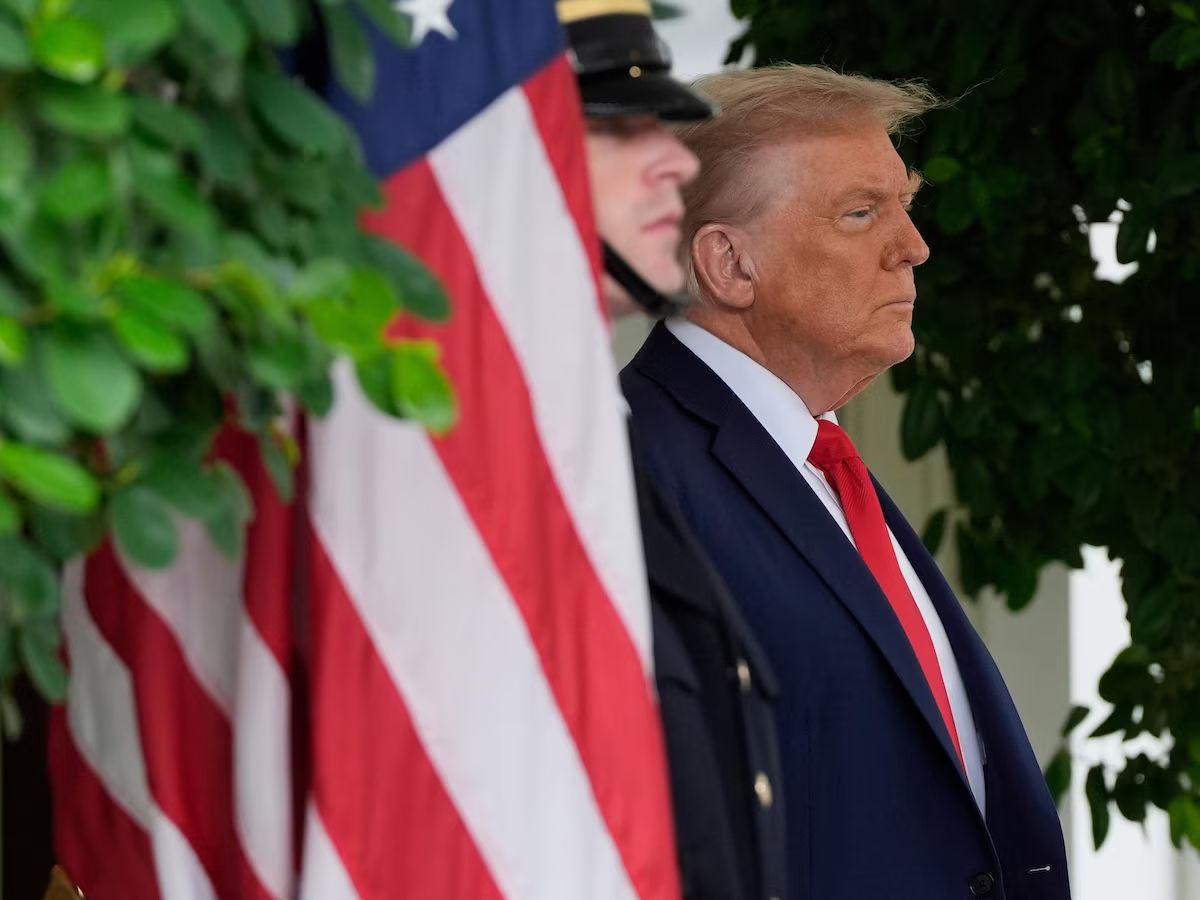
In American politics, few battles are fought with as much stealth, and as much consequence, as the drawing of lines on a map. This year, those lines have taken center stage again, as President Donald Trump pushes Republican-led states to redraw congressional districts, not just to survive next year’s midterm elections but to potentially cement Republican dominance for decades to come.
The stakes are enormous: the GOP currently holds a 219-212 majority in the House of Representatives. History says the party in power almost always loses seats in midterms, as Trump himself did in 2018 and Joe Biden in 2022. But Trump is betting that redistricting, wielded aggressively, could break that cycle.
The Texas Trigger and California’s Counterpunch
Texas fired the opening shot. Its Republican-controlled legislature approved a new map that could create five additional GOP seats. Within days, California Democrats floated their own retaliation: a proposal to add five blue seats, subject to a November special election.
What once seemed like local politics has now escalated into a national arms race of partisan gerrymandering, sharpened by modern data tools that make districts surgically precise.
Former GOP congressman Adam Kinzinger, himself ousted by a redrawn map in Illinois, put it bluntly: “Every time we break a norm in politics now, that norm never comes back. It’ll be an avalanche of constant redistricting.”
Democracy at the Edge
The fallout isn’t theoretical. A Reuters/Ipsos poll shows that most Americans oppose partisan gerrymandering and fear it erodes democracy. Yet, with only three dozen truly competitive districts left out of 435, real contests may soon shrink to party primaries — where the most partisan voices dominate.
Thomas Kahn, a veteran congressional scholar, warned: “If Republicans build institutional advantages through gerrymandering, they’ll create a lock on the House. And I don’t think that’s good for democracy.”
But Republicans argue the opposite. With 23 state legislatures and governorships under GOP control, compared to Democrats’ 15, they see the advantage as both strategic and fair game, a counterbalance to years when Democrats enjoyed dominance.
Demographics, Data, and the Minority Voter Puzzle
The irony lies in who is driving population growth in red states. Census data shows nearly all new residents in Texas and Florida since 2020 have been Hispanic, Black, or Asian. By 2030, these states could gain as many as seven or eight new seats combined.
Trump, who last year won the national Hispanic vote 51%–46%, sees opportunity. The Texas maps, crafted under his guidance, appear to court Hispanic voters in some districts. Yet Democrats accuse Republicans of diluting their power by slicing minority-heavy regions and merging them with conservative white suburbs.
As Hakeem Jeffries, the Democratic House leader, put it: “In Texas, this is a racial, partisan gerrymander ordered by Donald Trump. And we’re not going to let it happen.”
Also Read: ‘Will Buy Oil Where It’s Cheapest’: India Slams Trump’s Tariffs as ‘Unjustified’
Polarization, Not Policy
The redistricting storm also reflects a broader erosion of moderation in Congress. Trump’s second term has seen moderate Republicans like Don Bacon and Mike Gallagher forced out after clashing with the administration. The center is shrinking, and with maps locking in partisan gains, compromise is becoming collateral damage.
Former California Republican John Duarte, ousted in 2024, captured the mood: “We have major issues to solve. We’re not solving them. Everyone’s running away from the ball.”
The lines being drawn now are not just about 2026, they are about whether American democracy tilts further into a game where politicians choose their voters, rather than voters choosing their politicians.