
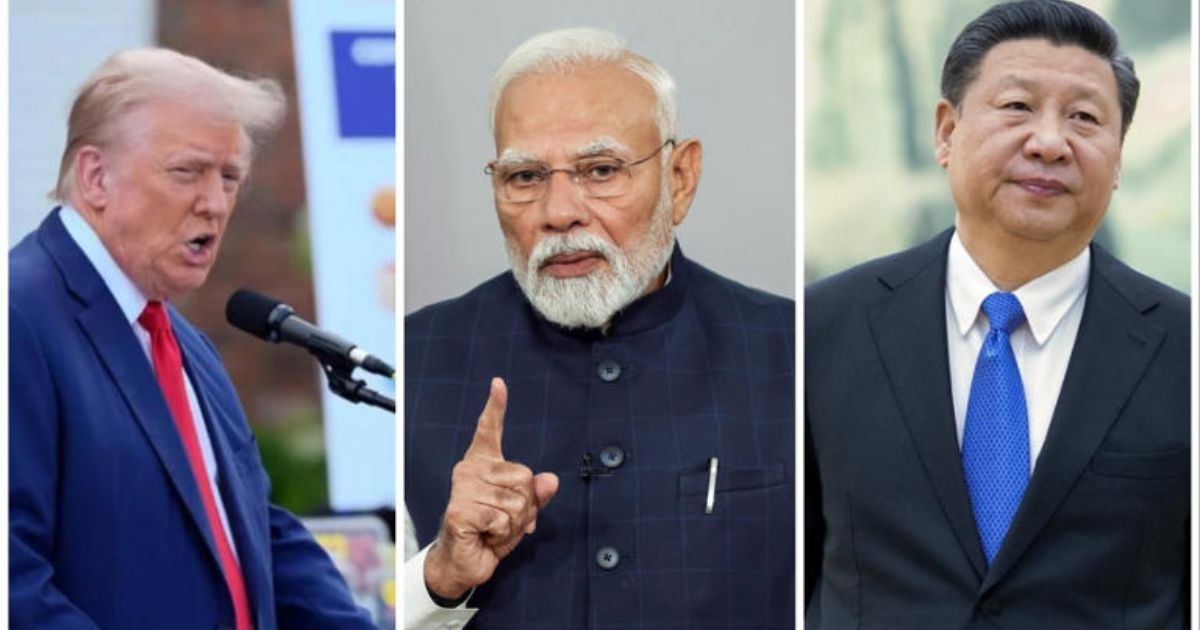
US President Donald Trump has threatened broad new sanctions on nations that purchase Russian oil, ratcheting up efforts to tighten Moscow’s economy and bring an end to the war in Ukraine. But whereas India has been hit with stinging tariff increases, China, the biggest purchaser of Russian crude, so far has escaped similar chastisement.
The action has triggered doubts on why New Delhi alone is being targeted when Beijing, which received a record 109 million tonnes of Russian oil last year, largely escaped.
India Faces Tariffs, Accusations of “Profiteering”
Last month, Trump doubled tariffs on Indian products to 50 percent, naming the country’s soaring Russian oil imports as the reason. India imported less than 1 percent of its oil from Russia prior to the war in Ukraine. Imports soared to nearly 42 percent currently, US Treasury Secretary Scott Bessent charged, accusing India of “arbitrage” purchasing discounted Russian crude, refining it, and selling it at a profit.
“They’ve made $16 billion in excess profits,” Bessent told CNBC, calling India’s trade behavior “financing Russia’s war.” White House officials including Peter Navarro and Stephen Miller have echoed the criticism, warning that New Delhi’s imports are helping sustain Moscow’s war effort.
On the other hand, Bessent minimized the role of China, pointing out that its Russian oil imports had increased by little more since the war started. “China has a diversified input of their oil,” he contended, indicating Beijing was less intentionally involved in arbitrage.
Why China Gets a Softer Touch
Trump has consistently avoided demands to impose comparable secondary sanctions on China. Talking to Fox News, he did suggest that a broader trade negotiation was in play when making his strategy. Rare earth minerals essential for clean energy, semiconductors, and defense technologies are still at the center of current US-China negotiations.
“Now, I’ll have to think about it in two or three weeks,” Trump replied, implying he was stalling to negotiate a broader trade agreement. Economists comment that the US economy is significantly reliant on Chinese goods and minerals, particularly in the months leading up to the holiday shopping season. Imposition of punitive tariffs now would endanger domestic inflation and upend important supply chains.
In recent weeks, Washington has also relaxed some Chinese semiconductor restrictions, including permitting Nvidia to sell advanced chips to Beijing in return for a federal tax on sales. The step, coupled with a temporary tariff truce reached in May and renewed in August, reflects Trump’s tightrope walking: being hard on China without engaging a full-blown trade war.
Lawmakers in both parties are pressing the Sanctioning Russia Act of 2025, legislation which would authorize Trump to impose tariffs of up to 500 percent on any nation buying Russian energy. Senators are said to be waiting for the president’s approval.
Vice President JD Vance described the China question as “more complicated,” while Secretary of State Marco Rubio cautioned that it may increase energy prices around the world to sanction Beijing. China’s Washington embassy stated its trade with Russia is legitimate under international law.
At the same time, China’s economy is beginning to feel the strain. Production in factories, investment, and retail sales eased in July, while youth unemployment jumped to almost 18 percent. Economists such as Alicia Garcia Herrero of Natixis say that Beijing has been preparing for potential sanctions by diversifying supply chains, but caution that increased US tariffs may still “increase inflation for American consumers.”
A Delicate Balancing Act
The stakes for the US and China remain high. America’s trade deficit with Beijing was almost $300 billion last year, and Trump’s tariffs have already transformed global trade flows. For India, however, the pressure is growing. New Delhi has emerged as Washington’s priority target as Trump seeks to cut Russia’s financial lifelines without destabilizing ties with China.
With the war in Ukraine entering its fourth year and world energy markets teetering, Trump has a strategic bet to make: punish both of Russia’s largest oil consumers, or keep tiptoeing that thin line between economic sanction and political expediency.