
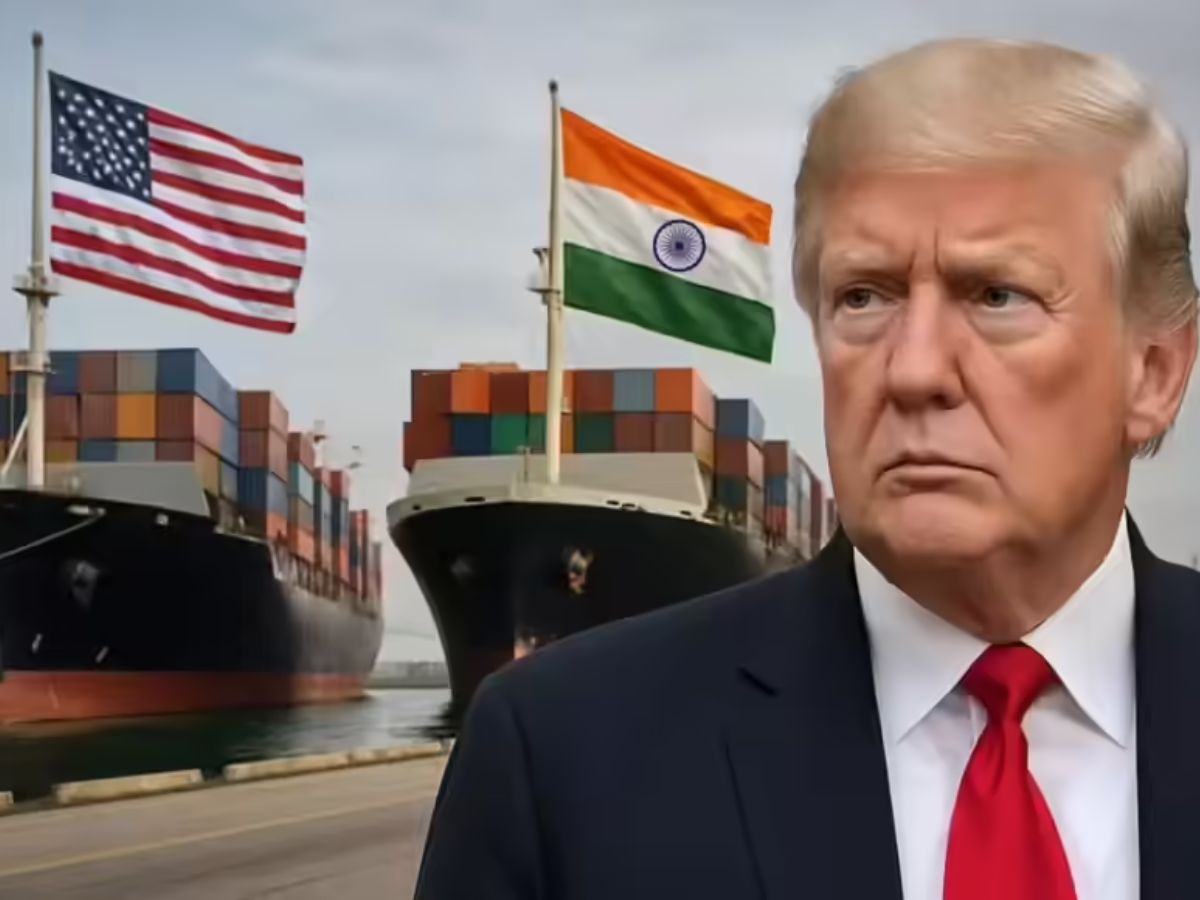
Commencing at midnight, the reciprocal duties will be implemented on Indian imports. A 25% levy is being imposed on Indian shipments to the US, and the remaining 25% will be applied on August 28.
This action raises significant concerns about the interplay between geopolitics and economics, which represents a sharp rise in trade hostilities.
Tariffs Staged in Two Phases
US President Trump issued an executive order on August 7, imposing a 25% “reciprocal tariff” that went into effect right away. Then, on August 28, another 25% surcharge will apply, bringing the cumulative duty to 50% on Indian goods.
Oil and Diplomacy
This reaction of the US to these sanctions is based on India’s ongoing imports of crude oil from Russia. Donald Trump claims these imports partly fund Russia’s war in Ukraine.
Meanwhile, India maintains that energy security, not geopolitical alignment, is the driving force behind its purchases.
ALSO READ: What Is Reciprocal Tariff & How It Affects Indian Exporters ?
Unequal, But Intentional
The selective target reveals fundamental biases and analysts’ caution. China, which purchases more Russian oil, is only subject to a 30% tariff rather than a 50% one.
Indian leaders are already reacting. Congress MP Shashi Tharoor called the tariffs “uncalled for and unfair” and urged the government to consider matching tariffs and pivot to non-Western trade partners.
Tariffs as a Political Compass
By staging the tariffs in two waves, the US sends a clear signal that this move goes beyond economics — it turns trade policy into a tool of geopolitical messaging.
The first wave makes headlines right away, and the second wave builds pressure over time. It may be necessary for countries to get ready for Trump’s tariffs as foreign policy instruments rather than just stagnant taxes.
ALSO READ: Trump’s Tariff Blow Hits India Hard—Why Is China Spared? Expert Points to Geopolitical Grudge
Businesses and Markets
Experts predict these tariffs will slash Indian exports by over 50%, hitting textiles, pharmaceuticals, and auto parts the hardest. Indian stock markets are already twitching, awaiting clarity on broader fallout.
The 25% tariff kicking in tonight, and the additional round on August 28, mark more than a trade dispute — they represent a serious challenge to India’s foreign policy independence.
By concentrating on India’s energy trade with Russia, Trump is using tariffs as a tool for political and economic pressure, and the move raises doubts about India’s commitment to strategic independence.
India must now decide how to protect & defend its interests while preserving international relations. Future developments could change how poor countries respond to global superpowers’ economic pressure.
ALSO READ: What Does Pakistan Army Chief’s Surprise Visit to Washington Mean for India–US Ties?