Cook Pushes Back At “Illegal Firing”
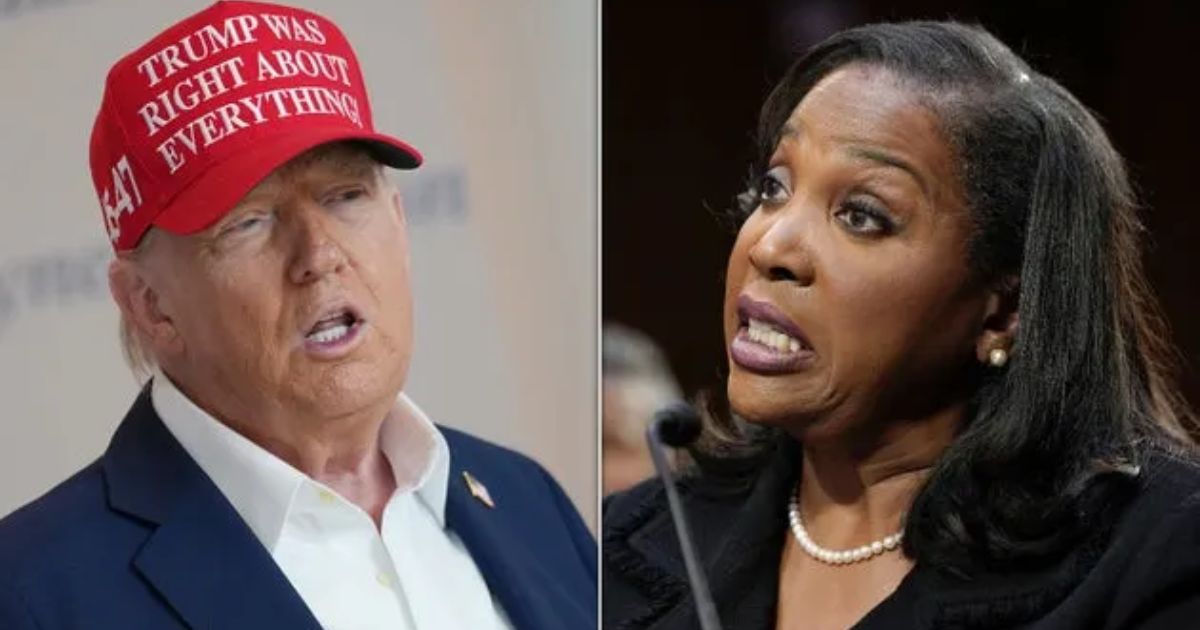
Federal Reserve Board Governor Lisa Cook is getting ready for a legal fight after former US President Donald Trump announced her firing from office, an action her lawyer says is illegal. Cook, the first Black female Federal Reserve Board of Governors member, indicated that she will not resign even after Trump accused her of mortgage fraud.
“President Trump cannot fire Federal Reserve Governor Lisa Cook,” declared her lawyer, Abbe Lowell, in a sharply worded release. He claimed that Trump’s move entirely based on a letter of referral has no factual or legal basis. Cook herself described the action as “illegal” and pledged to contest it in court.
Allegations, Backlash, and Political Storm
The controversy revolves around a complaint filed by one of Trump’s allies regarding mortgages that Cook took out in Georgia and Michigan. Trump, referencing those allegations, made the move to remove her “effective immediately” in a letter that he posted on his Truth Social website.
Black lawmakers quickly denounced the move as political and racially motivated. House Democratic Leader Hakeem Jeffries cited Cook’s historic position as the Fed’s first Black woman governor and accused Trump of attempting to remove her “without a shred of credible evidence.” Congressional Black Caucus took it a notch further, labelling Trump’s move “racist, misogynistic, and unlawful,” while it warned about the harm it would cause the independence of the Federal Reserve.
The outrage is historic. There has never been a US president trying to oust a sitting Federal Reserve governor in the 111-year history of the central bank. Trump’s effort represents an escalation of his attempts to exert political dominance over the institution historically insulated from party pressures.
Markets Rattle as Independence Questioned
Trump’s revelation caused financial market shockwaves, with futures for the Nasdaq, Dow Jones, and S&P 500 falling before bouncing back slightly after Cook stated she would fight. Economists cautioned that threatening the Fed’s autonomy poses long-term economic peril.
“The move has undermined confidence in the institution that serves as the foundation of the world’s financial system,” stated Nigel Green of the deVere Group. Analysts worry that if political meddling taints the credibility of the Fed, investors will require more returns to compensate for inflation risk increasing the cost of borrowing to consumers and companies.
This confrontation may go to the Supreme Court, and establish a precedent on whether or not the president can oust a sitting Fed governor. Trump would win at the expense of gutting a bedrock central bank tradition: the ability to make difficult, unpopular decisions such as raising interest rates to protect the economy.
ALSO READ: Trump Removes Fed Governor Lisa Cook Over Fraud Allegations
Historical Echoes and Economic Stakes
The controversy evokes memories of the 1970s, when then-Fed Chairman Arthur Burns was leaned on by President Richard Nixon to maintain low interest rates before an election, feeding into runaway inflation. Economists contend the independence of central banks today was shaped in those times, and sacrificing it now could pose similar dangers.
Cook’s refusal to resign guarantees a long battle through the courts with ramifications far from Washington. The most influential central bank in the world, and its power to guide the world economy, now lies in the eye of a unique political hurricane that will test the resilience of its leadership.