
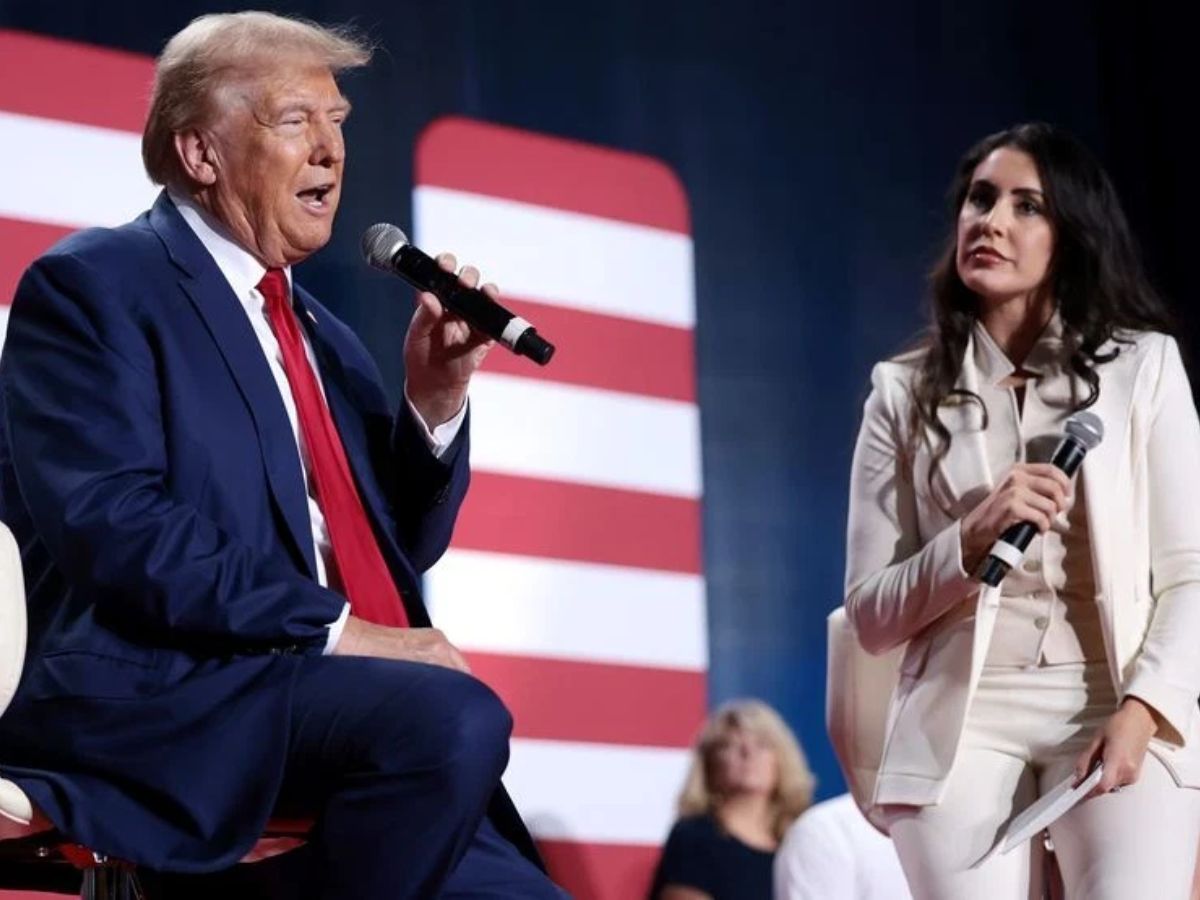
U.S. President Donald Trump on Monday pledged to issue an executive order banning mail-in ballots and electronic voting machines ahead of the 2026 midterm elections, a move likely to favor his Republican Party. The declaration demonstrates Trump’s ongoing attempts to tilt the election balance in his party’s favor.
Executive Order Sparks Legal Questions
Federal elections in the U.S. are administered by individual states, raising questions about whether the president has the constitutional authority to enforce such a measure. Legal challenges from states opposing the executive order are widely expected.
Trump’s push is part of a broader strategy to influence the midterms, with Democratic voters traditionally more likely to use mail-in ballots than Republicans. In addition, Trump has encouraged GOP lawmakers in states such as Texas and Indiana to redraw congressional districts, increasing the likelihood of Republican victories.
Trump Criticizes Mail-In Ballots and Voting Machines
Trump has opposed mail-in ballots on numerous occasions, asserting without proof that they are vulnerable to fraud. He has also called for the end of electronic voting machines, which he labels “highly inaccurate” and “very expensive,” advocating for paper ballots and hand-counts instead. Election officials, however, warn that hand-counting is slower, costlier, and less accurate than machine counting.
“Remember, the States are merely an ‘agent’ for the Federal Government in counting and tabulating the votes. They must do what the Federal Government, as represented by the President of the United States, tells them,” Trump wrote on social media.
Legal Experts Disagree
Constitutional experts emphasize that states have primary authority over election administration. Richard Pildes, a law professor at New York University, stated: “The President has no power constitutionally to dictate to states the manner in which they conduct national elections.”
Trump’s announcement follows his recent meeting with Russian President Vladimir Putin, during which he claimed Putin agreed with him on ending mail-in voting.
Also Read: Russian Oil Flows to Hungary and Slovakia Halted Amid Tensions—Budapest Blames Ukraine
Mail-In Voting Trends
Despite Trump’s criticisms, mail-in ballots remain a significant part of U.S. elections. COVID-19 caused mail-in ballots to hit all-time highs in 2020, but they fell in 2024. According to the U.S. Election Assistance Commission, more than two-thirds of voters in 2024 cast their ballots in person, while approximately 30% voted by mail.
Today, every U.S. state offers some form of absentee or mail-in ballot, according to the National Conference of State Legislatures. Some Republican-led states, such as Florida, continue to embrace mail-in voting as a secure and convenient way to expand voter participation. It’s interesting to note that Trump has urged his supporters to vote by mail in 2024 after doing so in past elections.
With the 2026 midterms poised to test Trump’s domestic and foreign policies, the president’s executive order pledge adds a controversial element to the upcoming electoral battles. Republicans are getting ready to back the president’s attempt to change voting procedures, while Democrats want to regain control of the House and Senate and possibly block some of his legislative agenda.