
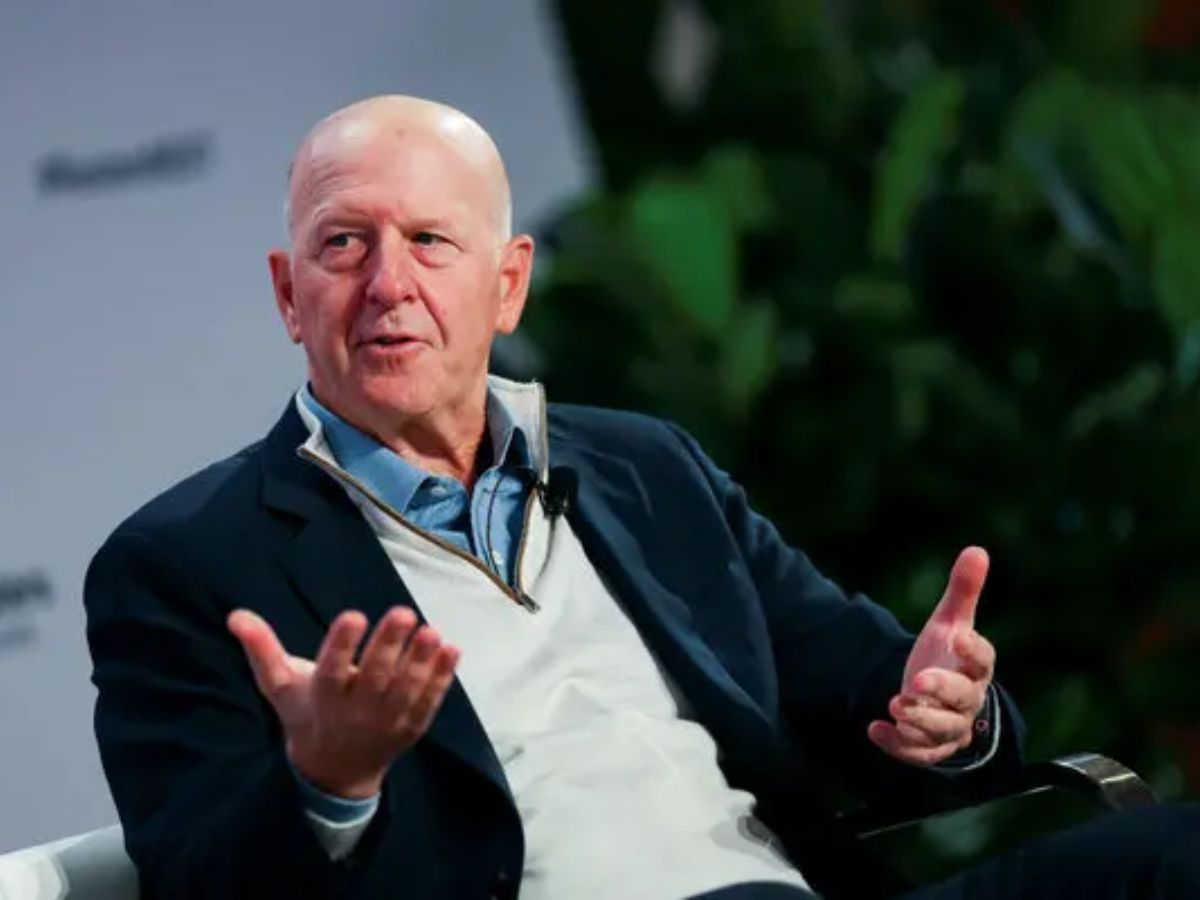
Donald Trump has escalated his trade war rhetoric by taking direct aim at Goldman Sachs CEO David Solomon over the bank’s tariff research. The former US president claims tariffs have boosted the economy, filled the Treasury, and spared consumers from higher costs.
Goldman’s economists disagree, warning that US households already bear part of the burden and could face more. This clash reflects a deeper political tactic—Trump is increasingly using public attacks on top corporate leaders to shape economic narratives ahead of the next election.
Goldman’s Analysis Sparks Presidential Wrath
Trump’s post on Truth Social, quoted by Reuters, accused Solomon of making “a bad prediction” about the economic effects of tariffs. He even mocked Solomon’s hobby, suggesting he “focus on being a DJ” rather than running Goldman Sachs.
Trump did not cite the exact report, but Goldman’s latest note says US consumers have absorbed 22% of tariff costs through June. That figure could rise to 67% if levies continue at current levels.
ALSO READ: Trump Takes Control of DC Police, Orders National Guard Deployment
Goldman has also warned that sweeping tariffs may slow global growth and push the Federal Reserve into sharper interest rate cuts. Chief economist Jan Hatzius and the bank’s spokesperson declined to comment on Trump’s remarks.
Trump’s Economic Defence of Tariffs
In his post, Trump insisted that tariffs mainly hit foreign companies and governments, not US consumers. “It has been shown that, for the most part, consumers aren’t even paying these tariffs,” he wrote.
Since February 1, when Trump expanded his trade war to imports from Mexico, Canada, and China, at least 333 companies worldwide have adjusted operations in response, Reuters data shows.
According to the global tariff tracker, companies reported a combined hit of $13.6 to $15.2 billion between July 16 and August 8 for the year.
Political Playbook Targeting CEOs
Trump’s remarks fit a pattern of taking aim at corporate leaders. He has attacked JPMorgan Chase and Bank of America over “debanking,” Intel CEO Lip Bu-Tan over China ties, Apple’s Tim Cook over overseas iPhone production, and Amazon for considering tariff-related price adjustments.
ALSO READ: ‘Trump Should Pick Up the Phone and Call PM Modi,’ Says US Congressman Ami Bera
This tactic politicises corporate economics, turning Wall Street executives into targets to reinforce Trump’s trade war message. For CEOs, this creates a dilemma—speak openly on policy risks, or face direct political blowback.
Economic & Political Backdrop
The clash comes as US inflation data shows moderate price increases in July, driven by tariff-sensitive goods and services. Markets still expect the Fed to cut rates in September due to a weaker labour market. However, economists warn that tariff-driven inflation may still filter through as pre-tariff inventories run out.
The policy debate is also unfolding amid political turbulence at the Bureau of Labour Statistics. BLS chief Erika McEntarfer was fired earlier this month after weak job growth data. Trump has nominated Heritage Foundation economist E.J. Antoni, a critic of the BLS and contributor to “Project 2025,” to lead the agency.
Tariff Crossfire
Trump’s confrontation with Goldman Sachs signals more than an economic disagreement. It is part of a deliberate political strategy to frame tariffs as an economic weapon while discrediting corporate dissent. As the trade war deepens, Wall Street’s role in shaping public opinion may face even more direct presidential fire.
ALSO READ: Zelensky Calls Alaska US Summit a ‘Personal Win’ for Putin