
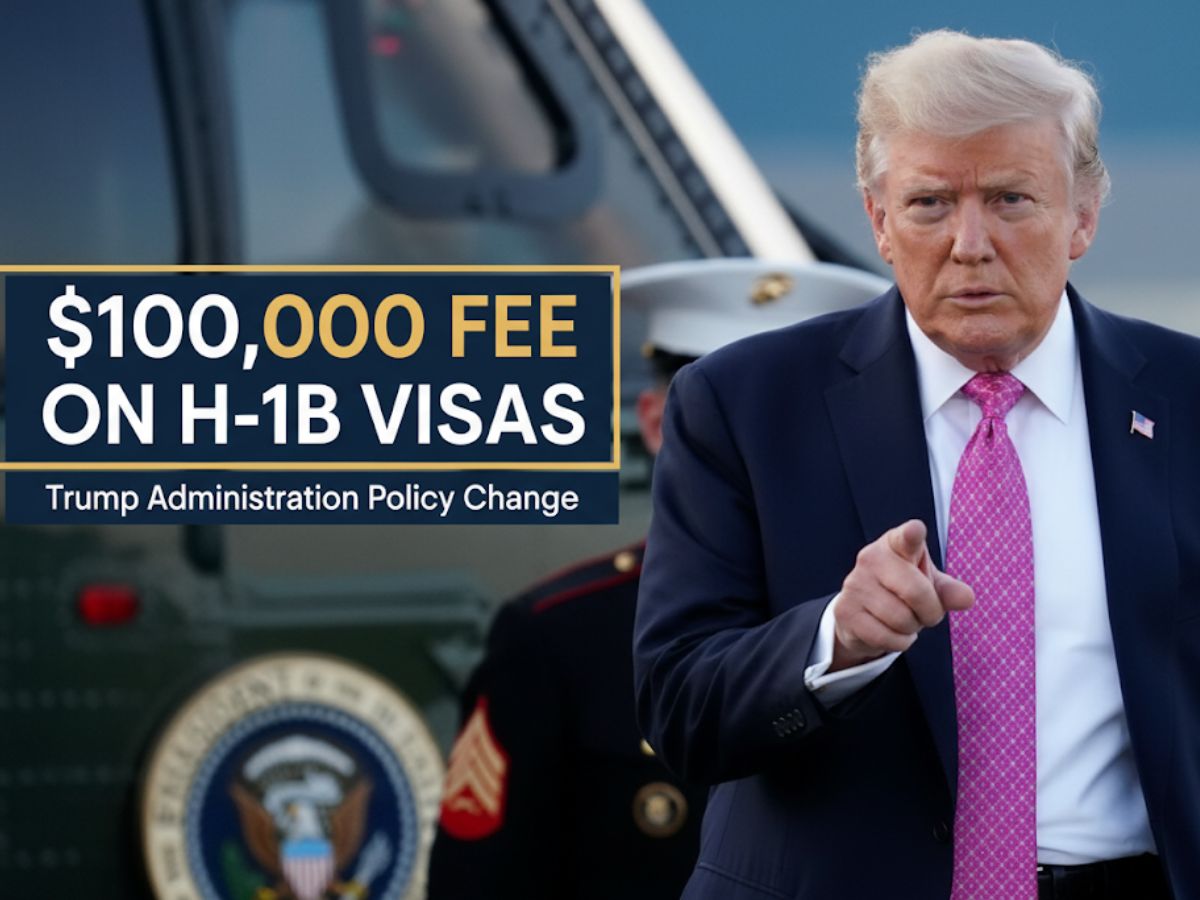
In a move that could drastically reshape the landscape for foreign tech workers in the United States, the Trump administration is planning to introduce a staggering $100,000 fee for H-1B visas. One of the main components of a new White House initiative to stop what it describes as the “overuse” and “abuse” of the well-liked visa program is this historic hike.
What is the New H-1B Visa Rule?
According to a report from Bloomberg News, citing a White House official, President Donald Trump is expected to sign a proclamation to enact this change. The core of the proclamation will reportedly restrict entry under the H-1B program unless accompanied by the $100,000 payment.
This fee would be in addition to the existing costs applicants and their sponsoring employers already bear, which include a $215 registration fee for the lottery and a $780 charge for the mandatory Form I-129 petition.
Why is the Administration Doing This?
The administration’s stated goal is to “stop the abuse of the H-1B pathway.” Critics and officials have long maintained that the existing system has several flaws that some businesses take advantage of.
One of the main issues is the behavior of certain outsourcing and staffing companies that send in a huge number of applications to the lottery every year.This tactic essentially manipulates the system, sidelining smaller employers and large tech firms that file fewer applications but look for niche, high-paying talent.
Who Would Be Most Affected by the $100K Fee?
The impact would be highly uneven across different types of companies:
Major Tech Firms: For vital talent, companies like Google, Apple, and Microsoft—which use the H-1B program to acquire highly skilled engineers for high-paying roles—may be able to absorb the cost.
Staffing & Outsourcing Companies: These firms, which account for nearly half of the 85,000 visas issued annually, often place workers in lower-wage positions. Their volume-based business strategy would probably become unprofitable if each visa cost $100,000.
The fee is intended to target this latter group, pushing them out of the lottery system and freeing up visas for what the administration sees as the program’s original intent: attracting top-tier global talent.
Is This Part of a Larger Trend?
Yes. This proposed fee is not an isolated action but part of a broader, ongoing effort to restrict immigration and prioritize American workers. The American Tech Workforce Act, a bill introduced by Senator Jim Banks, comes right after it.
Further indicating a political move towards a more protectionist visa policy, the measure also aims to significantly reform the H-1B system by increasing pay requirements for foreign workers and restricting the options available to employers for hiring them.
Also Read: Ukraine in ‘Intensive Talks’ for Legally-Binding U.S. Security Guarantee
What is the Debate Surrounding the H-1B Visa?
The H-1B program has always been a subject of intense debate among U.S. lawmakers:
- Critics contend that it suppresses wages by displacing skilled American workers and is frequently exploited to import cheaper labor.
- Proponents view it as an essential tool to fill critical labor gaps in the science, technology, engineering, and math (STEM) fields, arguing that there are not enough American workers to meet the demand for highly specialized skills.
This new $100,000 fee is the administration’s most aggressive attempt yet to tilt this debate in favor of the critics and force a fundamental change in how companies access global talent.