
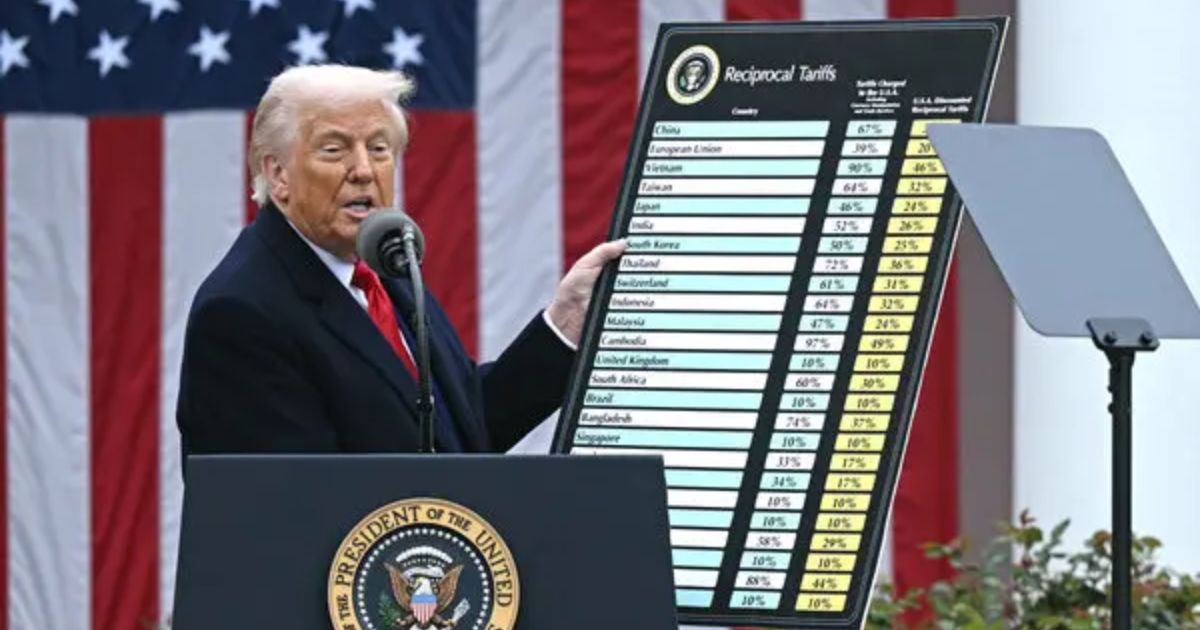
US Supreme Court is to hear one of the most significant cases of Donald Trump’s presidency, whether his worldwide tariffs were legally authorized using emergency powers.
Court Takes on Trump’s Tariff Authority
The justices, on Tuesday, said they will hear arguments in early November, speeding up a review of lower court decisions that held Trump went too far. At issue in the case is the International Emergency Economic Powers Act (IEEPA), a 1977 statute that enables presidents to act when facing strange foreign threats.
Trump used the law to impose tariffs between 10% and 50% on dozens of trading partners, including China, Mexico, and Canada. Although presidents have in the past applied IEEPA to prevent transactions or freeze assets, Trump was the first president to use it to impose broad trade tariffs.
A federal appeals court last month decided that the action was beyond presidential powers, highlighting that tariff authority is held by Congress. In spite of that, tariffs are still in effect while the case goes on.
Billions of Trade Dollars Ride the Balance
The decision has far-reaching financial consequences. If the justices rule in favour of lower courts, the US could be compelled to refund billions in import taxes already obtained. Trade deals with such allies as the UK and Japan might also be disrupted, putting current talks in limbo.
The tariffs were first challenged by small businesses and a group of states who stated that Trump’s exercise of IEEPA was unlawful. They cautioned that his declaration that trade deficits constitute a national emergency was a bad precedent.
ALSO READ: India-US Trade Talks to Resume Amid Tariff Tensions: Agriculture & Dairy Remain Key Issues
Political and Legal High Stakes
For Trump, this is more than a matter of trade policy it’s a challenge to presidential authority. His White House has leaned on the conservative majority on the Supreme Court in the past to validate central policies, typically with emergency orders. Here, the justices will be forced to confront directly whether his invoking emergency law to impose tariffs was appropriate.
Trump, who ranted against the appeals court ruling on Truth Social, claimed that rolling back the tariffs would “literally destroy the United States of America.” He also pointed to ongoing trade negotiations with India, indicating optimism about his overall trade agenda.
Even if the court finds the IEEPA tariffs to be unconstitutional, Trump would have ways of imposing some of them through other legal means, like those on steel, aluminium, and automobiles. But the larger question of precisely how extensive presidential economic authority is now directly in front of the country’s highest court.