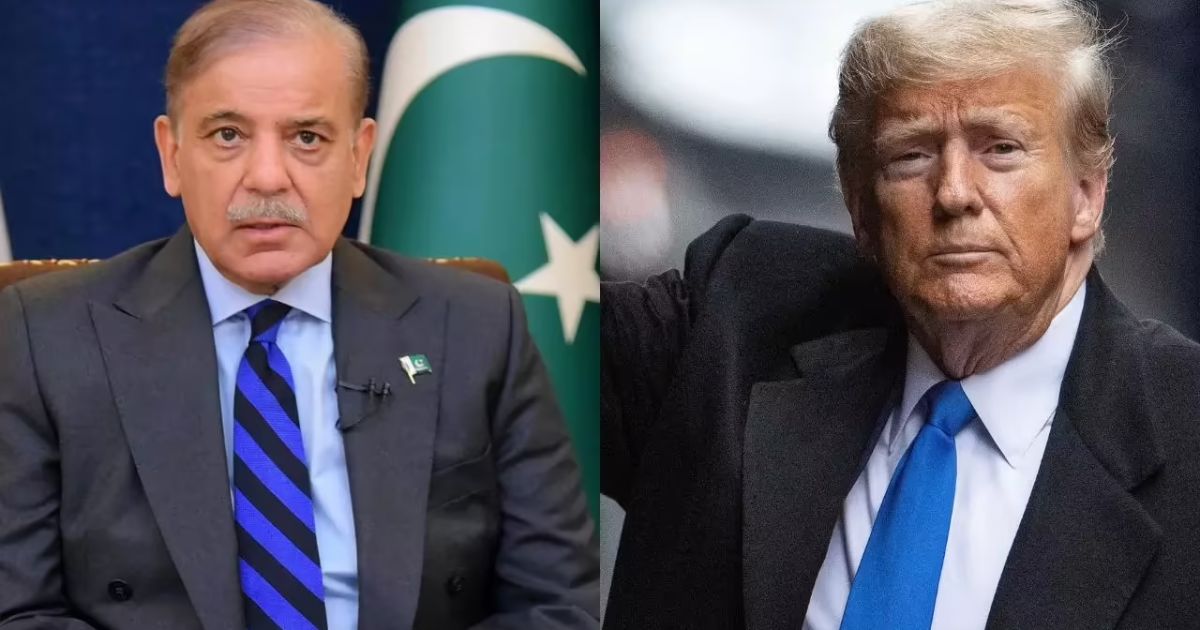
US President Donald Trump on Wednesday made a big announcement on a trade deal with Pakistan. PM Shehbaz Sharif of Pakistan thanked Trump for playing a “leadership role” in signing what he described as a “landmark” pact. Though specifics are unclear, Trump revealed that the agreement involves working together to explore Pakistan’s “massive oil reserves.”
The surprise pact followed shortly after Trump imposed a 25% tariff on all Indian imports and another penalty in response to India’s Russian military acquisitions. While India reviews the implications, the US-Pakistan trade agreement marks a possible strategic shift, putting oil and geopolitics at the forefront of regional rebalancing.
PM Sharif Hails ‘Historic’ Agreement
PM Shehbaz Sharif termed the agreement as “historic”. In an X post, he expressed gratitude to Trump and stated that the agreement would enhance bilateral cooperation. He further stated that it would “expand the frontiers of our enduring partnership in days to come.”
I wish to convey my profound thanks to President Trump @realDonaldTrump for his leadership role in finalization of the historic US-Pakistan trade agreement, successfully concluded by our two sides in Washington, last night.
This landmark deal will enhance our growing cooperation…— Shehbaz Sharif (@CMShehbaz) July 31, 2025
The two sides had reached an agreement in Washington overnight. But Pakistan’s government has yet to make an official announcement about the extent of the trade deal.
Trump References Oil Reserves, Sees Eye on India Market
Trump caught pundits off guard by mentioning Pakistan’s oil reserves. He posted on Truth Social, “We have just made a deal with the nation of Pakistan, where Pakistan and the United States will jointly develop their enormous oil reserves.”
He continued, “We are currently selecting the oil company to head this venture. Who knows, perhaps they will be selling oil to India someday!”
Experts are in doubt about which “massive reserves” Trump was referring to. Although Pakistan imports Middle Eastern oil, there have been claims of undiscovered offshore deposits. These remain largely unexplored because of a lack of investment and technology.
India Smacked with Tariffs, Cites BRICS Membership
Hours before the Pakistan deal, Trump unveiled steep tariffs on Indian goods. In one scathing post, he labelled the trade policies of India as “most strenuous and obnoxious”.
He declared a 25% tariff, plus a penalty tied to India’s energy and military ties with Russia. The new measures will take effect on August 1. Trump also slammed India’s role in BRICS, calling it “anti-US.”
When asked about India, Trump said talks are underway. “We’re negotiating with India right now,” he said, while criticising India’s “very high tariffs.”
Is Oil Now the Strategic Lever in South Asia?
Trump’s surprise reference to oil suggests a more fundamental change in approach. The US is using the development of energy as a means to re-engage with Pakistan, while ratcheting up pressure on India.
By gesturing at future Pakistani sales of oil to India, Trump might be experimenting with economic leverage as a local tool. This coincides with the US pushing against BRICS alignment and finding new friends as global polarisation grows.
Although Pakistan’s oil potential is unclear, the message is unambiguous: Washington is remapping its South Asia strategy through trade, tariffs, and now, energy.
India Meets Trump’s Action with Reserve
India’s initial reaction to Trump’s tariff action was circumspect. A government spokesman stated, “We have noted the statement and are analyzing its implications.”
India further said talks have been underway for a “fair, balanced and mutually beneficial” bilateral trade deal. But the abrupt imposition of sanctions marks a chill in relations, particularly in contrast to Trump’s overtures to Islamabad.
What This Signals for South Asia’s Power Balance
Trump’s tariff strike against India and the US-Pakistan trade agreement both point to a change in the balance of power in South Asia. Trump’s comments about oil indicate a shift in strategy, where trade and energy are used as leverage.
The region may be on the verge of a rebalanced equilibrium, with uncertain consequences, as Pakistan moves closer to Washington and India negotiates under pressure.