372
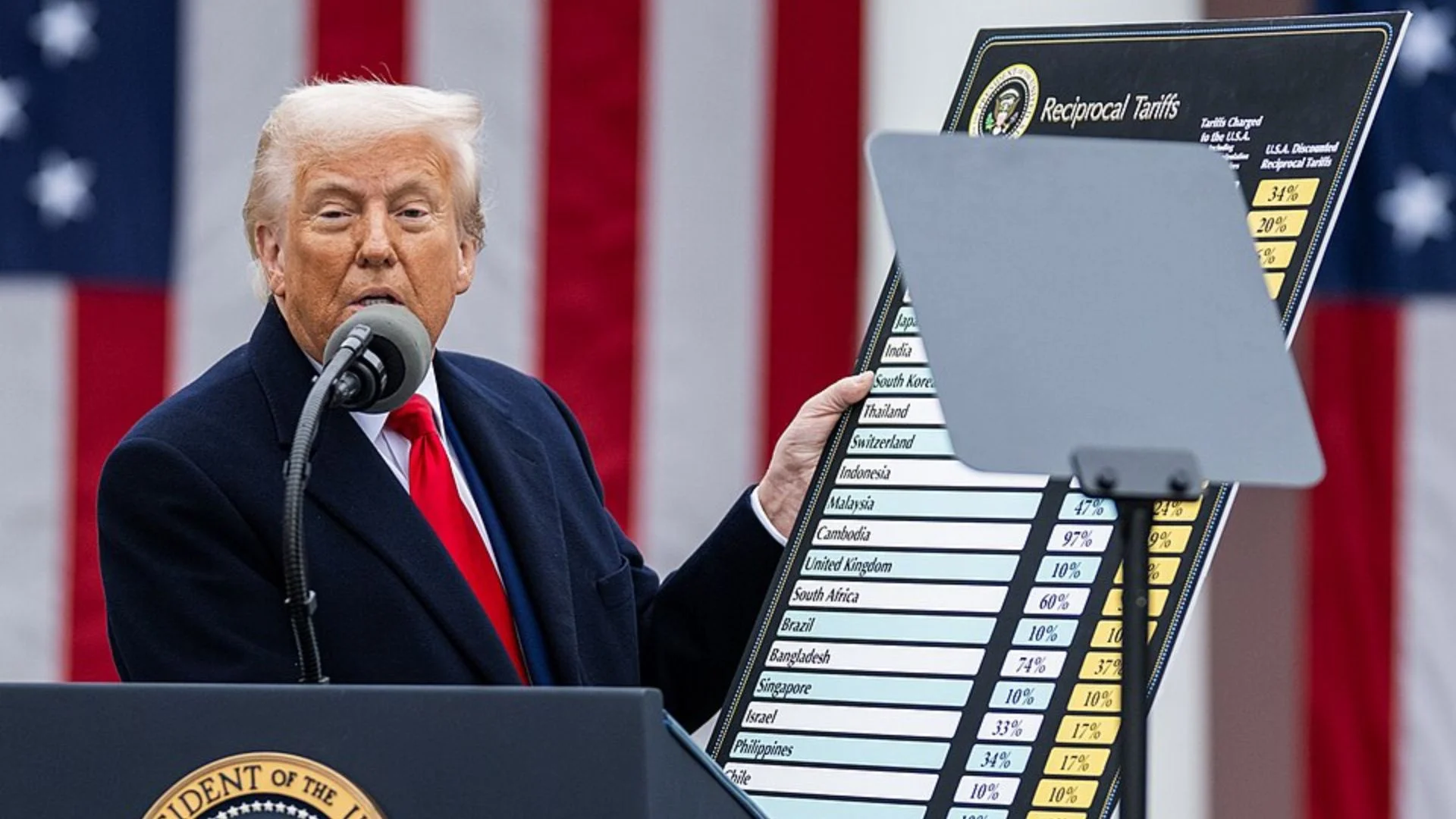
US President Donald Trump announced plans to introduce new tariffs ranging between 10% and 15% on over 150 countries, a move that notably excludes key American trade partners. Speaking to reporters on Wednesday, Trump said these tariffs will target “small countries” with limited trade volumes with the US. “We’ll have well over 150 countries that we’re just going to send a notice of payment out,” he said. The notices will contain information about the tariff rates that apply.
During the day, Trump indicated to Real America’s Voice that the specific tariff rate “will likely be 10 or 15 percent,” though it remains to be determined.
Analysts feel that the imposition of comparatively modest tariffs on smaller economies is indicative of the recognition of economic dislocation through the imposition of high trade barriers. Alicia Garcia Herrero, the Chief Asia Pacific Economist at Natixis, explained to Bloomberg that Trump’s measured move indicates a change of heart. “This shows that Trump is coming around to the realization that excessively high tariffs are disruptive,” she said. Herrero further added that, for Asia and other smaller economies, the clarity of the lower tariff rate could be taken as an encouraging sign.
While employing a more gentle treatment of less important economies, Trump has been more forceful with some of America’s most important strategic and trade partners. He has issued formal notices to 22 nations over the past few weeks, announcing tariffs of 25% or more. Among them are Japan and South Korea both crucial providers of automobiles, semiconductors, pharmaceuticals, and industrial machinery each subjected to a 25% tariff.
Other countries impacted are Malaysia (25%), Bangladesh (35%), Indonesia (32%), and South Africa (30%). The US’s second-largest supplier of chips is Malaysia, while Bangladesh and Indonesia are prominent industry leaders in world garment manufacturing. South Africa, on the other hand, accounted for nearly half of all US platinum imports in the previous year.
The tariffs are set to come into force from August 1.