
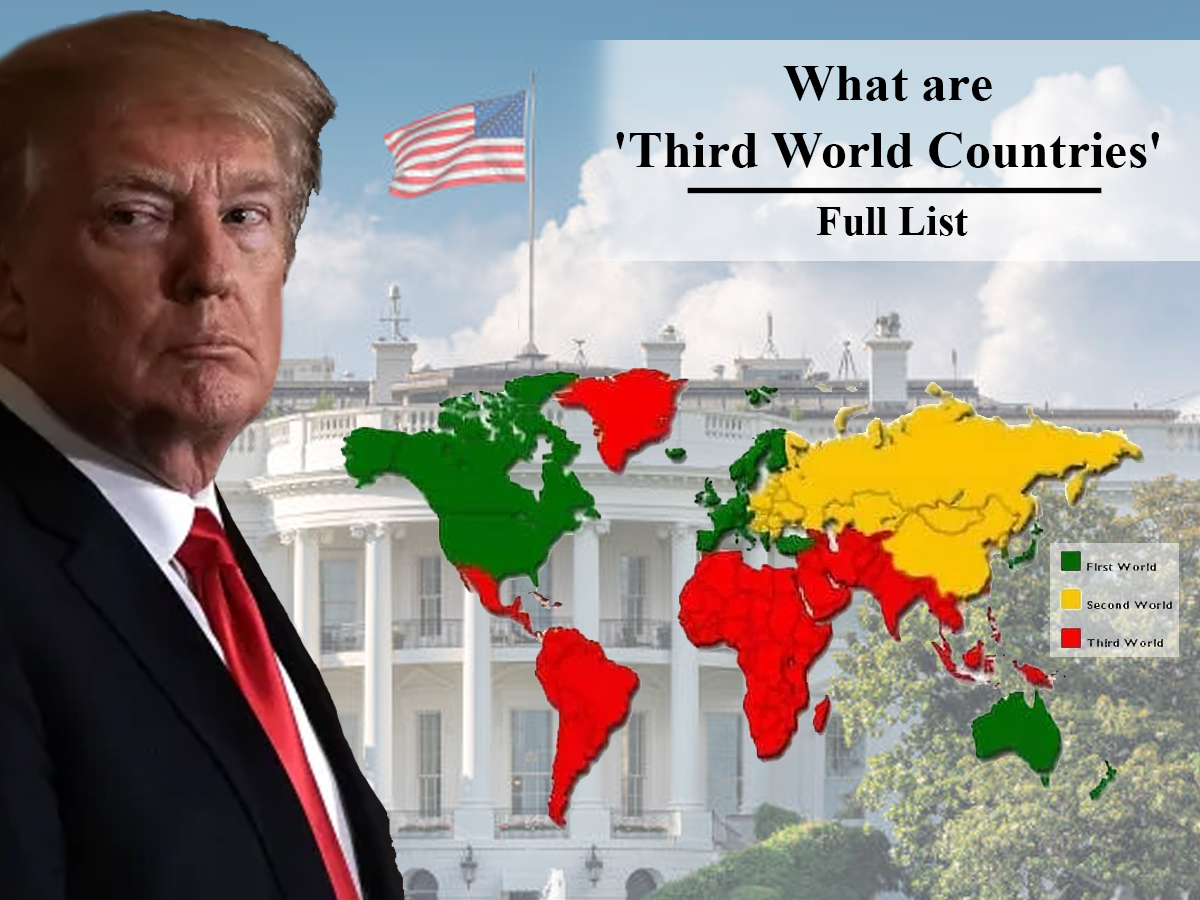
A major shift is unfolding in America’s immigration policy after President Donald Trump announced that he will “permanently pause migration from all Third World Countries.” The announcement came a day after an Afghan national allegedly shot two National Guard soldiers in Washington. Trump argued that the country’s current immigration system has failed and must be rebuilt before the U.S. can accept new migrants again.
The decision has created strong reactions across political, diplomatic, and humanitarian circles. Many now want clarity on what this pause means, which countries are affected, and why the phrase “Third World countries” itself is controversial.
This explainer breaks down everything in simple terms. Let’s learn what the ‘Third World Countries’ are and what the ‘Pause Migration from Third World Countries’ means for the US.
What Trump Said About the Migration Pause
Trump wrote that the United States has “progressed technologically,” but immigration from certain countries has “eroded those gains.” He declared that migration from “all Third World Countries” must be halted so the system can “fully recover.”
He added that he wants to reverse what he called “millions of Biden illegal admissions.” In the same statement, Trump said he plans to remove anyone he believes is “not a net asset to the United States” or “incapable of loving our Country.”
He also said that foreign nationals who are a “public charge, security risk, or incompatible with Western Civilization” should be deported.
These statements signal one of the strictest immigration crackdowns in recent U.S. history.
What the ‘Pause’ Could Mean in Practice
If fully implemented, the migration pause could reshape U.S. immigration policies for years. Here’s what could happen:
1. Halt on Migration From Selected Countries
The pause may apply to all visas, which include tourist, work, student, and immigration visas, from countries labelled under the “Third World” category.
2. Increased Deportation Efforts
People judged as a “public charge” or “security risk” could face removal, including those with long-term residence.
3. Green Card Review Ordered
Trump has ordered a complete review of immigration status for Green Card holders from 19 nations classified as “countries of concern.”
A top immigration official wrote that he had directed a “full-scale, rigorous re-examination of every Green Card for every alien from every country of concern.”
4. Travel Bans Expanded
Several countries already face entry restrictions. The new order expands this list and hardens the earlier travel bans.
List of Countries Labelled “Identified Concern”
The administration categorised 19 nations under two groups:
Full Travel Ban Countries
- Afghanistan
- Myanmar
- Chad
- Congo-Brazzaville
- Equatorial Guinea
- Eritrea
- Haiti
- Iran
- Libya
- Somalia
- Sudan
- Yemen
Partial Ban Countries
- Burundi
- Cuba
- Laos
- Sierra Leone
- Togo
- Turkmenistan
- Venezuela
These are the countries whose citizens may face immediate restrictions, deportation reviews, or a complete stop to immigration.
What are ‘Third World Countries’
Africa (Majority considered Third World)
- Angola
- Benin
- Burkina Faso
- Burundi
- Cameroon
- Cape Verde
- Central African Republic
- Chad
- Comoros
- Congo (Republic)
- DR Congo
- Djibouti
- Egypt
- Equatorial Guinea
- Eritrea
- Eswatini
- Ethiopia
- Gabon
- Gambia
- Ghana
- Guinea
- Guinea-Bissau
- Ivory Coast
- Kenya
- Lesotho
- Liberia
- Libya
- Madagascar
- Malawi
- Mali
- Mauritania
- Mauritius
- Morocco
- Mozambique
- Namibia
- Niger
- Nigeria
- Rwanda
- São Tomé & Príncipe
- Senegal
- Seychelles
- Sierra Leone
- Somalia
- South Sudan
- Sudan
- Tanzania
- Togo
- Tunisia
- Uganda
- Zambia
- Zimbabwe
Asia
- Afghanistan
- Bangladesh
- Bhutan
- Cambodia
- Laos
- Myanmar
- Nepal
- Pakistan
- Sri Lanka
- Timor-Leste
- Vietnam
- Yemen
- Syria
- Iraq
- Jordan
- Lebanon
- Palestine
- Kyrgyzstan
- Tajikistan
- Uzbekistan
- Turkmenistan
South Asia (Historically Third World)
- India (historically Third World due to Non-Aligned Movement, but NOT in modern usage)
- Bangladesh
- Pakistan
- Nepal
- Sri Lanka
- Bhutan
- Afghanistan
Latin America & The Caribbean
- Bolivia
- Paraguay
- Honduras
- El Salvador
- Nicaragua
- Guatemala
- Haiti
- Dominican Republic
- Cuba
- Belize
- Guyana
- Suriname
- Ecuador
- Peru
- Colombia
- Venezuela
Middle East / North Africa (MENA)
- Yemen
- Syria
- Iraq
- Sudan
- Libya
- Egypt
- Morocco
- Tunisia
- Jordan
- Lebanon
Oceania
- Papua New Guinea
- Solomon Islands
- Vanuatu
- Fiji (often included)
- Samoa
- Tonga
Why “Third World Country” Is an Outdated and Misleading Term
The term “Third World” is widely used but poorly understood. It does not originally refer to rich or poor countries. It comes from the Cold War era.
Cold War Meaning
- First World → U.S.-aligned capitalist nations
- Second World → Communist nations led by the USSR and China
- Third World → Nations belonging to neither bloc, mostly in Asia, Africa, Latin America
These were politically neutral or newly independent countries—not necessarily poor or unstable.
Why the Term Is Considered Harmful Today
- It lumps diverse nations into a single negative category
- It implies backwardness or inferiority
- It ignores the economic progress made by many of these countries
- It has no formal place in modern geopolitics
Today, experts prefer terms like Global South, developing countries, or low- and middle-income countries, which reflect economic realities rather than outdated Cold War divisions.
Why This Policy Matters
It affects millions globally
People seeking education, work, or refuge may lose access to America’s immigration system entirely.
It may face legal challenges
Previous bans based on nationality saw court blocks and protests. Similar challenges are expected again.
Green Card holders face uncertainty
Thousands of legal residents now worry about their immigration status being re-examined.
It shapes global perceptions
The decision raises debates about discrimination, fairness, and the ethics of broad immigration bans.
It impacts diplomacy
Countries affected by the ban may issue protests or revise ties with the U.S.
What These Changes Signal for America
Trump’s statement signals an unprecedented shift in U.S. immigration policy. The migration freeze may reshape how America deals with refugees, workers, and international travellers for years. But it also revives debate around a Cold War term that no longer reflects the world’s economic or political reality.
As the policy develops, the biggest questions will be how broadly the ban is implemented, how courts respond, and what happens to the millions already living in the United States.