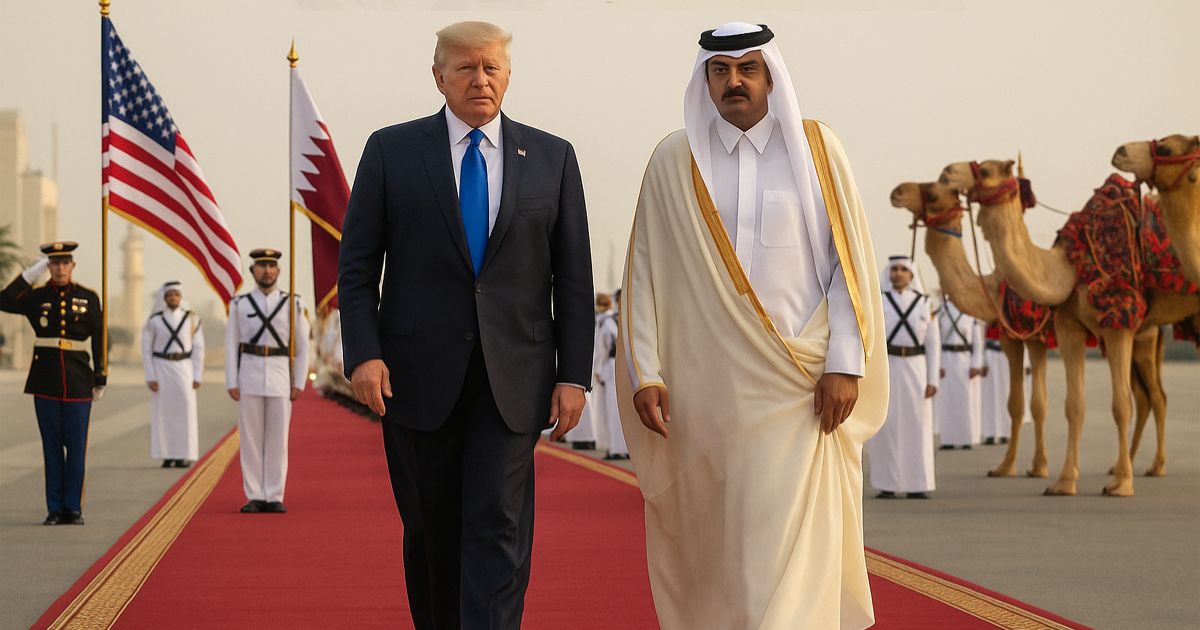
A possible ceasefire in Gaza is soon on its way as US President Donald Trump is set to receive Qatar’s PM Sheikh Mohammed bin Abdulrahman al-Thani on Wednesday. The meeting comes at a time when there is increased diplomatic activity towards a ceasefire in Gaza and restarting nuclear negotiations with Iran. A specific ceasefire plan is said to be likely to top the agenda, along with human rights issues and security in the region.
Trump himself has been an advocate of a Gaza ceasefire since his return to office, engaging in frequent conversations with Israeli PM Benjamin Netanyahu and Middle Eastern allies. Qatar, which has hosted Israel-Hamas indirect negotiations, is at the centre of the negotiations.
Trump, Witkoff Indicate Hopes on Ceasefire
President Trump recently expressed optimism about brokering a deal. “We are talking and hopefully we’re going to get that straightened out over the next week,” he told reporters on Sunday. His special envoy to the Middle East, Steve Witkoff, has been pushing a proposal for a 60-day truce.
The preliminary plan has all the main points: the release of all the remaining hostages, Israeli partial withdrawal from Gaza, and unrestricted supply of humanitarian assistance to Palestinian civilians. Witkoff’s team has closely coordinated with Qatari officials before the Trump–Sheikh Mohammed meeting.
Axios correspondent Barak Ravid broke on X that Trump had a phone conversation with Qatar’s Emir Sheikh Tamim bin Hamad Al Thani before arranging the face-to-face negotiations. That call could have paved the way for a broader deal.
Doha Talks Set the Stage
The last round of direct talks was held in Doha on July 6 between delegations from Israel and Hamas. While no breakthrough was reported, Qatari mediators indicated that there was movement on humanitarian and prisoner swap issues.
Qatar’s role is seen as central because it maintains long-standing lines of communication with Hamas and has played a role in past releases of hostages.
War’s Devastating Toll
The Gaza war started on October 7, 2023, when Hamas initiated an attack of terror in southern Israel, killing an estimated 1,200 individuals. The response from Israel was to declare a full-scale siege of Gaza, limiting water, electricity, and vital supplies.
More than 58,000 Palestinians have been killed since the war started, with most of them women and children, says the United Nations and Gaza’s Health Ministry, with international outcry and imperative appeals for a humanitarian corridor.
Reconstruction Plan Raises Concerns
In addition to ceasefire negotiations, Trump and Netanyahu have called for a Gaza rebuilding program. Critics say the plan, however, may result in mass Palestinian displacement and solidify Israeli military control in some parts of Gaza.
Human rights activists and various UN officials have cautioned that any peace or reconstruction effort should guarantee Palestinian autonomy and prevent forced transfers.
Diplomatic Crossroads
As Trump prepares for Wednesday’s session, hopes for a breakthrough remain cautious but in the air. A successful ceasefire deal would be the first significant diplomatic achievement in Gaza since fighting broke out again.
But with so many elements in motion—Israel’s domestic politics, Hamas’s conditions, and US domestic pressure—the path to peace cannot be predicted. The next Trump–Qatar PM meeting might unlock genuine progress or simply prolong a weak pause in a catastrophic war.