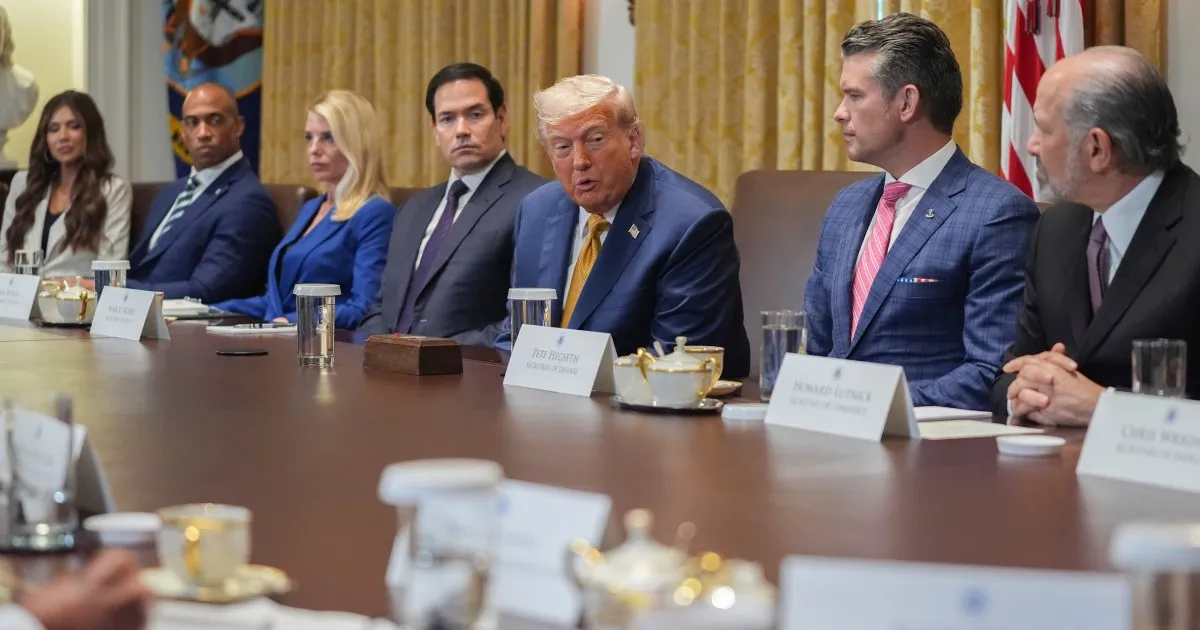
Former U.S. President Donald Trump has officially enacted a groundbreaking law aimed at providing a clear regulatory framework for stablecoins, a category of cryptocurrencies pegged to traditional assets. This legislative milestone is anticipated to foster mainstream adoption and trust in digital currencies by establishing legal certainty and oversight protocols.
In a landmark move that may lead to the widespread use of digital assets for money transfers and payments, US President Donald Trump signed legislation on Friday to establish a regulatory framework for stablecoins, or cryptocurrencies that are anchored to the US dollar. The majority of Republicans and almost half of the Democratic members supported the GENIUS Act, which passed by a vote of 308 to 122.
Supporters of cryptocurrencies, who have long pushed for such a regulatory structure in an effort to give greater credibility to an industry that started out as a digital Wild West in 2009 known for its inventiveness and speculative chaos, are thrilled with the bill.
Trump stated, “This signing is a massive validation of your hard work and pioneering spirit,” during a signing event attended by a number of cryptocurrency CEOs.
The use of stablecoins, which are intended to retain a fixed value typically a 1:1 US dollar peg has grown significantly, particularly among cryptocurrency traders who transfer money between tokens. The industry anticipates that they will become widely used for instantaneous payment transmission and receiving.
The new statute addresses longstanding concerns about the volatility and security risks associated with stablecoins. It mandates strict reserve requirements and transparency obligations for issuers, ensuring that every stablecoin unit is backed by adequate assets. This regulatory clarity is expected to safeguard investors and users from potential losses due to mismanagement or fraud.
Implications for the Cryptocurrency Industry and Financial Markets
Industry experts view this development as a critical step toward integrating cryptocurrencies into the broader financial ecosystem. By legitimizing stablecoins through federal regulation, the law paves the way for their increased use in everyday transactions, cross-border payments, and decentralized finance platforms. Moreover, it signals potential acceleration in the digital currency space, encouraging innovation while mitigating systemic risks.
According to the new law, stablecoins must be backed by liquid assets, including US dollars and short-term Treasury bills, and their issuers must reveal to the public each month the makeup of their reserves. Such legislation, according to cryptocurrency companies and executives, will increase the legitimacy of stablecoins and encourage banks, shops and consumers to utilize them for instantaneous money transfers.
According to Standard Chartered Bank’s estimate earlier this year, the stablecoin market, which cryptocurrency data company Coin Gecko estimates is worth over $260 billion, could reach $2 trillion by 2028 under the new regulation. The law’s passing marks the end of the sector’s protracted lobbying efforts. According to Federal Election Commission records, the industry contributed over $245 million to pro-crypto candidates, including Trump, during the previous election.
Trump’s Role and Political Context
Despite being out of office, Trump’s endorsement of the stablecoin law underscores his continued influence on financial policymaking. This act also reflects bipartisan recognition of the need to regulate emerging fintech products proactively, balancing innovation with consumer safety and financial stability.
In March, Trump signed an executive order creating a strategic bitcoin reserve as part of his efforts to completely restructure US cryptocurrency regulations. By introducing a meme coin named $TRUMP in January and partially controlling the cryptocurrency business World Liberty Financial, the president has made a foray into the world of digital assets. At one-point, congressional Democrats’ ire threatened to sabotage the measure as they became more and more critical of Trump and his family members’ promotion of their own cryptocurrency ventures.
In response, the Republican president, who has since introduced his own coin, sided with the sector and declared at a crypto conference during his campaign that he would turn the United States into “the crypto capital of the planet.”
However, Democrats and skeptics have argued that the law should have included stricter anti-money laundering safeguards, restricted foreign stablecoin issuers, and prevented large tech corporations from issuing their own stablecoins, which could have increased the influence of an already powerful sector. As the United States sets a precedent with this legislation, global regulators are likely to observe and potentially adopt similar frameworks. The law could serve as a blueprint for harmonized international standards, contributing to a more secure and integrated global digital currency market.
The White House has said there are no conflicts of interest for Trump and that his assets are in a trust managed by his children.