
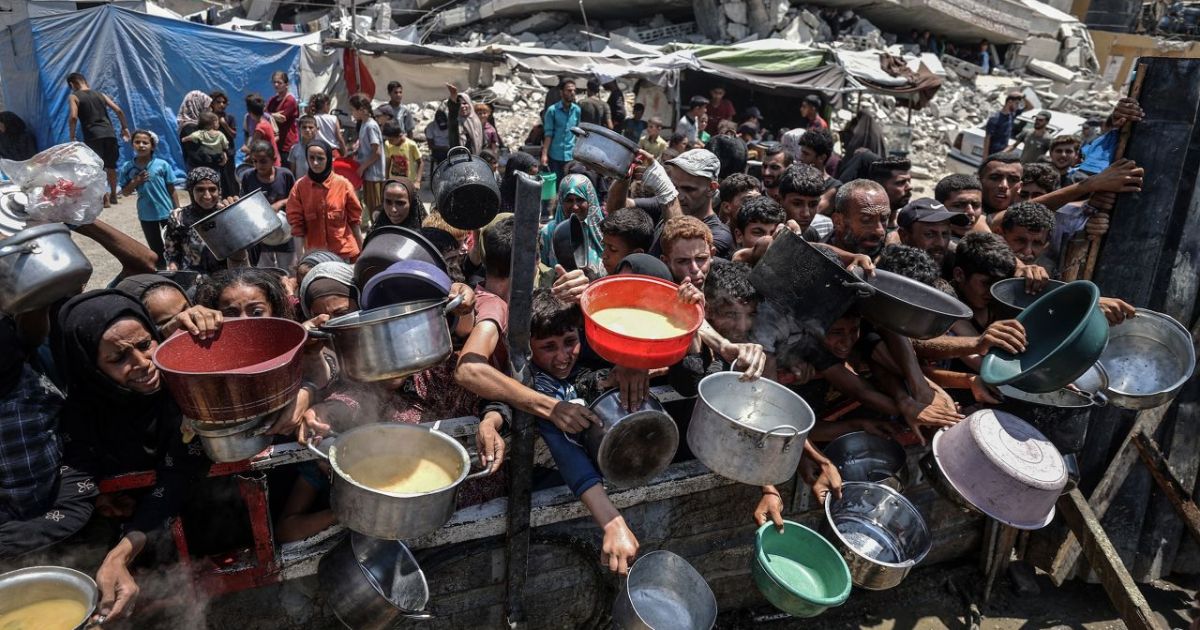
In a high-profile session in Scotland, US President Donald Trump publicly rebutted the statement by Israeli PM Benjamin Netanyahu that there is no famine in Gaza. Trump replied, “Those children look very hungry,” from images seen on television. Trump underscored the United States’ contribution of $60 million and denounced Hamas for rerouting supplies.
Alongside British PM Keir Starmer, he called on the EU and other nations to “step up.” They discussed the growing crisis in Gaza, potential ceasefire negotiations, and urgent humanitarian needs during their discussion.
Disputing the Official Narrative
When asked whether he endorsed Netanyahu, Trump responded, “I don’t know. Based on television… those children look very hungry.” He suggested that Israeli denial undermined visible suffering on television screens.
UK PM Starmer concurred, describing the situation as “a humanitarian crisis” and “an absolute catastrophe” that appals viewers in Britain. He urged immediate ceasefire negotiations and complimented Africa for its aid coordination efforts through Jordan.
Aid Efforts and Frustration with Global Passivity
Trump cited that America gave “a lot of money and a lot of food”, but scolded others for not doing the same or even expressing gratitude. He mentioned dialogues with European Commission President Ursula von der Leyen, who promised significant EU assistance.
Starmer verified that the UK is cooperating with Jordan to air-drop supplies and evacuate ill children. He cautioned that internal pressure is building in the UK for Palestinian statehood as part of a wider peace framework. In the meantime, the UN reports the Gaza hunger crisis has already led to fatalities. At least 14 people starved to death in 24 hours, two of whom were children, taking child deaths to 88 since October 2023.
Humanitarian Messaging as Political Strategy
Trump’s words go beyond sympathy—they mark a calculated rebranding of his international image. By highlighting starving kids in Gaza, he is projecting himself as a moral leader. He presents his palpable empathy in contrast to Netanyahu’s denials.
And he quietly criticizes the inaction of allies while presenting America with the humanitarian ball. This change assists Trump in building international leadership credentials outside his prior transactional diplomacy.
Hostages, Ceasefire, and War Tactics Shift
Trump spoke of the hostage situation, accusing Hamas of employing captives as human shields. He called on Israeli Prime Minister Netanyahu to take a “different way” approach.
Though Washington was dubious, Trump insisted that a ceasefire is still in the cards. He further asserted that his visit has averted several wars, projecting himself as an element of stability in international crises.
Starmer Leans In—UK Pushes Humanitarian Agenda
Starmer took the session to push Trump to pressure Israel to lift aid blockades. He termed the Gaza crisis “desperate” and called for resumed corridors and humanitarian breaks.
The crisis will be discussed at an emergency UK cabinet session, and the government is considering recognition of Palestinian statehood within a peace plan. France and Germany are already progressing with similar recognition commitments.
Moral Messaging Over Military Might
Trump and Starmer employed their Scotland discussions to frame Gaza’s agony as an international moral crisis. Trump’s focus on televised suffering and child starvation puts humanitarian narratives ahead of military preparations.
He comes out of it as the reluctant saviour of a failing international operation. But in the face of worsening circumstances, his rhetorical leadership runs the risk of coming across as hollow if allies don’t take more concrete action.