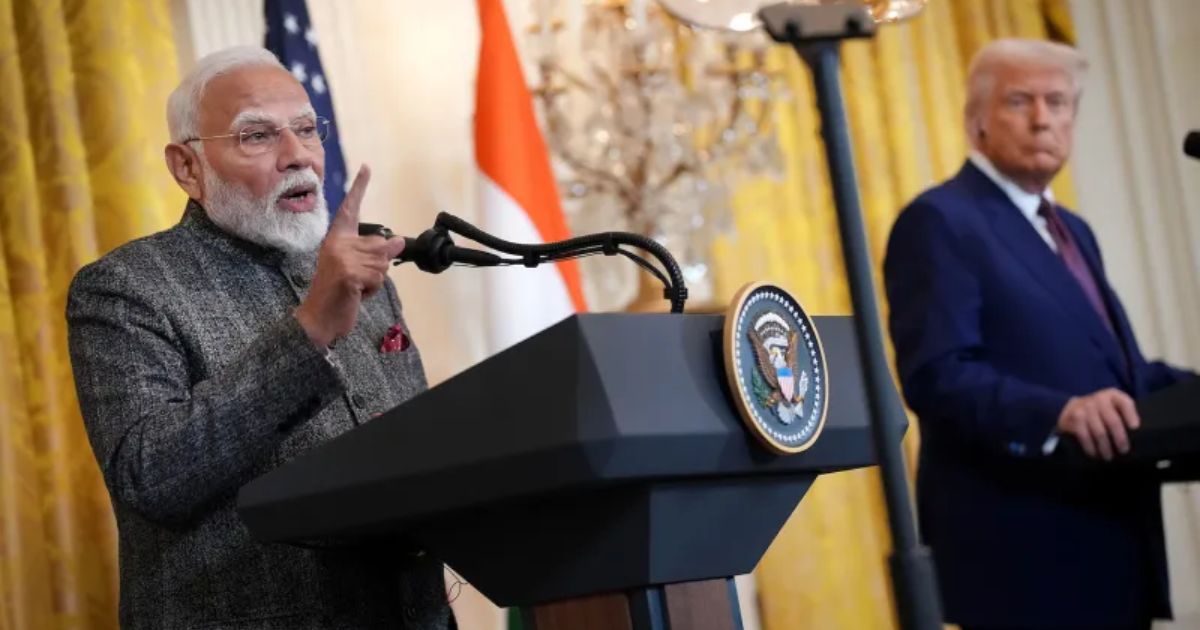
Washington-New Delhi Tensions Surface
US President Donald Trump rekindled trade tensions with India on Monday by calling the economic relationship “very one-sided” and blaming New Delhi for taking advantage of the American market. In a vitriolic Truth Social post, Trump said that India gains disproportionately from trade whereas the United States does not reap much in return. He further noted that India’s recent proposal to lower tariffs on US goods to zero was “too late” and should have been done years earlier.
The comments represent another dip in bilateral relations, as Trump continues to attribute trade tensions to India’s dependence on Russian crude and arms. His tweet also pointed to the Washington’s irritation that New Delhi has been reluctant to move its strategic procurements away from Moscow, an old defence supplier.
Tariff Disputes and Strategic Frictions
The Trump administration has already levied 50 percent tariffs on Indian imports some of the highest levels imposed on foreign countries. These actions have elicited robust reactions from New Delhi. Minister of Commerce and Industry Piyush Goyal recently stated that India “will neither bow down nor ever appear weak” in response to Washington’s economic coercion.
Trump has repeatedly paired threats of tariffs with requests that foreign nations purchase more American goods, particularly energy and defence products. He contended that India’s continued reliance on Russian vendors defies prospects for American companies.
ALSO READ: “One-Sided Disaster”: Trump Slams India After Modi Meets Xi & Putin at SCO
India’s Balancing Act in Global Alliances
India’s deepening divergence with the US comes at a delicate time for India, which is balancing its long-standing relationship with Russia while negotiating with the United States and other Western allies. Trump’s vitriolic rhetoric may serve to push India further towards alternative alliances.
India’s Prime Minister Narendra Modi recently restated his resolve to strengthen ties with Beijing during a China-led conference instigating non-Western alliances, marking India’s quest for diversified relationships in the face of global uncertainties.
Trump’s policy of presenting world trade as disadvantageous to Washington may appeal to his domestic base but risks isolating strategic allies such as India. The deepening tariff clash highlights a larger geopolitical fight where economic policy, defence decisions, and great-power competition are more inextricably linked than ever before.