
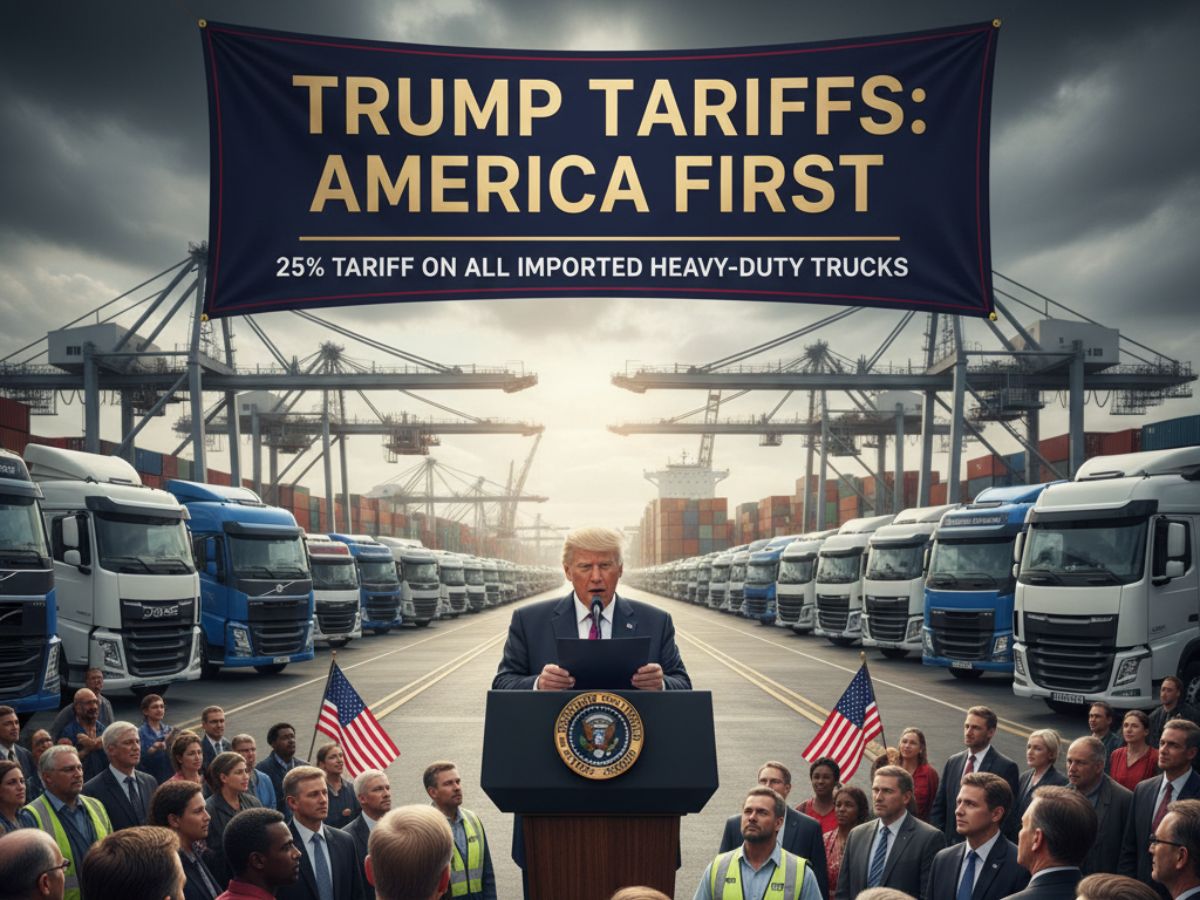
On Monday, President Donald Trump declared that nearly all imported medium- and heavy-duty trucks will face a 25% tariff starting November 1. The action, which specifically targets a key area of the industrial economy, is a major step forward in the administration’s protectionist trade strategy.
What Exactly Does This New Tariff Do?
The new policy will apply a 25% tax on the value of all medium- and heavy-duty trucks imported from every foreign country. President Trump announced the decision in a public post, writing, “Beginning November 1st, 2025, all Medium and Heavy Duty Trucks coming into the United States from other Countries will be Tariffed at the Rate of 25%.” This broad, blanket tariff is designed to make foreign-made trucks more expensive, thereby encouraging buyers to purchase vehicles manufactured domestically.
Why is the US Government Taking This Step?
The tax comes after the US Commerce Department, acting under Section 232 of the Trade Expansion Act, opened an official probe in April. Because of this law, tariffs based on national security concerns are permitted. The probe examined imports of trucks weighing over 10,000 pounds and their key components. The viability of American producers and the security of domestic supply chains were allegedly jeopardized by “a tiny number” of foreign suppliers controlling the US market through “predatory trade tactics,” according to officials.
Also Read: Scientist Claims US Hid Evidence of Ancient City on the Moon, Says India and China Will Reveal It
Who Pushed for This Protectionist Measure?
The decision comes after months of intense lobbying from major US automakers, particularly Detroit’s “Big Three”: Ford, General Motors, and Stellantis. For years, these companies have said tariffs help defend U.S. production and jobs from unfair overseas rivals. The administration’s action is a big win for their efforts and fits the President’s “America First” policy.
Was There Any Resistance to the Plan?
Yes, the implementation was not without internal debate and delay. President Trump had initially suggested the tariffs would start on October 1. But as representatives of the business appealed to White House and Commerce Department officials, that deadline was rescheduled for November 1. These organizations issued warnings about possible drawbacks, such as enhanced pricing for auto parts and greater ultimate expenses for customers and trucking-dependent firms.
Also Read: Draconid Meteor Shower 2025: When and Where to Look for October’s Celestial Fireworks
How Does This Fit into the Broader Trade Landscape?
The new truck tariff adds to the administration’s growing list of trade measures. Similar tariffs already exist on electronics, drugs, and electric vehicles. Together, they show a clear strategy of using import taxes to promote U.S. manufacturing.
Disclaimer: This report is based on information from official statements and international news agency reports.