
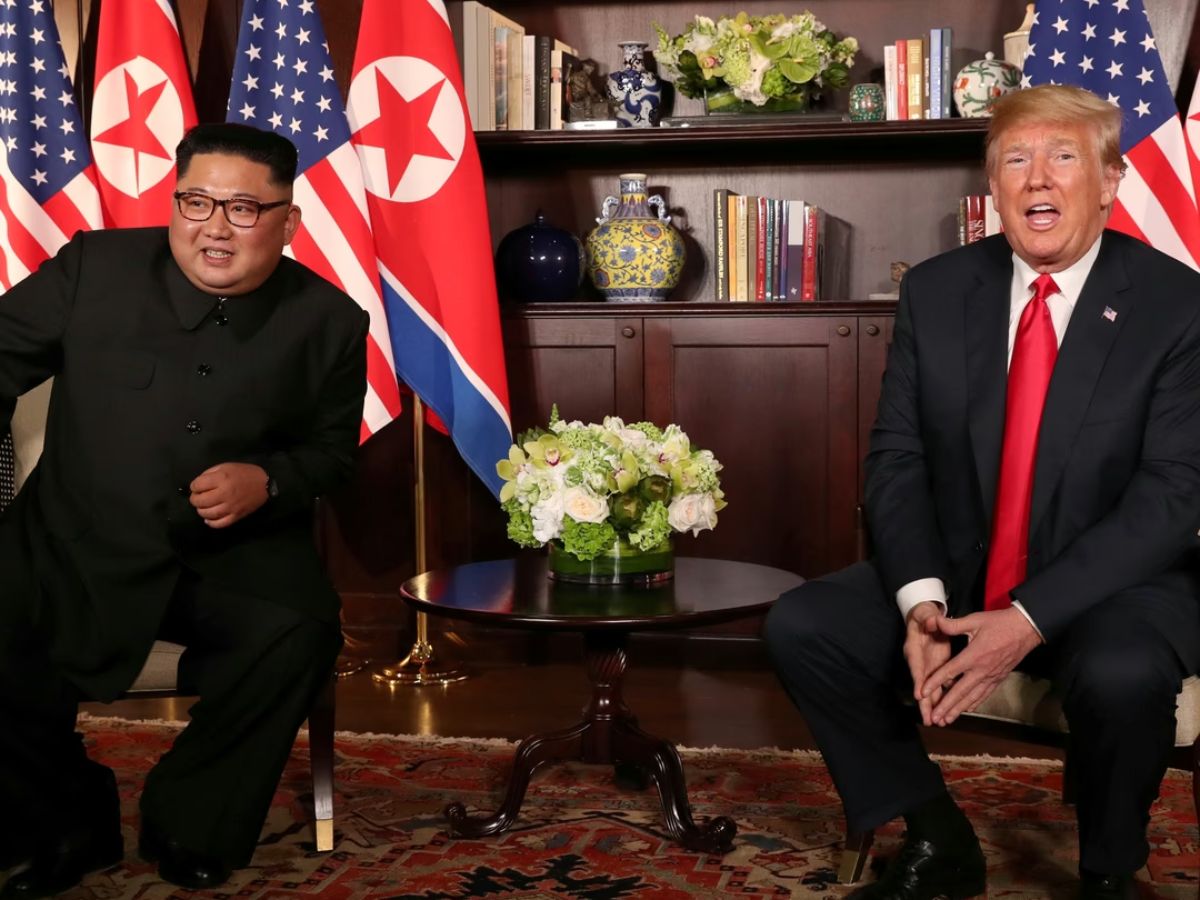
A bombshell report from the New York Times has pulled back the curtain on a clandestine and failed U.S. military operation against North Korea, approved directly by then-President Donald Trump. A period of public diplomacy between the two leaders was marred by the deaths of North Korean citizens during the 2019 mission, which was executed by the elite Navy SEAL Team Six with the goal of planting a surveillance device to monitor Kim Jong Un.
What Was the Goal of the Secret Mission?
The objective was audacious: to intercept the communications of North Korean leader Kim Jong Un. According to the report, the plan involved the elite “Red Squadron” of SEAL Team Six—the same unit that killed Osama bin Laden, deploying via a nuclear-powered submarine. From there, they would use mini-submarines to swim ashore and covertly plant an electronic surveillance device near the supreme leader’s compound. The mission had Trump’s direct approval.
How Did the Covert Operation Unravel?
The crew was prepared to carry out the risky infiltration after months of training. However, when a tiny North Korean boat unexpectedly approached the SEALs’ area, the mission was immediately terminated. According to reports, the U.S. commandos opened fire during a crucial choice. The occupants of the boat, later identified not as soldiers but as civilian divers searching for shellfish, were killed. The mission was immediately called off and deemed a catastrophic failure.
Also Read: ADR Analysis Reveals Richest Ministers of India In Year 2025 | 12 of 30 Have Criminal Cases Registered
Why Wasn’t Congress Told About This Mission?
The apparent lack of legislative supervision is one of the report’s major revelations. The top Republican and Democratic leaders in the House and Senate, known as the “Gang of Eight,” were not informed of the high-stakes operation by the Trump administration.This bypassing of standard procedure raises significant concerns about the transparency and accountability of covert actions, especially those with the potential for major geopolitical fallout.
Both the Pentagon and the White House have maintained a strict silence. CNN confirmed that outreach to U.S. Special Operations Command and North Korea’s mission to the United Nations yielded no official comment. The silence from official channels leaves the New York Times report standing without formal confirmation or denial from the U.S. government.
What Was the Political Context of This Operation?
In terms of U.S.-North Korean ties, the purported mission occurred during a turbulent time. In 2017, Trump threatened Pyongyang with “fire and fury.” He became the first sitting U.S. president to visit North Korea in 2018 and 2019, however, and was holding historic talks and private correspondence with Kim Jong Un.
This covert operation, occurring amidst these public displays of diplomacy, highlights the contradictory nature of the strategy, which involved both overt negotiation and clandestine pressure. After all, those negotiations ended without any real denuclearization advancements.
Also Read: Jobs Shock Raises Stakes: Will Fed Deliver A Bigger-Than-Expected Rate Cut?
How Does This Compare to Current Policy?
The Biden administration has taken a distinctly different approach. As previously reported by CNN, the current strategy has moved away from high-profile leader-to-leader summits.It steers clear of the great gestures of the past and instead concentrates on reinforcing military ties with South Korea and Japan while pursuing small, practical moves toward disarmament.
The exposure of this failed mission serves as a stark reminder of the immense risks and potential human costs of covert operations in the world’s most isolated and heavily guarded nations. It also ignites a fresh debate about the limits of presidential power and the essential role of congressional oversight in matters of war and peace.