
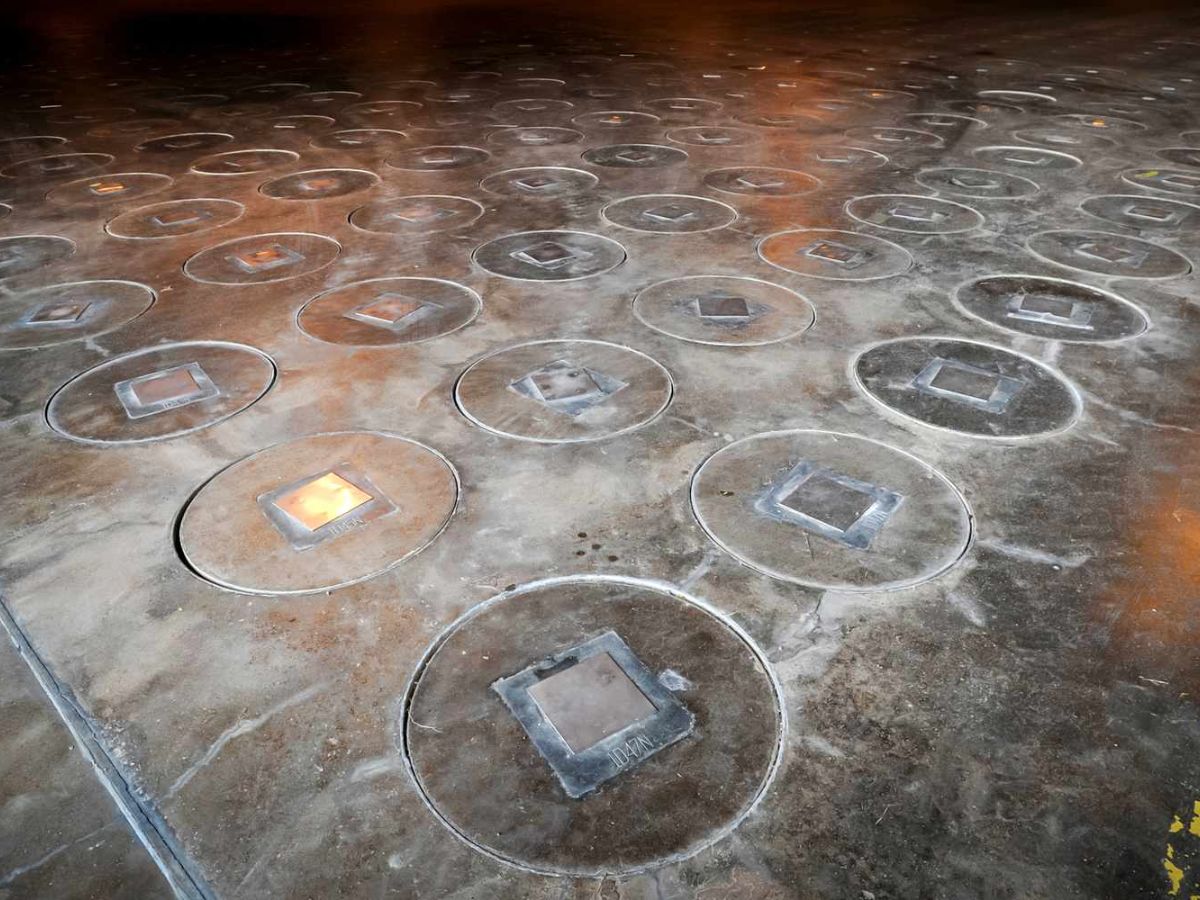
A nest of wasps with very high radiation levels was discovered recently at a closed nuclear arms manufacturing facility in South Carolina, the U.S. Department of Energy reported. The find is causing worries about residual radioactive contamination on the site.
Nest Held Radiation 10 Times Over Safe Limit
On July 3, Savannah River Site (SRS) workers in the area of Aiken, South Carolina, discovered a wasp nest containing ten times the safe level of radiation under federal guidelines. In a report issued last week, the Department of Energy confirmed that the nest had been eliminated and was treated as radioactive waste.
“The wasp nest was sprayed to kill wasps, then bagged as radiological waste,” the report said. Curiously, no wasps were around when the nest was discovered.
No Leak from Nuclear Waste Tanks
The nest was found close to a cluster of tanks containing millions of gallons of liquid nuclear waste, but officials insisted there was no leak involved.
It was not a result of a recent leak or spill, say researchers. Rather, it was produced by what they termed ‘onsite legacy radioactive contamination,’ residual radiation from the Cold War period when the facility was producing actively nuclear bomb components.
Why the Radiation Was So High
Scientists explain that the nest must have been contaminated with radioactive dust or particles deposited from the facility’s nuclear weapons production processes. The plant, opened in the 1950s, was previously employed to produce plutonium for nuclear weapon cores. Nowadays, it produces materials for power plants for various nuclear-related purposes.
The Department of Energy report clarified that the wasps themselves would not have received as much radiation as the structure of the nest. Additionally, because wasps only usually remain within a few hundred feet of their nest, officials suspect the insects probably did not venture beyond the boundaries of the site.
No Hazard to People or the Environment, Officials Say
Federal investigators assured the public that the radiation was not hazardous to people or the environment.
“There were no effects to the workers, the environment or the public,” the report stated.
The surrounding area where the nest was also sampled and no radioactive contamination was noted outside of the nest itself.
Watchdog Group Wants More Answers
Even with the government’s assurance, environmental watchdogs are not yet satisfied with the explanation.
Tom Clements, a spokesperson for Savannah River Site Watch, criticized the lack of detail in the report. “I’m as mad as a hornet that SRS didn’t explain where the radioactive waste came from or if there is some kind of leak from the waste tanks that the public should be aware of,” he told the Associated Press.
Savannah River Site Watch is an organization that keeps tabs on what goes on at the plant and frequently has public safety and transparency issues.
What’s Stored at the Site Today?
The Savannah River Site continues to contain large quantities of nuclear waste from its decades of weapon manufacturing. Savannah River Mission Completion states that the site formerly contained over 165 million gallons (625 million liters) of liquid nuclear waste. Today, 43 underground tanks remain operational, and eight are sealed and closed for good.
The property covers 310 square miles and continues to be a vital component of the U.S. government’s nuclear stewardship system, though its emphasis is no longer on weapons but other nuclear material.
Safety Questions Remain
Although an immediate threat was not reported, the find has reopened questions regarding how effectively the site is monitored and kept up.
Environmental organizations still call for greater openness regarding potential hazards and how residual radiation from earlier nuclear activities is being managed today.
While the Department of Energy continues its probe, most are looking for clearer responses, and a plan to make sure that no surprise radioactive ones appear again.