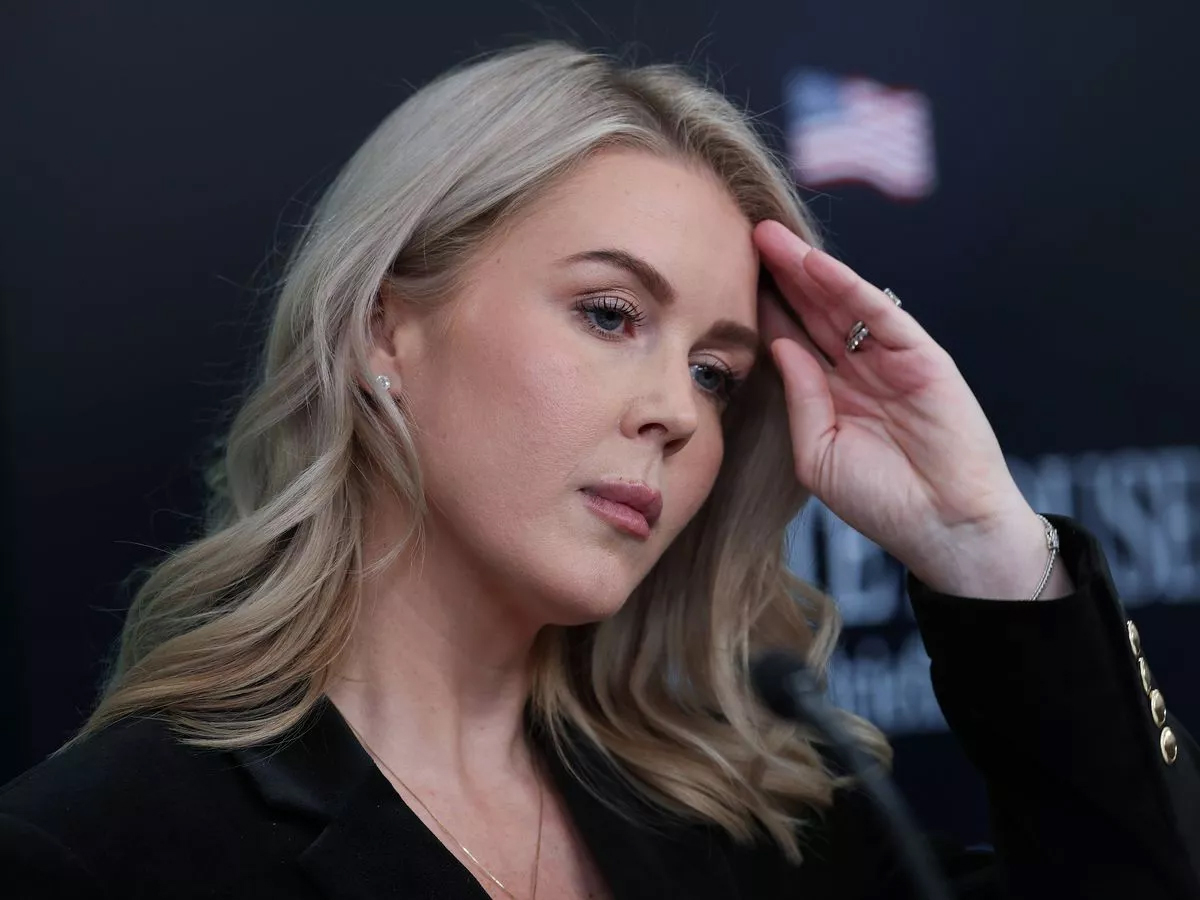
White House Press Secretary Karoline Leavitt has revealed that she suffers from post-traumatic stress disorder (PTSD) as a result of her relentless workload. The 28-year-old said her stress is not from the press or criticism, but from the demands of her role — and the many sacrifices she has made in her personal life.
Leavitt told The Daily Mail that she struggles to make plans with her family. “Honestly, I have PTSD about making plans, so I just don’t,” she said. Coordinating time away from work is nearly impossible, she added.
Leavitt is married to Nicholas Riccio, a 60-year-old real estate developer. She said they tried to plan three short weekend getaways this summer. But all of them were cancelled because of foreign policy events and other duties.
“We just roll with it. If there’s a night when I happen to become free, then we take full advantage of that as a family,” she explained.
Karoline Leavitt says a 24/7 Role causes PTSD
Leavitt described her job as “a 24/7 job.” She said she begins her work before dawn and often continues into the late evening. On days with press briefings, she told the outlet, she is “the first one in the West Wing.”
When she is not at work, she still stays plugged in. She reads newspapers, watches the news, and sometimes calls Cabinet members, or even Donald Trump himself, from home.
High Expectations, High Pressure
Leavitt has earned praise for her loyal and direct style during press briefings. She has defended Trump’s remarks and faced tough questions from the media. But she said the intensity of her job is taking a toll — emotionally and mentally.
She told The Daily Mail that Trump and White House Chief of Staff Susie Wiles encourage her to spend time with her family, but the nature of her work makes it hard. She admitted that planning is almost impossible.
Family Time Sacrificed
For Leavitt, her confession is more than just a headline. She shared a deeply personal side to her life in the West Wing. The PTSD she describes is not from trauma in the typical sense, but from the chronic pressure of constant availability.
She also expressed how scarce family time is. That unstructured time off feels like a luxury she cannot count on.
Her admission may resonate with others in high-stress political jobs — roles where the lines between personal life and professional duty blur.
Why It Matters
Leavitt’s story raises important questions. How sustainable is a job that demands total commitment? What happens when public servants put duty ahead of their own well-being?
In politics, high-stakes roles are often glamorized. But for Leavitt, the cost is very real: emotional strain, missed moments with loved ones, and a constant battle to find balance.
She has opened a rare window into the toll that serving at the highest level can take — especially when work never really ends.