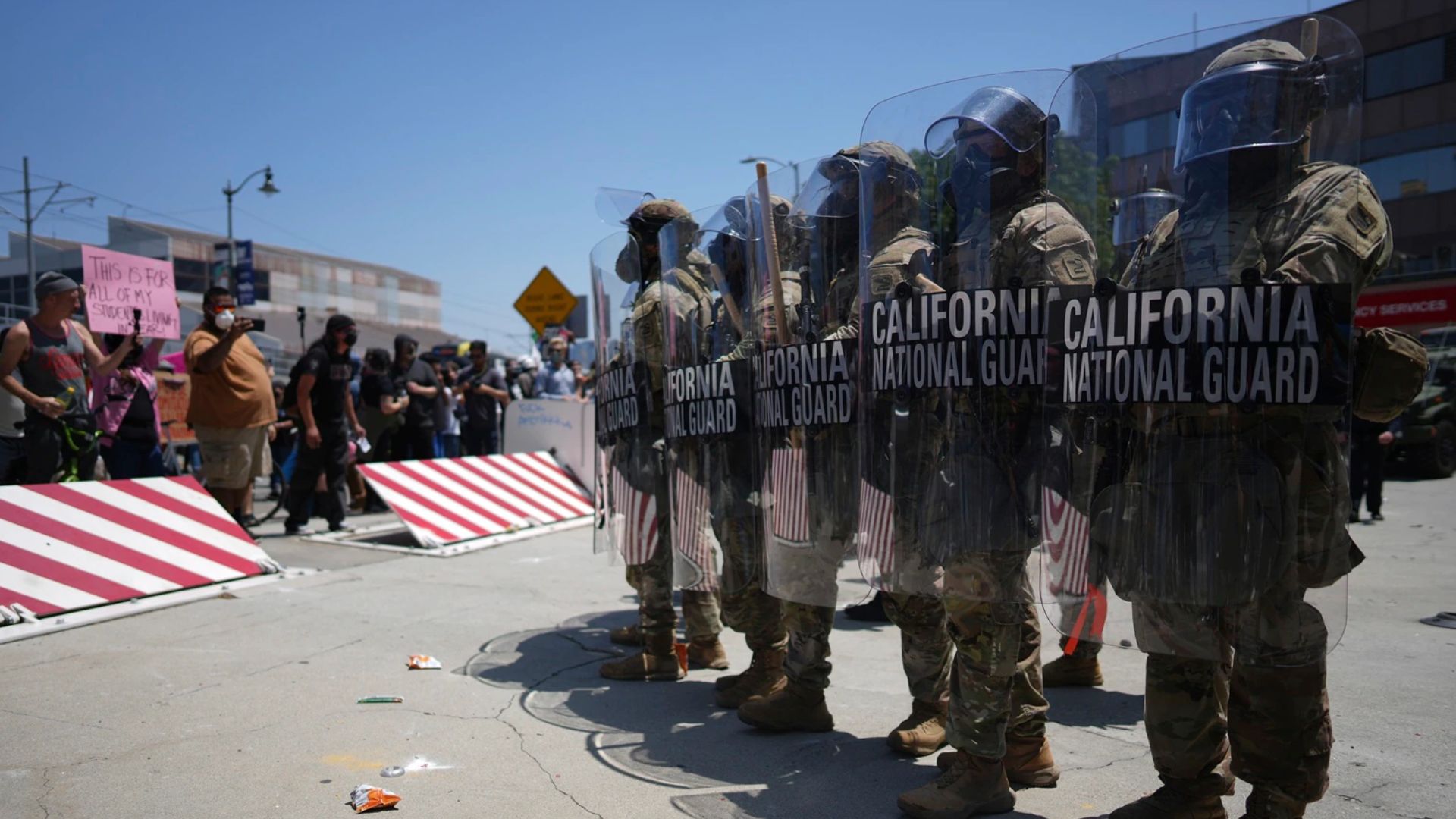
The US Department of Defense has ordered 700 Marines to leave Los Angeles, officially ending a controversial military deployment that sparked strong opposition from local and state leaders. The Marines were pulled out on Monday, a few weeks after they had been sent to the city following a directive from President Donald Trump.
Why Were the Marines Sent?
Last month, President Trump ordered thousands of National Guard troops and hundreds of Marines to be deployed in response to mass protests triggered by aggressive federal immigration raids. The presence of uniformed personnel on city streets quickly drew criticism.
California Governor Gavin Newsom and Los Angeles Mayor Karen Bass both objected strongly to the deployment. They argued that sending military forces into the city during peaceful protests was unnecessary and escalated tensions.
Pentagon Defends the Decision
Despite the pushback, the Pentagon stood by the initial deployment. Spokesperson Sean Parnell said the troops sent a firm warning that “lawlessness would not be tolerated.” He praised the Marines for their “rapid response and discipline,” crediting them with helping to bring calm during a time of civil unrest.
Decision to Withdraw
Defense Secretary Pete Hegseth recently ordered the Marines’ withdrawal. This came shortly after he had authorized a reduction of 2,000 National Guard troops. Together, these moves have reduced the number of federal troops in Los Angeles by half.
Reactions from Local Leaders
Mayor Karen Bass expressed relief and satisfaction after the withdrawal. In a message on X (formerly Twitter), she said the move was “another win” for the city and described the original deployment as “unnecessary.”
Political Context
Los Angeles, known as a sanctuary city, has long been at odds with federal immigration policies, especially under President Trump. The city is home to a large undocumented population and has been a frequent focus of Trump’s efforts to tighten immigration enforcement since he returned to the White House earlier this year.
The deployment of troops also had historical significance. It marked the first time since 1965 that a U.S. president sent National Guard troops into a state without the approval of that state’s governor.